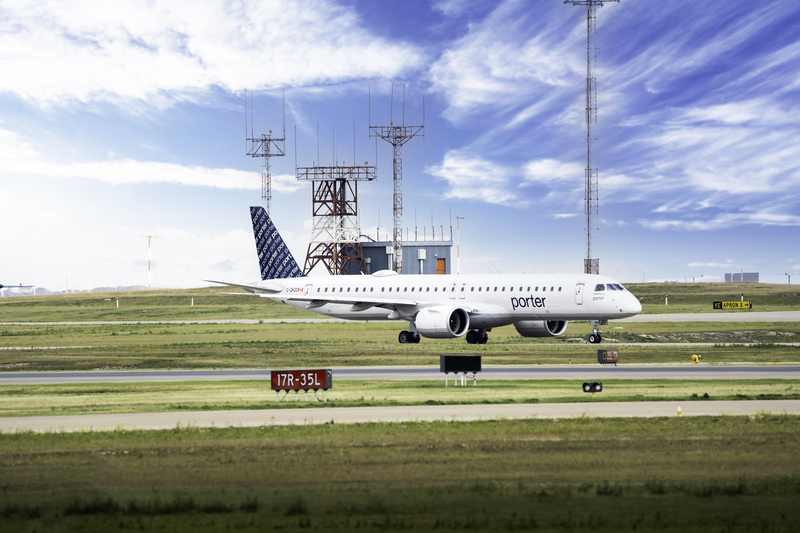
Porter Airlines is on track for its largest year ever.

Schedule data shows the Canadian carrier plans about 10.34 million two-way seats in 2026. That would push Porter past the 10 million-seat mark for the first time in its history.
It is a major milestone for an airline that started as a regional operator at Billy Bishop Toronto City Airport (YTZ).
Read our stories in your inbox
Two aviation newsletters. Zero fluff.
Porter is no longer just a downtown Toronto turboprop airline. It is now a much larger North American carrier with a growing jet fleet, a bigger Toronto Pearson presence, and more routes across Canada, the United States, Mexico, the Caribbean, and Central America.
The aircraft behind that shift is the Embraer E195-E2.
Porter Is No Longer A Small Regional Story
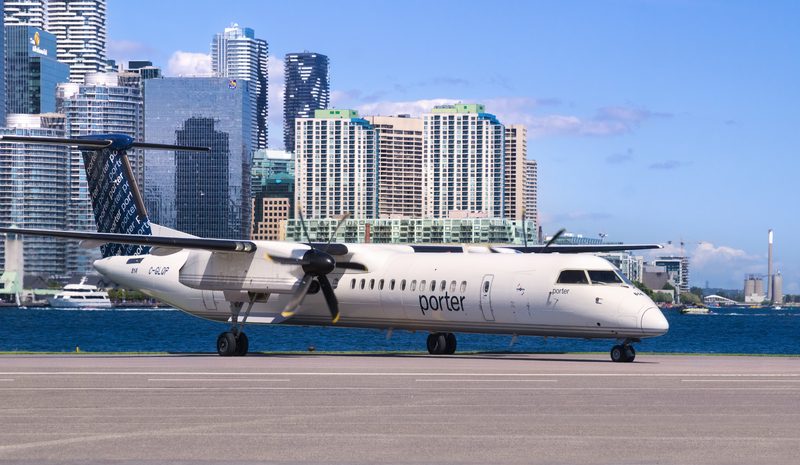
For years, Porter was closely tied to Billy Bishop Toronto City Airport (YTZ).
That airport gave the airline a strong identity. It also gave business travelers fast access to downtown Toronto.
The model worked well. But it had limits.
Billy Bishop is built around turboprop flying. Porter’s De Havilland Dash 8-400 fleet was ideal for short regional routes. However, it could not unlock the longer routes Porter wanted to serve.
That changed when Porter introduced the E195-E2.
The jet gave Porter more range, more seats, and a much larger network opportunity.
The E195-E2 Changed The Airline
Porter received its first E195-E2 in late 2022.
Since then, the aircraft has become the engine of the airline’s growth.
Embraer says Porter received its 50th E195-E2 in December 2025. The airline has firm orders for 75 aircraft and purchase rights for another 25. That could eventually bring Porter’s E2 fleet to 100 aircraft.
The aircraft is a good fit for Porter’s strategy.
It seats 132 passengers in Porter’s layout. It has a 2-2 cabin, which means no middle seats. It also gives Porter the range to fly across Canada, into the U.S., and to leisure destinations farther south.
Embraer lists the E195-E2 with a range of about 3,000 nautical miles. That is enough for many routes that were never realistic with the Dash 8-400.
The Seat Growth Is Dramatic
Porter’s seat capacity has changed quickly.
The airline was still recovering from the pandemic in 2021. That year, it had fewer than one million scheduled seats.
By 2023, capacity had climbed above five million seats. In 2024, it moved close to eight million.
Now, in 2026, Porter is scheduled to pass 10 million seats.
That is not normal organic growth. It is a fleet-driven transformation.
The E195-E2 is now responsible for most of Porter’s capacity. In 2026, schedule data shows the aircraft accounting for about 7.16 million seats.
That means the jet fleet has become the center of the airline, not just an add-on.
Toronto Pearson Is Now Central To The Plan
Porter’s growth also changed its airport strategy.
Billy Bishop (YTZ) remains important. But Toronto Pearson International Airport (YYZ) has become the larger growth platform.
Pearson gives Porter something Billy Bishop cannot: space for jet growth and long-range flying.
That matters because the E195-E2 cannot operate from Billy Bishop under current airport rules. Porter uses the jet from airports such as Toronto Pearson (YYZ), Ottawa International Airport (YOW), Montréal–Trudeau International Airport (YUL), and other Canadian points.
Pearson also gives Porter access to Canada’s largest aviation market.
That allows the airline to compete more directly with Air Canada and WestJet, especially on transcontinental and transborder routes.
U.S. Growth Is Becoming More Important
The United States is also playing a larger role.
Porter has served U.S. cities for years. However, the E195-E2 has changed what kind of U.S. network the airline can build.
In 2026, Porter’s U.S. capacity is expected to reach about 1.34 million seats, according to schedule data. That is well above pre-pandemic levels.
The carrier is adding routes that fit both business and leisure demand.
One example is Boston Logan International Airport (BOS). Porter launched new service from Toronto Pearson (YYZ) and Montréal (YUL) to Boston in May 2026. The Toronto Pearson route uses the E195-E2, while the Montréal route uses the Dash 8-400.
That gives Porter more Boston coverage than before. It also connects Boston passengers to Porter’s wider Canadian network.
Austin Adds A New U.S. Market
Porter has also entered Texas.
The airline launched Toronto Pearson (YYZ) to Austin-Bergstrom International Airport (AUS) on May 21, 2026. The route operates five times weekly with the E195-E2.
Austin is a strong addition.
It has business demand, technology traffic, leisure appeal, and a growing population. It also gives Porter another U.S. market where the airline can offer a different product from larger competitors.
The route would not have fit Porter’s old turboprop model.
With the E195-E2, it becomes possible.
Chicago Moves To O’Hare
Porter is also changing its Chicago operation.
From September 1, 2026, Porter’s Toronto City (YTZ) service to Chicago will move from Midway (MDW) to Chicago O’Hare International Airport (ORD).
The route will operate three times daily using the Dash 8-400.
This is an important move.
O’Hare gives Porter access to Chicago’s primary airport. It also creates future connection opportunities through partner airlines.
For passengers at Billy Bishop, the shift improves access to one of North America’s most important business airports.
Porter Is Expanding South
Porter is also pushing deeper into sun markets.
The airline is adding winter service to destinations such as Aruba (AUA), Montego Bay (MBJ), Los Cabos (SJD), San José, Costa Rica (SJO), and Providenciales (PLS).
It is also increasing service to existing sun markets such as Cancun (CUN), Puerto Vallarta (PVR), Nassau (NAS), Grand Cayman (GCM), and Liberia, Costa Rica (LIR).
This is a big change for Porter.
The airline once had a much narrower network. Now it is competing for winter leisure traffic from multiple Canadian cities.
That puts it more directly against Air Canada, WestJet, Air Transat, and Sunwing-style vacation flying.
The Winter Sun Plan Is Much Bigger
Porter says its 2026-27 winter sun schedule will include nearly 5,000 flights.
That is more than 150% above the previous winter season.
New routes include Toronto Pearson (YYZ) to Aruba (AUA), Los Cabos (SJD), Montego Bay (MBJ), San José (SJO), and Providenciales (PLS).
Ottawa (YOW) is also gaining more leisure flying. Porter is adding routes from Ottawa to Aruba, Montego Bay, Los Cabos, and Providenciales.
Hamilton (YHM) is getting more service as well, including new flights to Tampa (TPA).
The E195-E2 makes much of this possible.
It gives Porter a right-sized aircraft for leisure routes that may not need a larger Boeing 737 or Airbus A320-family aircraft.
Porter’s Product Is Part Of The Strategy
Porter is not trying to compete only on price.
Its product is a major part of the growth story.
The airline promotes no middle seats on every flight. It also offers complimentary beer and wine served in glassware, along with premium snacks.
On E195-E2 flights, Porter offers free, fast Wi-Fi.
That matters because the airline is growing into markets where travelers already have choices. Porter needs to stand out.
Its product gives it a clear message: economy travel can feel better without becoming a traditional business-class airline.
That is especially important on longer E195-E2 routes.
The E195-E2 Fits The Brand
The E195-E2 supports Porter’s product promise.
The aircraft has a 2-2 seating layout. That means no passenger sits in a middle seat.
That is a simple selling point. It is also easy for customers to understand.
The aircraft is also quieter and more fuel efficient than earlier-generation regional jets. Embraer says the E195-E2 delivers up to 29% lower fuel burn than first-generation E-Jets.
For Porter, that helps in two ways.
It improves operating economics. It also supports the airline’s customer-experience message.
Partnerships Are Becoming More Important
Porter’s growth is also pushing it closer to the global airline system.
The airline recently joined the International Air Transport Association (IATA). Porter said the membership followed completion of the IATA Operational Safety Audit for its E195-E2 fleet.
That matters because Porter is no longer just a small regional carrier.
It is working with more partners. It is also carrying more connecting traffic.
Porter already has partnerships with airlines such as Air Transat and American Airlines. These relationships can help Porter extend its reach without flying every route itself.
As Porter grows, partnerships may become even more important.
Growth Brings New Challenges
The 10 million-seat milestone is impressive. But it also raises expectations.
Porter must now operate a much larger network with more aircraft, more crews, and more airports.
That brings complexity.
A larger schedule means more disruption risk. Weather, maintenance, air traffic control, crew positioning, and aircraft delivery timing all matter more when an airline grows quickly.
The airline also faces strong competitors.
Air Canada and WestJet remain much larger. Both have deeper networks, larger loyalty programs, and stronger corporate contracts.
Porter’s challenge is to grow without losing the service identity that made it different.
The Biggest Shift Is Perception
Porter’s growth is changing how the airline is viewed.
For years, many travelers saw it mainly as a convenient option from downtown Toronto.
That is no longer enough.
Porter is now a serious national and cross-border competitor. It serves coast-to-coast Canadian markets, more U.S. cities, and a growing list of leisure destinations.
The E195-E2 made that possible.
Toronto Pearson (YYZ) gave it scale. Ottawa (YOW) and Montréal (YUL) added more network depth. The sun markets added seasonal growth.
Together, those changes have reshaped the airline.
Bottom Line
Porter Airlines is expected to pass 10 million scheduled seats in 2026 for the first time.
That milestone reflects a major transformation.
The airline has moved beyond its original regional model at Billy Bishop Toronto City Airport (YTZ). It now has a growing E195-E2 fleet, a larger Toronto Pearson (YYZ) presence, and a much broader network across Canada, the U.S., Mexico, the Caribbean, and Central America.
The Embraer E195-E2 is the key aircraft in this shift. It gives Porter more range, more capacity, and the ability to serve routes that were not possible with the Dash 8-400.
Porter’s next challenge is execution.
The airline has grown quickly. Now it must prove that it can keep the same service quality while operating a much larger and more complex network.
If it can do that, 10 million seats may be less of a peak and more of a new baseline.
Keep reading FlyMag
Get the Daily Brief in the morning or the Route Watch weekly recap on Fridays. Or both.