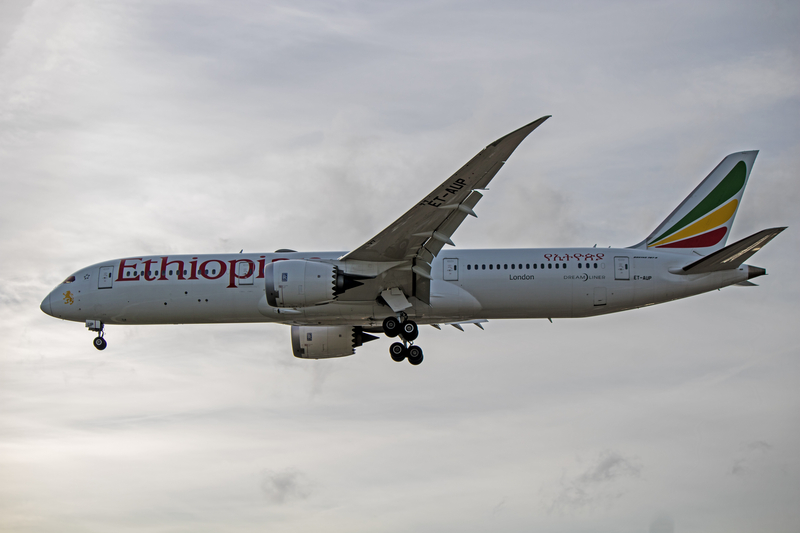
Ethiopian Airlines is bringing back nonstop passenger flights between Addis Ababa Bole International Airport (ADD) and Hartsfield-Jackson Atlanta International Airport (ATL) from May 21, 2026, restoring a route that had been suspended since February.

On the surface, this is a route resumption. In practice, it is more important than that. Atlanta is one of the largest and most commercially significant air markets in the United States, and for Ethiopian Airlines it is not just another North American destination. It is a high-value gateway that strengthens the carrier’s role as one of the most important connectors between Africa and the U.S.
That is the real significance of the restart. Ethiopian is not simply putting Atlanta back on the board. It is reactivating one of the strongest pieces of its transatlantic network.
Read our stories in your inbox
Two aviation newsletters. Zero fluff.
Atlanta Matters For Reasons Beyond Local Traffic
Atlanta (ATL) is an obvious city for Ethiopian Airlines to serve.
It is a major business center, one of the world’s busiest airports, and a metropolitan area with a large African diaspora. Those fundamentals give the route natural point-to-point strength. But as with many of Ethiopian’s long-haul services, the route’s value goes beyond the local market.

Addis Ababa (ADD) is not merely the capital of Ethiopia. It is Ethiopian Airlines’ primary hub and one of Africa’s most important connecting gateways. That means the Atlanta service feeds a much wider map across East, West, Central, and Southern Africa. For passengers in the United States, ATL–ADD is therefore not just a route to Ethiopia. It is a one-stop bridge into dozens of African destinations.
That hub role is what makes the resumption strategically important.
This Is Also About Network Credibility
When a long-haul airline suspends a route and then restores it relatively quickly, the restart says something about confidence.
Ethiopian could have left Atlanta off the map longer and concentrated entirely on other North American points. Instead, it is restoring the route in late May, which suggests the airline still sees the market as strategically worthwhile and commercially relevant enough to bring back soon rather than defer indefinitely.
That matters because airlines do not usually resume long-haul service quickly unless they believe the market supports it and the route still fits the wider network.
For Ethiopian, Atlanta clearly does.
Addis Ababa’s Connecting Power Is Still The Main Engine
The route also reinforces one of Ethiopian Airlines’ core strengths: hub connectivity.
Ethiopian has built one of the largest and most geographically extensive airline networks in Africa, and Addis Ababa (ADD) remains the center of that system. For a city like Atlanta (ATL), that makes the route more powerful than a simple city-pair connection. It offers one-stop access to numerous destinations that would otherwise require more circuitous routings via Europe, the Gulf, or another African gateway.

That is especially important in a U.S.–Africa market where nonstop options remain limited relative to the size and economic importance of the continent.
The Resumption Supports A Bigger North American Position
Atlanta’s return also fits into Ethiopian’s broader North American strategy.
The airline has spent years building a meaningful U.S. and Canada presence, and it continues to be one of the few African carriers with a substantial and recognizable footprint across the North American market. Restoring ATL helps preserve that position and prevents one of the most important U.S. gateways from remaining absent too long.
It also gives Ethiopian a stronger southern U.S. presence, which matters because geographic balance in a long-haul network is often underappreciated. Serving the Northeast alone is not enough. A large airline with real transatlantic ambitions wants access to multiple U.S. regions, and Atlanta is one of the most powerful anchor points available.
Bottom Line
Ethiopian Airlines’ decision to resume nonstop Addis Ababa (ADD)–Atlanta (ATL) passenger service from May 21, 2026 is more significant than a simple route restart.
Atlanta is one of the airline’s most strategically useful U.S. markets, combining strong local demand with access to one of the world’s largest airport systems. More importantly, the route reconnects the U.S. Southeast with Ethiopian’s vast African network through Addis Ababa, reinforcing the airline’s role as one of the most important bridges between North America and Africa.
For aviation readers, the key takeaway is clear: this is not just Ethiopian restoring a suspended flight. It is reactivating a major transatlantic link that strengthens both its U.S. presence and its wider African hub strategy.