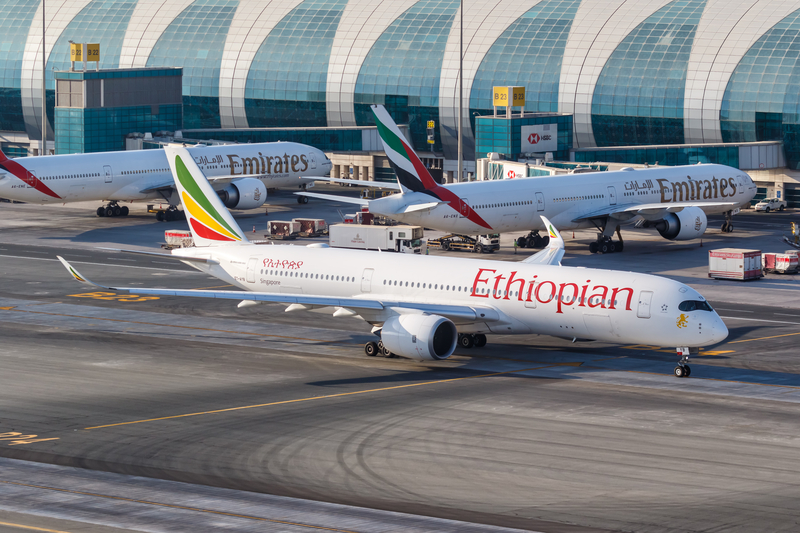
Ethiopian Airlines marked its 80th anniversary on April 8, 2026, launching a new round of celebrations that does more than honor a historic date. It highlights how the carrier has evolved from a small postwar airline into the central force in African commercial aviation.

That distinction matters. This is not simply an anniversary for a legacy brand. It is an anniversary for an airline that still sets the pace on the continent. Ethiopian began scheduled operations on April 8, 1946, with a Douglas C-47 Skytrain service from Addis Ababa (ADD) to Cairo (CAI) via Asmara (ASM). Eight decades later, it stands as Africa’s largest airline and one of the continent’s most important strategic businesses.
From Five C-47s to a Modern Long-Haul Fleet
The scale of that transformation is what gives the anniversary real weight. Ethiopian started with five Douglas C-47 aircraft, a rugged type well suited to the airline’s earliest years, when reliability and basic connectivity mattered more than scale or sophistication.
Read our stories in your inbox
Two aviation newsletters. Zero fluff.
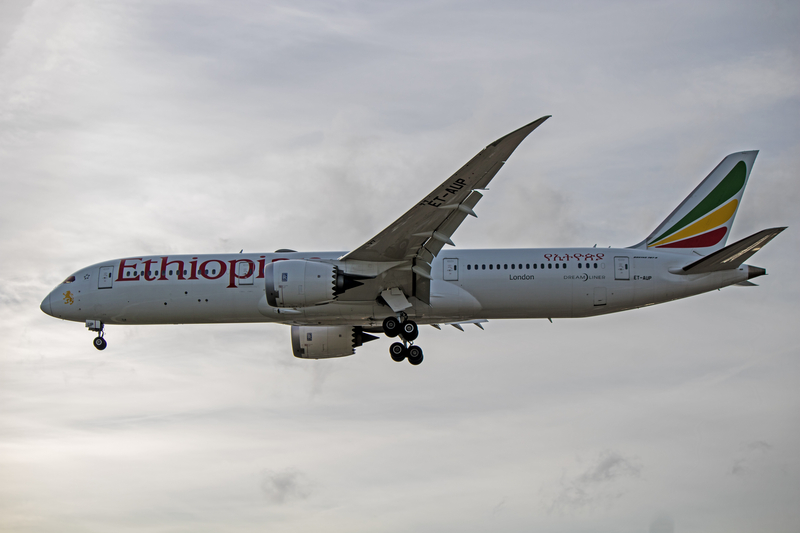
Today, the fleet tells a completely different story. Ethiopian is now a major operator of Boeing 787 Dreamliners, Airbus A350s, Boeing 777s, Boeing 737 MAX 8s, and De Havilland Dash 8-400 turboprops. That mix is important because it shows how the airline built its network properly. Widebodies support long-haul reach from Addis Ababa (ADD) into Europe, Asia, the Middle East, and North America, while narrowbodies and turboprops keep intra-African and domestic connectivity functioning at scale.
That is one of the reasons Ethiopian has long been seen as a technological leader in African aviation. It has not just added aircraft. It has consistently moved early on modern fleet types that improve fuel burn, range, reliability, and network flexibility.
Addis Ababa Became the Hub That Changed the Airline
The bigger story, though, is not just about aircraft. It is about hub strategy.
Ethiopian built Addis Ababa (ADD) into one of Africa’s most important connecting gateways, and that has been the foundation of its success. Geography helped, but execution mattered more. The airline created a network structure that links African cities to one another while also connecting the continent outward to major global markets.
That is what separates Ethiopian from many other carriers that once had similar ambitions but never built the same resilience. It did not rely only on a strong home market. It built a transit model. That model allowed the airline to grow beyond Ethiopia’s local demand and become a true intercontinental connector.
The Airline’s Pan-African Position Is Still Its Greatest Strength
Chief executive Mesfin Tasew has been emphasizing Ethiopian’s Pan-African identity during the anniversary celebrations, and that is not just ceremonial language. It remains the airline’s clearest strategic advantage.
Ethiopian’s importance goes beyond national aviation. The carrier has become a major platform for African connectivity, trade, tourism, and corporate travel. It serves more than 145 international passenger and cargo destinations, including more than 60 cities in Africa, giving it a breadth that few competitors on the continent can match.
That network depth is especially important in Africa, where air service is often as much about economic integration as it is about travel demand. An airline that can link African capitals and secondary cities efficiently does more than move passengers. It helps shape the commercial map of the continent.
The 80-Year Mark Comes at a Time of Continued Expansion
This is also not an anniversary being celebrated from a position of nostalgia or retrenchment. Ethiopian is marking 80 years while still expanding.
The airline recently reported strong half-year revenue growth and continues to push ahead with its long-term Vision 2035 strategy. It is also investing beyond the airline itself, including the development of the new Bishoftu International Airport project, which is intended to support future growth well beyond the limits of Addis Ababa Bole International Airport (ADD).
That makes this anniversary more interesting than many aviation milestones. Ethiopian is not looking backward because it has stopped growing. It is looking backward while still trying to redefine how large an African airline can become.
Bottom Line
Ethiopian Airlines’ 80th anniversary is significant because it reflects both longevity and execution.
Many airlines can point to historic founding dates. Far fewer can say they used those decades to become the dominant carrier in their region. Ethiopian went from five Douglas C-47s and a first route from Addis Ababa (ADD) to Cairo (CAI) via Asmara (ASM) to a modern multi-fleet operation that now connects Africa to the world at scale.
That is the real story behind the celebrations. Ethiopian Airlines is not just commemorating 80 years of service. It is marking 80 years of turning itself into the airline most others on the continent have spent decades trying to become.
Keep reading FlyMag
Get the Daily Brief in the morning or the Route Watch weekly recap on Fridays. Or both.