United Airlines is preparing to bring one of the most unusual new long-haul products in the U.S. market to economy class: a couch-style seating option called United Relax Row.

Unveiled at the airline’s “Elevated” product event in Los Angeles, the concept converts a row of three economy seats into a flatter lounging and sleeping surface through fold-up leg rests and added bedding. It is designed for long-haul flights on Boeing 787s and a large portion of the Boeing 777 fleet, with rollout beginning in 2027.
That alone makes it notable. But the bigger story is what it says about United’s strategy. The airline is no longer treating premium innovation as something reserved only for Polaris and Premium Plus. It is now pushing comfort upgrades deeper into the back of the cabin.
Read our stories in your inbox
Two aviation newsletters. Zero fluff.
This Is Not A Lie-Flat Bed — But It Is A Real Economy Upgrade
The most important way to understand Relax Row is to avoid overstating it.
This is not a business-class-style bed in economy. It is still a row of three standard economy seats. What changes is that the leg rests fold up to create a flatter lounging surface, and passengers get a mattress pad, blanket, and extra pillows to make the space more sleep-friendly.
That distinction matters because United is not trying to turn economy into Polaris. It is trying to create a middle ground for passengers who want more comfort than a standard coach seat but are not paying premium-economy or business-class fares.
That is a clever place to compete.
The Product Is Clearly Aimed At Families, Couples, And Solo Travelers Willing To Pay For Space
Relax Row makes the most sense for a very specific kind of customer.
Families with young children are the most obvious fit. A couch-style row gives them a way to create a more manageable overnight space on long-haul flights without moving into a premium cabin. Couples are another clear target, especially on leisure-heavy routes where sleep and comfort matter but full premium fares may be hard to justify.
United is also positioning the product for solo travelers, though in that case the appeal will depend heavily on pricing. Because the concept requires all three seats in the row to be purchased, the economics only work if the surcharge sits far enough below premium economy to feel worthwhile.
That pricing will matter enormously, and United has not announced it yet.
This Is A Big Strategic Shift In How United Talks About The Main Cabin
The more interesting part of the story is not the product itself. It is the philosophy behind it.
For years, U.S. legacy carriers have focused premium investment at the front of the plane, where the returns are most obvious. United is still doing that — and doing it aggressively — but Relax Row shows the airline also sees a commercial opportunity in making the long-haul economy experience more differentiated.
That matters because most economy innovation in the United States has centered on seatback screens, Wi-Fi, power outlets, and better cabin aesthetics. Relax Row is something else. It is a physical product change that alters how passengers use the space rather than simply how they are entertained while sitting in it.
That is a more ambitious idea.
The Timing Fits United’s Wider Cabin Push Perfectly
Relax Row is arriving as part of a much broader fleet and cabin transformation.
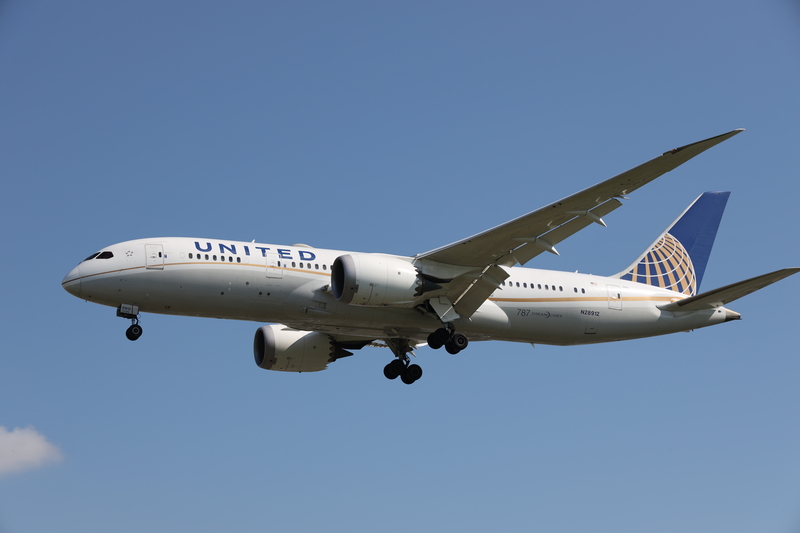
United’s new premium-heavy Boeing 787-9s with the “Elevated” interior already represent a major redesign of the carrier’s long-haul proposition. Those aircraft bring Polaris Studio suites at the very front, upgraded standard Polaris seats with doors, a more refined Premium Plus cabin, and much-improved technology in economy.
Adding Relax Row to the same broader aircraft family makes strategic sense. United is essentially trying to create a more layered cabin hierarchy, where every section of the aircraft has a stronger and more distinct value proposition than before.
That is exactly how premium-focused airlines think.
The Boeing 787 And 777 Fleets Are The Right Place To Start
United says Relax Row will appear on every Boeing 787 and on a substantial portion of the Boeing 777 fleet, with more than 200 aircraft expected to have the product by 2030.
That is a major rollout.
The aircraft choice makes sense because these are the airline’s core long-haul platforms. They operate the routes where sleep matters most, where overnight flying is common, and where passengers are most likely to pay extra for comfort without stepping all the way up to a premium cabin.
This also means Relax Row is not being treated as an experimental niche feature. United is planning it as a fleet-wide long-haul product family.
This Is Also A Quiet Admission About Premium Economy
There is another reason Relax Row is interesting: it reveals where premium economy may not fully solve the comfort gap.
Premium economy works well for many travelers, but it is still fundamentally a seat product. Relax Row is aimed at something different — passengers who may care less about a wider seat and more about being able to curl up, stretch out, or create a rest-friendly space on a long flight.
That is especially relevant on overnight routes and family travel patterns, where upright comfort is not always the main objective.
In that sense, Relax Row is not competing directly with Premium Plus. It is creating a parallel comfort option inside standard economy.
United May Have Found A Smart Revenue Product
From a commercial standpoint, Relax Row could become a very smart upsell tool.
It uses existing cabin real estate more creatively rather than requiring a totally separate new cabin. It offers something visually distinctive and easy to market. And it gives United another way to segment the back of the aircraft without adding an entirely new class of service.
If the pricing lands in the right zone, this could become one of those products that looks unusual at launch but quickly becomes a meaningful ancillary revenue line.
That is especially true on long-haul routes where passengers are already primed to pay for better rest.
Bottom Line
United’s new Relax Row is one of the most interesting economy-class product ideas any North American airline has introduced in years.
It will not turn economy into business class, and it should not be described that way. But it does give long-haul coach passengers something U.S. airlines have rarely offered at scale: a real sleep-and-space upgrade that sits between standard economy and premium economy.
For aviation readers, the bigger point is strategic. United is not just making Polaris more premium. It is trying to make every cabin more sellable. Relax Row is the clearest sign yet that the battle for long-haul revenue is now reaching deep into the back of the plane.
Keep reading FlyMag
Get the Daily Brief in the morning or the Route Watch weekly recap on Fridays. Or both.