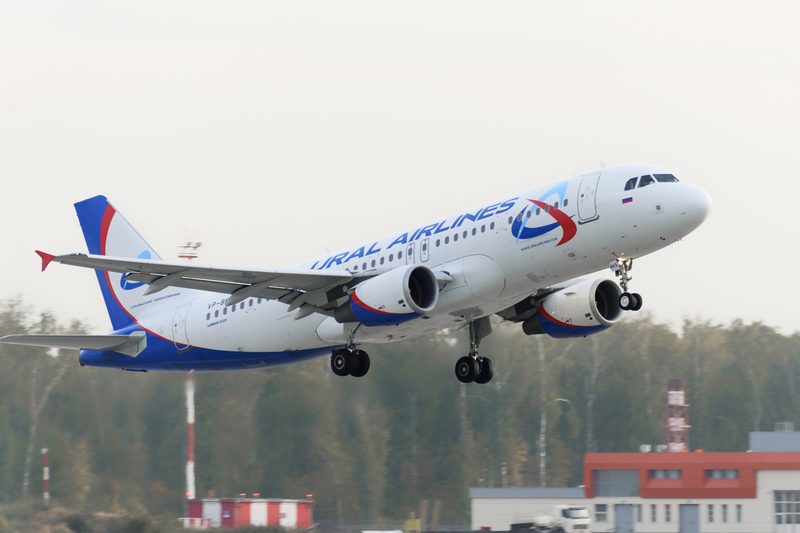
Ural Airlines is looking to expand its maintenance, repair, and overhaul (MRO) capabilities for Airbus A320-family and Boeing 737 aircraft—an operational move that signals a push for tighter control over fleet reliability, cost management, and maintenance scheduling.
While the announcement is light on specifics such as hangar location, certification scope, or timeline, the intent is clear: grow internal technical capacity so the airline can keep more work “under its own roof,” reducing reliance on third-party providers and improving resilience in day-to-day operations.
Why airlines invest in MRO: reliability is a schedule product
For a narrowbody operator, MRO isn’t a back-office function—it is one of the strongest levers for protecting the schedule. Expanded in-house capability can deliver:
Read our stories in your inbox
Two aviation newsletters. Zero fluff.
-
Shorter AOG recovery time (aircraft-on-ground events live or die by how fast you can troubleshoot and access parts)
-
Better maintenance planning (more predictable checks and fewer last-minute slot battles at external shops)
-
Lower total cost through reduced outsourcing, better labor utilization, and more efficient parts pooling
-
Higher dispatch reliability, which directly impacts on-time performance and customer satisfaction

On high-frequency domestic and regional networks, a single missing aircraft can cascade into multiple cancellations. That’s why airlines treat maintenance capacity as a form of operational insurance.

What “A320 and 737 MRO expansion” can mean in practice
When an airline says it’s expanding MRO capability for a narrowbody fleet, it can range from modest to transformative. The most meaningful step-changes typically include:
Line maintenance scale-up
Expanding “line” capability improves routine reliability:
-
overnight checks
-
rapid defect rectification
-
component swaps
-
troubleshooting for recurring snags
This is the quickest way to reduce delays and cancellations because it targets the everyday issues that disrupt departures.
Base maintenance and heavy checks
Moving deeper into base maintenance is a bigger commitment:
-
C-check level work
-
structural inspections
-
major cabin and systems maintenance
-
long-duration hangar events
If Ural Airlines is serious about reducing external dependence, base capability—hangar space, tooling, qualified personnel, and approved procedures—will be the decisive factor.
Component repair and parts support
Aircraft availability is often limited by components rather than airframes. Expanding:
-
avionics repair
-
wheel/brake shops
-
composite repair
-
hydraulic/pneumatic component support
can materially improve turnaround speed and reduce AOG time.
The fleet angle: A320-family focus, plus the 737 question
Ural Airlines is widely associated with Airbus A320-family operations (A319/A320/A321), so expanded MRO support for that fleet aligns directly with core operational needs.
The mention of Boeing 737 is the interesting part. There are two plausible interpretations:
-
Capability development for broader market services
Even if Ural’s own 737 exposure is limited, building 737-approved capability can open the door to third-party line or base maintenance for other operators. -
Future fleet flexibility and ecosystem resilience
Building cross-platform maintenance capability can give airlines more options if fleet composition evolves, aircraft are transferred, or operational partnerships require support across types.
Either way, supporting both A320-family and 737 aircraft is a strong signal that Ural is thinking beyond “just enough maintenance” and toward a larger technical platform.
Third-party maintenance: where the real upside can be
Once an airline has excess capacity—hangar slots, technicians, approvals—it can monetize that capability through third-party work. For carriers that build MRO scale effectively, the benefits include:
-
Diversified revenue less sensitive to passenger demand swings
-
Better parts and tooling utilization
-
Enhanced technical recruiting and retention (more varied work, steadier workload)
-
Increased leverage in supply chains and vendor negotiations
But it only works if the airline can maintain high internal reliability while also servicing external customers—MRO “side businesses” can backfire if they starve the airline’s own operation of attention or capacity.
Bottom Line
Ural Airlines’ plan to expand A320-family and Boeing 737 MRO capability is a strategic operations move: more in-house maintenance typically means faster defect resolution, tighter scheduling control, and improved dispatch reliability—especially critical for narrowbody fleets operating dense, high-frequency networks. If the expansion includes deeper base-maintenance scope and component support, it could reduce dependence on external shops and potentially position Ural to offer third-party maintenance over time.
Keep reading FlyMag
Get the Daily Brief in the morning or the Route Watch weekly recap on Fridays. Or both.