Emirates is once again looking at how far first class can be pushed, and this time the concept is even more ambitious than its already-famous onboard shower spas.

Airline President Sir Tim Clark has said Emirates is working on the idea of en-suite bathrooms inside first class suites, a move that would take the carrier beyond its current Airbus A380 shower spa concept and into a new category of ultra-premium design. If Emirates follows through, it would not simply be refining first class. It would be rethinking what private space at 35,000 feet can mean.
For aviation professionals, the significance is obvious. This is not just about adding another luxury feature. It is about whether a commercial airline can practically integrate truly private bathroom space into a first class suite without compromising aircraft economics, cabin density, certification, and weight.
Read our stories in your inbox
Two aviation newsletters. Zero fluff.
Emirates Is Trying To Stay Ahead Of First Class Stagnation
One of the most revealing parts of Sir Tim Clark’s comments is not the bathroom itself. It is the reason behind it.
Emirates has spent decades building one of the most recognizable first class products in commercial aviation. It pioneered enclosed suites, onboard bars, and shower spas on the Airbus A380. More recently, it introduced its newer Boeing 777 first class suites with floor-to-ceiling doors and a much more private, almost room-like layout.
But premium airline products age quickly in strategic terms, even when they still feel luxurious to passengers. Once competitors catch up in seating, privacy, dining, or onboard comfort, the differentiator becomes weaker. Emirates clearly understands that. The en-suite bathroom idea looks like the next attempt to create a feature that is difficult for rivals to match and impossible to ignore.
This Would Go Beyond Emirates’ Existing A380 Shower Spa
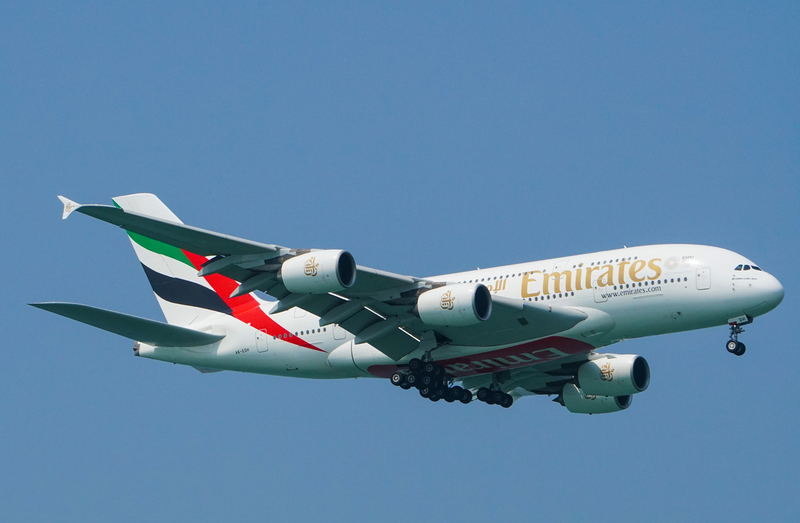
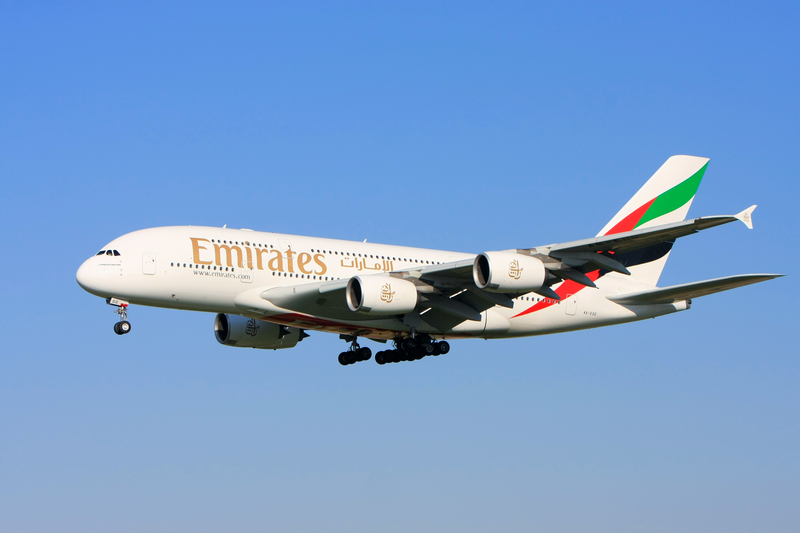
Emirates already offers one of the most famous premium amenities in aviation: the shower spa on the Airbus A380.
But those showers, while iconic, are still shared facilities for first class passengers rather than private bathrooms built into each suite. That distinction matters. The current A380 concept is luxurious, but it remains a communal premium feature within an exclusive cabin.
An en-suite bathroom changes the proposition entirely. Instead of walking out of the suite and booking a slot in a shared shower room, the passenger would have a dedicated private washroom directly connected to the suite itself.
That would move Emirates away from the premium-lounge model of first class and closer to the private-room model.
The Competitive Comparison With Etihad Needs Precision
Any discussion of private bathrooms in first class inevitably invites comparison with Etihad Airways and its A380 Residence product.
Etihad already offers a private shower room within The Residence, which includes a separate living area and bedroom. But that is a singular ultra-premium product, effectively an apartment in the sky, not a standard first class cabin design replicated seat by seat across the aircraft.
That is what makes the Emirates idea more radical. If the airline is serious about an en-suite for every first class traveler, it would be attempting something broader than The Residence concept. It would not just create one showcase suite. It would redesign the entire upper end of the cabin around personal bathroom space.
That is a much bigger engineering and commercial challenge.
The Aircraft Question Will Be Central
The biggest practical question is not whether Emirates wants to do this. It is where it could actually do it.
The Airbus A380 may seem like the most natural platform because of its sheer size and the fact that Emirates already uses it for shower spas. But even on a very large aircraft, dedicating enough volume for true en-suite bathrooms across multiple suites would require a major reallocation of cabin real estate.
The Boeing 777 is a different challenge altogether. Emirates’ latest 777 first class suite is already one of the most private and space-intensive products in the sky, but the 777 fuselage still offers much less excess volume than an A380. Integrating private bathrooms there would require serious design trade-offs in suite count, galley space, circulation, weight, and structural layout.
That means the concept is not just a product question. It is a cabin architecture question.
Weight, Water, And Certification Would Be The Real Obstacles
From an airline-design perspective, private bathrooms are not difficult because they are luxurious. They are difficult because they are heavy, complex, and operationally expensive.
Water supply, waste handling, plumbing, floor reinforcement, emergency-access requirements, and maintenance complexity all become far more demanding when bathrooms are multiplied and placed inside premium suites. Every square foot used for a washroom is also a square foot not used for another revenue seat, storage area, or service zone.
Then there is certification. Cabin layouts have to meet strict safety and evacuation standards, and private enclosed spaces must still allow for operational access, emergency intervention, and clear passenger movement patterns.
This is why so many flashy premium-cabin concepts remain just that: concepts. The challenge is not drawing them. The challenge is making them certifiable, reliable, and commercially survivable.
Emirates Is One Of The Few Airlines That Could Even Try This
If any airline has both the ambition and brand logic to pursue en-suite first class bathrooms, it is Emirates.
The airline has built much of its premium identity around doing what other carriers initially consider excessive, impractical, or too expensive. Often, those bets have worked because Emirates uses scale, brand recognition, and hub economics from Dubai International Airport (DXB) to support products that would be harder to justify elsewhere.
That does not mean the en-suite idea is certain to happen. But it does mean Emirates is one of the very few carriers whose brand is actually strengthened by entertaining such a concept in public. Even discussing it reinforces the image of a carrier that wants to dominate the top end of the market rather than merely participate in it.
This Is Also About Brand Theatre, Not Just Passenger Need
It is worth saying plainly that private bathrooms in first class are not an operational necessity.
They are brand theatre, product leadership, and competitive signaling wrapped into one. Very few first class passengers would say the absence of a private en-suite is the one thing holding back their onboard experience. But that is not the point. At this level of the market, airlines are not always selling necessity. They are selling exclusivity, distinction, and the feeling that no one else is offering quite the same thing.
That is why the idea matters even before it exists. It keeps Emirates in the conversation as the airline trying to define the next version of first class.
The Real Test Will Be Whether Emirates Builds It, Not Just Teases It
Airlines often float premium ideas long before they become real products, and sometimes they never do.
So the important distinction here is that Emirates has publicly signaled it is working on the concept, but has not announced a timeline, aircraft platform, configuration, or launch program. That leaves a large gap between ambition and execution.
Still, the fact that the idea is being discussed at this level suggests it is more than a casual fantasy. Emirates is clearly thinking about how to prevent its first class product from standing still, and en-suite bathrooms appear to be part of that thinking.
Bottom Line
Emirates is exploring one of the boldest first class ideas the industry has heard in years: private en-suite bathrooms inside first class suites. If it ever becomes reality, it would take the airline beyond the shared Airbus A380 shower spa model and into a new category of individual premium space.
Whether the concept proves technically and commercially workable is a separate question, and a major one. But the strategy behind it is already clear. Emirates does not want its first class product to remain merely excellent. It wants it to stay unmatched.
Keep reading FlyMag
Get the Daily Brief in the morning or the Route Watch weekly recap on Fridays. Or both.