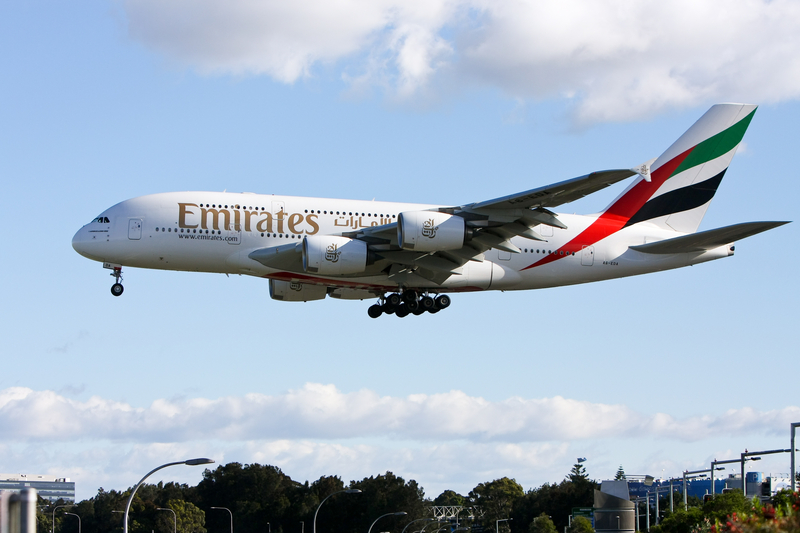
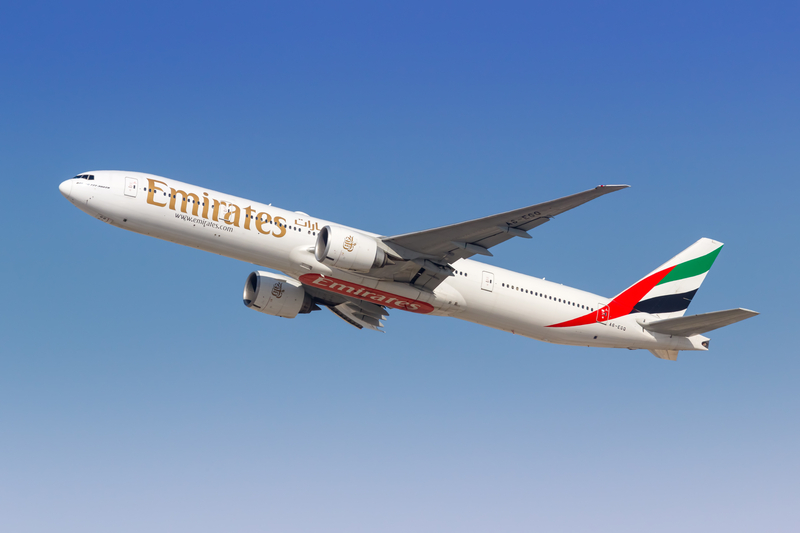
Emirates is extending its premium-economy push into one of its most scrutinized long-haul markets: New York. Beginning April 1, 2026, the Dubai-based carrier will start operating select Dubai (DXB)–New York (JFK) flights with its four-class retrofitted Airbus A380, introducing Premium Economy on the route for the first time on the superjumbo. The move ramps quickly—what starts as a limited weekly pattern becomes daily by June 1, right as the North Atlantic market enters peak summer mode.

For Emirates, this isn’t a cosmetic cabin tweak. JFK is a yield-heavy arena where product differentiation matters, and the A380 is the airline’s flagship stage. Putting the refurbished, four-cabin A380 on a core DXB–JFK pairing signals confidence that New York can consistently support not just First and Business, but also the increasingly lucrative “in-between” cabin where travelers pay for space, service, and a step-change in comfort without stepping up to lie-flat.
The operational change at JFK: EK201/202 goes 4x weekly, then daily
Emirates has confirmed that flight pair EK201/202 between DXB and JFK will be the first New York service to receive the retrofitted four-class A380.
Read our stories in your inbox
Two aviation newsletters. Zero fluff.
-
From April 1, 2026: the upgraded A380 operates four times weekly on Mondays, Wednesdays, Fridays, and Saturdays.
-
From June 1, 2026: the premium-economy A380 increases to daily operation.
In practice, the daily upgrade matters as much as the product itself. Premium Economy sells best when corporate travel managers and frequent flyers can depend on it. A four-times-weekly pattern is exciting; a daily pattern is commercially reliable—especially for a market like New York where travelers often choose flights around meeting windows and same-week itinerary changes.
Why Emirates is leaning into Premium Economy now
Premium Economy has evolved into one of the most powerful revenue levers in long-haul aviation. It’s frequently the cabin with the widest “willingness-to-pay” range: leisure travelers buy it for comfort, business travelers buy it when corporate policy won’t cover Business, and many premium flyers buy it when upgrade inventory is tight.
Emirates spent years operating without this cabin while many competitors quietly built it into their long-haul strategy. The airline’s Premium Economy introduction—highly visible and aggressively rolled out—has been a calculated correction. Moving it onto the A380 for JFK is a high-profile step because the A380 is where Emirates’ brand promise is most tangible: big-cabin ambience, premium service choreography, and a clear hierarchy between Economy, Premium Economy, Business, and First.
Inside Emirates’ A380 Premium Economy: 56 seats, 2-4-2, and real space gains
On Emirates’ A380s configured with Premium Economy, the cabin consists of 56 seats in an eight-abreast 2-4-2 layout, positioned at the front of the lower deck. That location is not accidental: it creates a quieter, more “premium” boarding and service zone, while also separating the cabin from the densest portions of Economy.
The hard-product geometry is where Premium Economy earns its keep:
-
Seat pitch: 40 inches
-
Seat width: 19.5 inches
-
Recline: 8 inches
-
Screen: 13.3-inch HD seatback display
Compared with the typical long-haul economy experience (where pitch and personal space vary by airline and configuration), Emirates’ Premium Economy is designed to feel like a meaningful reset—more knee room, more shoulder room, and a calmer cabin rhythm. The seats also incorporate cushioned leg rests that make the recline function feel more like lounging than simply leaning back.
This is exactly the kind of product that performs well on a transatlantic-length mission like DXB–JFK, where the flight is long enough for comfort to become a purchasing decision—but still short enough that many travelers won’t justify the full Business Class fare.
The A380 context: why this cabin mix matters on the world’s largest airliner
The Airbus A380 isn’t just “big.” It’s big in a way that changes airline economics and cabin strategy. Its size allows Emirates to carry multiple premium cabins without the same per-seat cost penalty that smaller widebodies can face when carving out premium real estate.
That’s why a four-class A380 (First, Business, Premium Economy, Economy) is such a powerful tool: it lets Emirates segment demand far more precisely. JFK is an ideal test bed for that segmentation because it combines:
-
strong corporate and premium-leisure demand,
-
high competition across alliances and independents,
-
and travelers who are unusually product-aware.
The four-class retrofit also isn’t the only A380 story unfolding inside Emirates’ program. The airline has said it will soon complete the refurbishment of its first high-density two-class A380, converting it into a three-class layout. That program is designed to take aircraft that were originally optimized for volume and re-balance them toward higher-yield cabins—an increasingly common theme as airlines chase revenue quality over raw capacity.
A broader rollout strategy—New York is the headline, not the whole plan
JFK is the most eye-catching North American move, but it sits within a wider network plan that places Premium Economy-equipped aircraft on routes where the airline sees sustainable demand and pricing power.
In Europe, Emirates is also upgrading select services with Premium Economy on flagship aircraft—an approach that helps the airline normalize the product across regions rather than treating it as a niche offering. The endgame is consistency: if Premium Economy becomes something customers expect to find across Emirates’ long-haul network, it becomes easier to sell, easier to price, and easier to defend against competitors.
Bottom Line
Starting April 1, 2026, Emirates will introduce its four-class retrofitted Airbus A380—including Premium Economy—to New York JFK (JFK) on the DXB–JFK pairing EK201/202, operating four times weekly before moving to daily service on June 1. The cabin itself is built to be a true step up: 56 Premium Economy seats in a 2-4-2 layout with 40 inches of pitch, 19.5 inches of width, and a 13.3-inch screen, positioned at the front of the A380’s lower deck. For Emirates, placing that product into JFK is a clear premium-market statement—one that turns “Premium Economy rollout” from a talking point into a dependable, daily offering in one of the world’s most competitive long-haul arenas.
Keep reading FlyMag
Get the Daily Brief in the morning or the Route Watch weekly recap on Fridays. Or both.
Share this story
Composed for each network — click to share, or copy the composed text for your own timing.