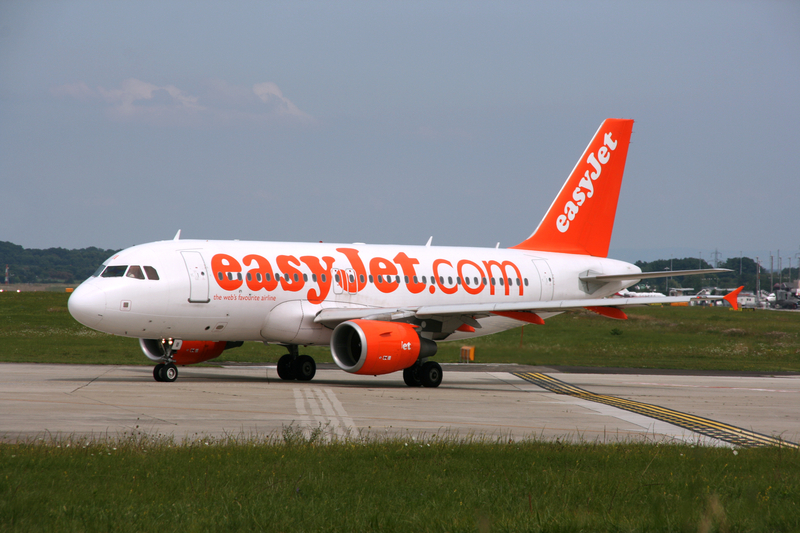
easyJet has done more than open another operational outstation. By basing aircraft at Marrakech Menara Airport (RAK), the carrier has created its first base in Africa and, in the process, turned Morocco into one of the clearest growth stories in its short-haul network.

That matters because this is not a symbolic move. The new Marrakech base is built around three based aircraft, is expected to create around 100 direct jobs alongside thousands of indirect roles, and gives easyJet the scale to offer roughly 4 million seats in the first year of operation. For a low-cost carrier, that is the difference between serving a destination and building a platform.
Marrakech is no longer just a destination. It is now a base.
That distinction is the real aviation story here. Airlines can fly into a popular leisure market for years without meaningfully changing their position in it. A base is different. A base means overnighting aircraft, building schedules around local demand, adding early and late wave connectivity, and turning a city into part of the airline’s operating structure rather than just another point on the map.
Read our stories in your inbox
Two aviation newsletters. Zero fluff.
At Marrakech Menara Airport (RAK), that gives easyJet a more durable role in one of North Africa’s strongest leisure markets. It also strengthens the airline’s hand in a city where it already holds a significant position. easyJet has described itself as the number two airline in Marrakech, and the base opening suggests it now wants that status to be backed by more year-round depth rather than by seasonal volume alone.
As with the rest of easyJet’s network, the operation sits within the airline’s all-Airbus A320-family model. That matters because it keeps the Marrakech base aligned with easyJet’s core low-cost structure: common fleet, high-utilization narrowbodies, and a schedule that can flex between city-break demand, leisure traffic, and package-holiday flying without introducing unnecessary fleet complexity.
The route map shows a broader Morocco strategy
The six new routes announced alongside the base opening make that strategy clearer.
For winter 2026/27, easyJet is adding Prague Airport (PRG) to Marrakech Menara Airport (RAK), Newcastle International Airport (NCL) to Marrakech (RAK), and Zurich Airport (ZRH) to Marrakech (RAK). It is also widening the Morocco network beyond Marrakech itself, with Nantes Atlantique Airport (NTE) to Essaouira Mogador Airport (ESU), Bordeaux-Mérignac Airport (BOD) to Agadir Al Massira Airport (AGA), and Birmingham Airport (BHX) to Agadir (AGA).
That matters because this is not just a Marrakech story. It is a Morocco story. easyJet is using the new base to deepen service at RAK, but it is also using the momentum of that base to broaden the country network around Agadir (AGA) and Essaouira (ESU). In effect, the airline is moving from a single-marquee-destination approach to a more layered Moroccan portfolio.
The year-round extensions underline the same point. Routes from Marrakech (RAK) to Lille Airport (LIL), Strasbourg Airport (SXB), and Hamburg Airport (HAM) will now continue through the winter rather than remaining seasonal. That is a strong signal that easyJet sees enough depth in demand to make Morocco less dependent on peak-season spikes.
This is also a tourism and packaging play
The partnership with the Moroccan National Tourist Office is important, but the bigger commercial angle is what it does for easyJet holidays.
Morocco has become one of the faster-growing package-holiday markets for the group, and Marrakech (RAK) is central to that proposition. easyJet holidays now sells a wide range of accommodation in the city, including higher-end inventory aimed at travelers who want more than a low-cost seat and a hotel transfer. That makes the base commercially more valuable than a pure airline expansion. It gives easyJet a stronger way to sell the destination, not just serve it.
For airline professionals, that is a crucial distinction. The most resilient leisure routes are increasingly the ones where the airline also controls more of the holiday product. That does not just improve margins. It also helps stabilize demand across the shoulder seasons, which is exactly what year-round growth at Marrakech Menara Airport (RAK) appears designed to do.
Morocco is becoming a more structural market for easyJet
easyJet has now carried more than 20 million passengers to and from Morocco since launching operations there in 2006. It serves five airports in the country: Marrakech Menara Airport (RAK), Agadir Al Massira Airport (AGA), Rabat-Salé Airport (RBA), Essaouira Mogador Airport (ESU), and Tangier Ibn Battouta Airport (TNG).
Those numbers matter because they show this base opening did not come out of nowhere. easyJet is not experimenting with Morocco. It is doubling down on a market it already knows well. The difference now is that the airline is giving the country more structural importance inside the network.
That is what makes the base strategically significant. It tightens easyJet’s European access to Morocco, strengthens its holiday proposition, and gives the carrier a permanent African operating foothold without forcing it outside the Airbus A320-family model that underpins its economics.
Bottom Line
easyJet’s Marrakech Menara Airport (RAK) base is more than a milestone because it is the airline’s first in Africa. It is important because it shows how the carrier now views Morocco: not simply as a sun destination, but as a scalable, year-round short-haul market with room for deeper network growth.
The three-aircraft base, the six new routes, the year-round extension of existing Marrakech services, and the wider build-out around Agadir Al Massira Airport (AGA) and Essaouira Mogador Airport (ESU) all point in the same direction. easyJet is not just adding capacity to Morocco. It is turning the country into a more permanent pillar of its leisure and holiday strategy.