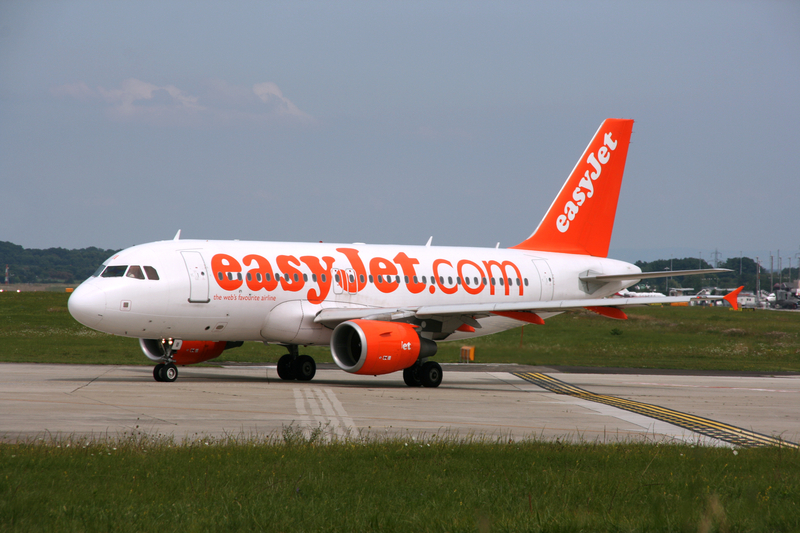
An easyJet flight from London Southend Airport (SEN) to Málaga-Costa del Sol Airport (AGP) became an unusual reminder of how unforgiving takeoff performance can be, after five passengers volunteered to leave the aircraft so the flight could depart safely.

The incident involved easyJet flight EJU7008 on April 11, when the carrier determined that the Airbus A319 operating the route was above the allowable takeoff weight for the conditions at Southend. For many passengers, the announcement would have sounded extraordinary. For airline and airport professionals, though, the logic behind it was straightforward: when runway length, aircraft weight, and weather combine unfavorably, the numbers have to work or the aircraft does not go.
What made the episode stand out was not that the flight crew acted. It was that the solution played out in full view of the cabin.
Read our stories in your inbox
Two aviation newsletters. Zero fluff.
The Problem Was Not That The Aircraft Was “Too Heavy” In Absolute Terms
At first glance, the phrase “too heavy to fly” can sound misleading. The aircraft was not overloaded in some simple sense, nor was it unable to fly as a type. The issue was more precise than that.
The Airbus A319 operating the Southend Airport (SEN) to Málaga Airport (AGP) flight was reportedly above the allowable takeoff weight for the exact conditions at that moment. That distinction matters. Aircraft performance is not based on one fixed maximum figure that works in every situation. Airlines and crews calculate whether an aircraft can depart safely from a specific runway, at a specific airport, in specific wind and weather conditions, with a specific payload and fuel load.
If the computed takeoff performance does not meet the required margins, weight has to come off. That can mean less fuel, less cargo, fewer bags, or fewer passengers. On this occasion, the quickest operational solution was to reduce the passenger load.
Southend’s Runway Is A Key Part Of The Story
London Southend Airport (SEN) has a single runway measuring 1,856 meters, or just over 6,000 feet. That is perfectly usable for commercial narrowbody operations, but it does not offer the same performance margin as longer runways at larger airports such as London Gatwick Airport (LGW), London Stansted Airport (STN), or Manchester Airport (MAN).
That matters because shorter runways narrow the margin available for aircraft acceleration, decision speed, and safe liftoff. Add unfavorable weather or wind conditions, and the permitted takeoff weight can fall quickly.
easyJet said the issue was driven by the weather conditions and the short runway at SEN. That explanation is entirely plausible from an operational standpoint. A runway that is adequate on one day can become more restrictive on another depending on temperature, wind, runway condition, and the required performance calculations for that particular departure.

In other words, the airport did not suddenly become unsuitable for an A319. The departure simply became more performance-limited than the aircraft’s payload allowed.
Why An Airbus A319 Is More Sensitive In This Situation Than People Might Think
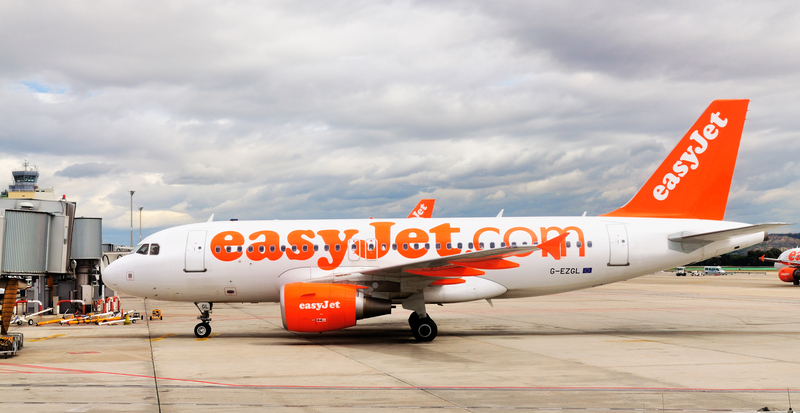
The aircraft involved was an Airbus A319, one of the smaller members of the A320 family and a type long used by easyJet across Europe. In easyJet’s configuration, the A319 typically seats 156 passengers, giving the airline a flexible narrowbody for thinner short-haul markets and airports with less demand than core A320 routes.
From a performance standpoint, the A319 can be well suited to shorter runways compared with larger narrowbodies, but that does not make it immune to payload limits. Every aircraft has a certified maximum takeoff weight, yet the operative number on any given departure is often the lower of several limits, including runway performance, obstacle clearance, and environmental conditions.
That is why an aircraft can legally carry a full load on one sector and need offloads on another, even if the route itself is not especially long. The actual allowable departure weight is always condition-specific.
For a sector such as Southend Airport (SEN) to Málaga Airport (AGP), the A319 is ordinarily a routine aircraft choice. But if the weather or wind reduces the available performance margin, the numbers can tighten very quickly.
The Crew’s Decision Was A Textbook Safety Call
According to passenger accounts, the captain presented the cabin with a stark choice: volunteers would need to leave, baggage would need to be removed, or the flight would not depart.
To passengers, that may have sounded abrupt. Operationally, it was the correct approach.
Once the takeoff performance calculation shows the aircraft cannot depart within limits, there is no gray zone. The crew cannot “try it and see,” and the airline cannot wave the problem through because the route is short or the delay is inconvenient. Commercial aviation is built on hard limits in exactly these situations.
easyJet later said five passengers volunteered to travel on alternative flights, allowing the aircraft to depart. Reports from those onboard suggest the volunteers were applauded by the remaining passengers, which is understandable. Their decision effectively resolved the performance issue without turning the event into a cancellation or a much longer ground delay.
That may have felt dramatic in the cabin, but from a safety perspective it was a disciplined and entirely normal result once the limitation was identified.
Why Empty Seats Do Not Automatically Solve The Issue
One passenger reportedly noted that there were already empty seats on board. To many travelers, that might sound like proof that the weight issue made no sense.
In reality, empty seats do not tell the whole story.
Takeoff weight is the sum of everything onboard: passengers, checked baggage, cabin baggage assumptions, cargo, fuel, operational items, and the aircraft itself. It is possible for a flight to have open seats and still exceed the allowable performance weight for departure from a given runway. The determining factor is not whether every seat is occupied. It is whether the aircraft’s total takeoff mass is within the permitted limit for the conditions.
This is also why the crew’s options reportedly included leaving baggage behind. Removing bags can be just as operationally effective as removing passengers, and sometimes more so. But baggage offloads create their own handling challenges, especially on a live departure where time, reconciliation, and onward service recovery all matter.
In this case, getting volunteers off the aircraft appears to have been the cleanest path to an immediate departure.
The Delay Was Short, But The Performance Lesson Was Real
Despite the disruption, the flight did eventually depart for Málaga Airport (AGP) with only a modest delay. Reports indicate the aircraft left around 12 minutes behind schedule, which is actually a strong recovery given the nature of the problem.
That short delay is worth noting because it shows the issue was not operational chaos. It was a narrowly defined performance restriction that the airline solved quickly once enough weight was removed.
For aviation readers, that is the most interesting part of the story. The event was unusual from a passenger-experience standpoint, but not from a flight operations standpoint. Airlines deal with weight restrictions all the time, especially at airports with shorter runways or performance-sensitive conditions. What is rare is for the resolution to be so visible and memorable to the passengers onboard.
easyJet’s Handling Was Commercially Practical As Well
easyJet said the five volunteers were provided transport and rebooked on a later same-day service to Málaga Airport (AGP) from London Gatwick Airport (LGW), free of charge. The airline also said it had been in contact with them regarding compensation in line with applicable regulations.
That is consistent with how carriers generally try to handle voluntary offloads in these situations. Once passengers agree to give up their seats so the flight can operate within limits, the airline’s job becomes one of rapid service recovery. Reaccommodation, ground transport, and compensation are part of containing what could otherwise become a much more damaging customer-service issue.
From the airline’s perspective, the priority is to preserve safety first, then minimize network disruption, and then protect the customer relationship. On this occasion, it appears easyJet managed to do all three without allowing the event to spiral into a cancellation.
This Was Unusual, But Not Without Precedent
Reports around the incident noted that a similar situation had occurred on the same Southend Airport (SEN) to Málaga Airport (AGP) route in the past. That is not especially surprising.
Routes from shorter-runway airports can be more exposed to these issues than passengers realize, especially when combined with full loads, seasonal leisure baggage, or weather-related performance penalties. While most such restrictions are managed behind the scenes through payload planning, fuel adjustments, or pre-departure controls, occasionally they reach the point where customer-visible offloads become necessary.
That does not indicate poor safety management. In many ways, it indicates the opposite. It shows the system worked as intended, with the flight crew and airline refusing to depart until the aircraft was inside the required performance envelope.
Bottom Line
The easyJet incident at London Southend Airport (SEN) was not a case of an Airbus A319 being generically “too heavy to fly.” It was a case of the aircraft being above the allowable takeoff weight for the weather conditions and runway performance limits on that specific departure to Málaga Airport (AGP).
Five passengers volunteered to leave, the flight departed shortly afterward, and easyJet rebooked the affected travelers later the same day from London Gatwick Airport (LGW). For passengers, it was an unusual and memorable delay. For aviation professionals, it was a classic example of performance-limited operations: the numbers did not work, so the airline reduced weight and flew only when they did.
Keep reading FlyMag
Get the Daily Brief in the morning or the Route Watch weekly recap on Fridays. Or both.