For a brief period, Orlando International Airport (MCO) stood out as the one gap in Emirates’ U.S. network.

That made the route unusual. Even as Middle East disruption forced schedule changes and temporary reductions across parts of the network, Dubai-based Emirates kept flying to the vast majority of its U.S. destinations. Orlando was the exception. But that is no longer the case. The Dubai International Airport (DXB)–Orlando (MCO) service has now returned, first at five weekly flights and then rising to six weekly from May.
So the more accurate story is not that Orlando is still suspended. It is that Orlando was the last U.S. route to come back.
Read our stories in your inbox
Two aviation newsletters. Zero fluff.
Why Orlando Was The Weakest Link
If any U.S. market was likely to be temporarily trimmed in a disrupted operating environment, Orlando was always the most obvious candidate.

Compared with Emirates’ other U.S. destinations, Orlando (MCO) is more leisure-heavy, less corporate, and more dependent on connecting traffic over Dubai. That does not make it unimportant, but it does make it easier to suspend temporarily when the airline is trying to protect the strongest and most strategically critical parts of the network.
That logic appears to fit the numbers. Orlando was the smallest of Emirates’ U.S. markets last year, which helps explain why it became the one service most exposed when the airline had to operate more selectively.
The Route Is Coming Back Stronger Than Before
The important change is that Orlando is not merely returning — it is returning with more frequency than it had before the recent disruption.
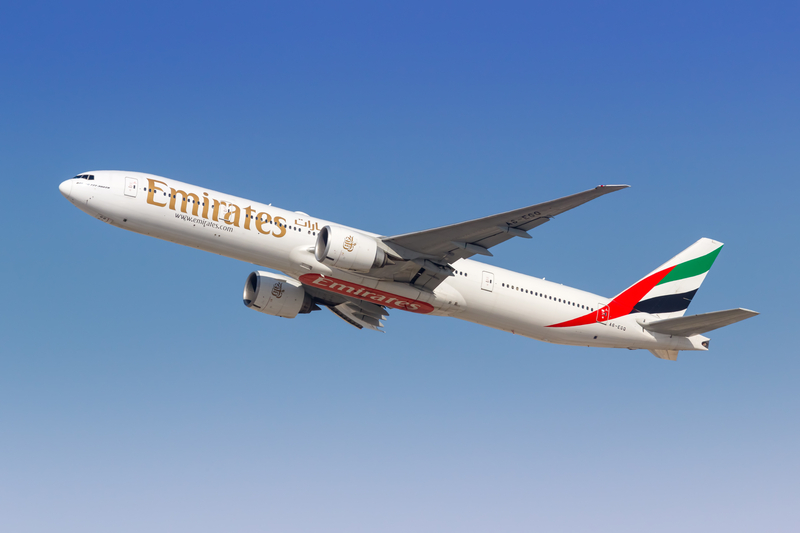
Emirates is restoring the route at five weekly flights in late March and then increasing it to six weekly from May 7, using the Boeing 777-300ER. That means Orlando will operate on every day except Sunday.

That is a meaningful signal.
Airlines do not usually bring back a route at a higher frequency unless they still see solid demand and strategic value in the market. So while Orlando may have been the weakest link in Emirates’ U.S. network, it is clearly not a marginal one the airline wants to abandon.
Orlando Works Because Dubai Is The Real Destination For Many Travelers
The Orlando route only makes full sense when viewed through Dubai International Airport (DXB) as a transfer hub rather than as a local Dubai–Florida market.
A very large share of passengers traveling between DXB and MCO connect onward in Dubai, especially to destinations in India and the broader South Asia and Southeast Asia regions. That is what turns a seemingly unusual route into a viable one. Emirates is not relying only on demand between Central Florida and the United Arab Emirates. It is using Orlando as a spoke feeding a much wider network.
That is the same logic that underpins much of Emirates’ U.S. operation. Orlando simply leans even more heavily on it than some of the airline’s larger North American stations.
Why Orlando Matters More Than It First Appears
At first glance, Orlando (MCO) can look like an outlier in Emirates’ network.
It is a major leisure destination, yes, but not an obvious Middle East corporate market in the way New York JFK (JFK), Washington Dulles (IAD), or Chicago O’Hare (ORD) are. But the route does offer something valuable: a strong Florida gateway, access to the southeastern U.S. leisure market, and a nonstop option no other Middle Eastern airline currently matches at Orlando.
That matters because network value is not always about prestige or corporate density. Sometimes it is about unique positioning.
The Aircraft Choice Fits The Market
Emirates continues to use the Boeing 777-300ER on Orlando, which is the right fit.
The route does not appear to need A380-scale capacity, but it is still large enough and long enough to justify a true long-haul widebody with meaningful premium and cargo capability. The 777-300ER gives Emirates a strong balance of range, seat count, and cargo volume without oversizing the market.
That tells you the airline still sees Orlando as substantial enough to support a serious long-haul operation, just not one requiring its flagship double-decker.
The Bigger Story Is Network Resilience
The Orlando resumption also says something broader about Emirates’ network recovery.
During the latest period of regional disruption, the airline had to manage reduced schedules and selective suspensions. The fact that Orlando was the last U.S. route to return shows both how resilient the overall U.S. network remained and how deliberately Emirates prioritized its restoration.
In other words, this was not a wholesale retreat from the United States. It was a targeted adjustment in which Orlando, as the smallest and most leisure-weighted market, was the most vulnerable short-term casualty.
Now that it is back, the message is clear: the U.S. network is effectively whole again.
Bottom Line
Orlando International Airport (MCO) was briefly Emirates’ only suspended U.S. destination, but that is no longer the case.
The Dubai (DXB)–Orlando route has resumed and is set to increase to six weekly Boeing 777-300ER flights from May 7. That makes Orlando the last U.S. route to return, not the only one still absent.
For aviation readers, the key point is that Emirates never really pulled back broadly from the United States. It temporarily sidelined its most vulnerable U.S. market, then restored it once conditions allowed. In that sense, Orlando was the outlier — but only for a while.
Keep reading FlyMag
Get the Daily Brief in the morning or the Route Watch weekly recap on Fridays. Or both.