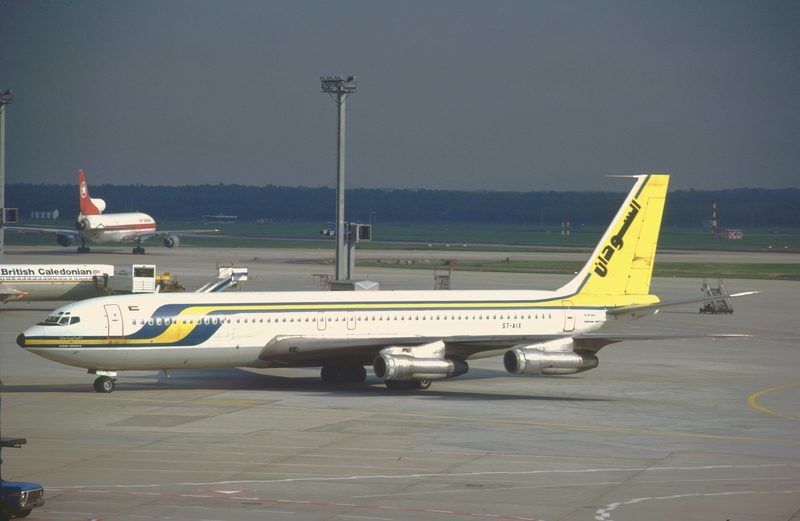
For the first time since Sudan’s war upended aviation in the capital, Khartoum International Airport (KRT) has received a scheduled commercial passenger flight—an operational milestone that goes beyond a single rotation. On Sunday, February 1, 2026, a Sudan Airways (IATA: SD) service operated from Port Sudan New International Airport (PZU) to Khartoum (KRT), carrying dozens of passengers and marking a cautious step toward restoring domestic air links into the country’s political and economic center.

The optics were obvious—an aircraft back on the ramp at KRT—but the operational message mattered more: airport services, air traffic control, and basic passenger handling have reached a level where authorities are willing to restart routine civilian movements, not just one-off missions.
Why the Port Sudan (PZU)–Khartoum (KRT) link is the one that counts
Since the conflict began, Port Sudan (PZU) has functioned as Sudan’s practical aviation lifeline on the Red Sea, handling what Khartoum (KRT) could not. Reopening the domestic trunk between PZU and KRT is the fastest way to reconnect government, commerce, healthcare travel, and onward surface transport inside the country. The stage length is also well suited to narrowbody operations—roughly 355 nautical miles—so a single aircraft can run the sector with a workable block time and still remain flexible for other domestic or regional flying.
Read our stories in your inbox
Two aviation newsletters. Zero fluff.
For airline and airport professionals, this kind of “first route back” is typically the test case: one airport pair, one predictable schedule, one set of ground handlers, one security framework. If it holds, the network can grow.
The aircraft behind the restart: why an Airbus A320 is the practical choice
Sudan Airways’ restart has been closely tied to the serviceability of a single narrowbody—reported locally as an Airbus A320 that returned from maintenance abroad—giving the carrier a realistic tool for short domestic hops and limited regional missions. In a market where fleet depth is thin, dispatch reliability becomes the product: if the aircraft goes tech, the timetable collapses.
From a performance standpoint, the A320 family is a sensible fit for KRT and PZU:
-
Runway compatibility: KRT’s primary runway (18/36) is around 2,980 meters (9,777 feet), which is ample for A320 operations even with temperature and payload considerations.
-
Cabin economics: An A320 can right-size capacity for a restart phase—large enough to move meaningful demand, small enough to avoid flying half-empty widebodies.
-
Maintenance practicality: The global A320 ecosystem (spares, tooling, familiarity) is typically stronger than for niche types—important when an airline is rebuilding capability.
KRT operations in 2026: what “open” really means
A “first scheduled flight” doesn’t automatically mean an airport is back to pre-war rhythm. Think of KRT as operating in a constrained-but-functional mode:
Airfield and approaches: KRT sits in a complex urban and security environment, and its single-runway layout concentrates any disruption—inspection holds, runway closures, or lighting issues—into immediate capacity impacts. Published airport references indicate standard approach aids (including PAPI on the primary runway) and a layout that can support narrowbody passenger service when perimeter security and airside services are stable.
Terminal and ground handling: Even if runway and ATC are available, passenger processing is the pacing item. Security screening, baggage systems, staffing, and landside access determine whether KRT can scale beyond “a few flights per day.” Officials have suggested an initial operating tempo that may be limited to a handful of daily movements—enough to restart connectivity, not enough to resemble a full hub bank.
Risk management: Airlines typically reintroduce service in stages: daylight-only operations, reduced frequencies, conservative turnaround times, and heightened contingency planning. In practical terms, that means more spare time in the schedule, more emphasis on MEL discipline, and fewer “tight” rotations that assume everything runs perfectly.
What this could mean for Sudan Airways’ next steps
For Sudan Airways, the PZU–KRT return is both a capability statement and a stress test. If the operation holds—consistent handling, stable security posture, predictable ATC—then the airline can start rebuilding network credibility with additional domestic links and limited regional flying. If it doesn’t, the carrier risks burning consumer confidence quickly in a market where rebooking options are limited.
Expect the near-term playbook to look familiar to anyone who has watched post-disruption aviation recover elsewhere:
-
Consolidate around one reliable trunk (PZU–KRT) before expanding.
-
Add frequency only after dispatch metrics stabilize (completion factor and on-time performance matter more than headline routes).
-
Protect the maintenance program—because a single-aircraft operation has no margin for deferred reliability.
Bottom Line
The first scheduled Sudan Airways flight back into Khartoum International Airport (KRT) from Port Sudan (PZU) is a meaningful operational restart—not because one aircraft landed, but because it signals a controlled attempt to re-establish routine commercial aviation in the capital. For aviation professionals, the story to watch now is reliability: whether Sudan Airways can sustain repeatable operations with limited fleet depth, and whether KRT can scale from “symbolic reopening” to dependable domestic connectivity.
Keep reading FlyMag
Get the Daily Brief in the morning or the Route Watch weekly recap on Fridays. Or both.