Alaska Airlines is expanding its winter Hawaii network with two unusually long Boeing 737 routes linking Daniel K. Inouye International Airport in Honolulu (HNL) with Boise, Idaho, and Spokane, Washington.

Daily nonstop service between Boise Airport (BOI) and Honolulu (HNL) will begin December 17, 2026. Alaska will follow two days later with a once-weekly Saturday flight between Spokane International Airport (GEG) and Honolulu (HNL).
Both routes are seasonal. Boise-Honolulu will operate through March 21, 2027, while Spokane-Honolulu will continue through April 17. Alaska will be the only airline offering nonstop service between Hawaii and either airport during the operating period.
Read our stories in your inbox
Two aviation newsletters. Zero fluff.
The Boise route is particularly noteworthy because Alaska is launching it with daily service rather than gradually testing the market with one or two weekly flights. Spokane, despite generating a remarkably similar amount of Hawaii traffic, will receive a much more cautious Saturday-only schedule.
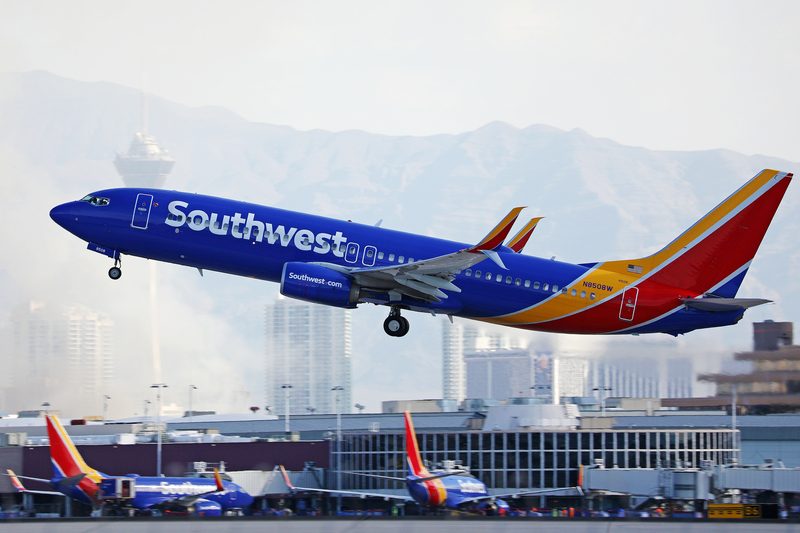
Full Alaska Airlines Boise and Spokane Hawaii Schedule
Alaska has published the following schedule for the two routes. All times are local.
| Route | Operating dates | Departure | Arrival | Frequency | Scheduled aircraft |
|---|---|---|---|---|---|
| Boise (BOI)-Honolulu (HNL) | Dec. 17-March 21 | 10:20 a.m. | 2:20 p.m. | Daily | Boeing 737 MAX |
| Honolulu (HNL)-Boise (BOI) | Dec. 17-March 21 | 12:42 p.m. | 9:45 p.m. | Daily | Boeing 737 MAX |
| Spokane (GEG)-Honolulu (HNL) | Dec. 19-April 17 | 9:00 a.m. | 2:03 p.m. | Saturdays | Boeing 737 MAX |
| Honolulu (HNL)-Spokane (GEG) | Dec. 19-April 17 | 2:33 p.m. | 10:42 p.m. | Saturdays | Boeing 737 MAX |
Alaska says departure and arrival times may be adjusted slightly during selected periods in early 2027. Passengers should therefore verify the schedule when booking and again before departure.
The timing also shows that the flights will not operate as simple same-aircraft round trips.
The Honolulu-Boise flight leaves Hawaii before that day’s Boise-Honolulu aircraft arrives. The Spokane flight has only 30 minutes between the scheduled inbound arrival and outbound departure, which is not sufficient for a normal aircraft turnaround.

Alaska will instead integrate the routes into its larger Honolulu operation, with aircraft arriving from or continuing to other destinations within the combined Alaska and Hawaiian Airlines network.
Boise Receives a Surprisingly Aggressive Daily Schedule
The nonstop flight between Boise Airport (BOI) and Honolulu (HNL) will cover approximately 2,464 nautical miles each way.
Alaska has scheduled exactly seven hours for the westbound journey, with the aircraft departing Boise (BOI) at 10:20 a.m. and arriving in Honolulu (HNL) at 2:20 p.m. Hawaii time.
The return flight is considerably shorter. It leaves Honolulu at 12:42 p.m. and reaches Boise at 9:45 p.m., producing a scheduled block time of six hours and three minutes.

The difference is primarily caused by prevailing winds. Aircraft flying west toward Hawaii frequently encounter stronger headwinds, while the eastbound return benefits from more favorable upper-level winds. Block time also includes taxiing at both airports and therefore exceeds the actual time spent airborne.
Launching the route daily is a substantial commitment for a market without recent nonstop service.
From December 17 through March 21, Alaska is scheduled to operate approximately 95 departures in each direction. Depending on whether the airline assigns a 159-, 161-, or 178-seat Boeing 737 MAX configuration, the seasonal operation could provide roughly 30,000 to 34,000 total seat positions between Boise and Honolulu.
That is far more capacity than would be created by the one- or two-weekly introductory schedules commonly used to test smaller leisure markets.
Honolulu Was Boise’s Fourth-Largest Unserved Market
A Department of Transportation-based market analysis cited in the original route report estimated that approximately 41,045 round-trip passengers traveled between Boise (BOI) and Honolulu (HNL) during the 12 months ending in March 2026.
That equates to more than 110 passengers per day across both directions, even though every traveler had to make at least one connection.
Honolulu was reportedly Boise’s fourth-largest domestic market without nonstop service, behind Orlando International Airport (MCO), Austin-Bergstrom International Airport (AUS), and Nashville International Airport (BNA). Alaska already carried approximately 34% of Boise-Honolulu passengers, primarily through Seattle-Tacoma International Airport (SEA) and Portland International Airport (PDX).
Alaska will not rely only on passengers whose final destination is Oahu.
The wider Boise-Hawaii market generated an estimated 119,955 round-trip passengers during the same period. That included approximately 32,900 passengers traveling between Boise and Kahului Airport (OGG) on Maui, 23,200 traveling to Lihue Airport (LIH) on Kauai, and 21,700 traveling to Ellison Onizuka Kona International Airport (KOA) on the Island of Hawaii.
Alaska has specifically said that a significant portion of travelers from Boise and Spokane continue beyond Honolulu to other Hawaiian islands. That makes Honolulu (HNL) more valuable than a purely local Oahu route because each flight can combine passengers traveling to several island destinations.
Spokane Will Receive a Much More Cautious Launch
The Spokane-Honolulu route is slightly longer than the Boise service, covering approximately 2,503 nautical miles each way.
Alaska has scheduled seven hours and three minutes for the westbound flight from Spokane International Airport (GEG) to Honolulu (HNL). The return journey is scheduled for six hours and nine minutes.
Despite being only three minutes longer than Boise-Honolulu in the westbound direction, Spokane will receive just one weekly flight.
The service will operate on Saturdays from December 19 through April 17, producing approximately 18 round trips over the full season.
Depending on the final Boeing 737 MAX version assigned, that would provide approximately 5,700 to 6,400 total seat positions in both directions—less than one-fifth of the seasonal capacity Alaska plans to offer between Boise and Honolulu.
The difference is striking because the underlying market sizes appear remarkably similar.
Spokane Generated Almost the Same Honolulu Demand as Boise
A DOT-based analysis estimated that approximately 41,234 round-trip passengers traveled between Spokane (GEG) and Honolulu (HNL) during the 12 months ending in March 2026.
That is only 189 more passengers than the estimated Boise-Honolulu market.
Honolulu was reportedly Spokane’s fourth-largest unserved market, behind Orlando (MCO), Ontario International Airport (ONT), and Nashville (BNA). Alaska already carried approximately 39% of the indirect Spokane-Honolulu traffic, giving it a slightly stronger share than it held from Boise.
The total Spokane-Hawaii market was estimated at approximately 116,552 round-trip passengers—again, only slightly below Boise’s total.
The similar passenger figures make Alaska’s capacity decisions particularly interesting. Boise will receive seven weekly flights, while Spokane will receive one.
Several considerations could explain the disparity.
Alaska has a broader and increasingly important operation at Boise (BOI), where it serves destinations throughout the Pacific Northwest, California, and the Mountain West. The airline may expect the Honolulu flight to attract passengers from communities beyond Boise itself or believe that the local market will respond more strongly to daily service.
The carrier may also have identified stronger premium demand, higher expected fares, larger vacation-package volumes, or more attractive aircraft utilization from Boise.
Spokane’s weekly service appears closer to a conventional market test. Alaska can establish the nonstop, measure passenger behavior, and determine whether additional frequencies are justified without immediately committing daily capacity.
Both Routes Are Officially Scheduled With the Boeing 737 MAX
The original report lists the Boeing 737 MAX 8 for Boise and the older Boeing 737-900ER for Spokane.
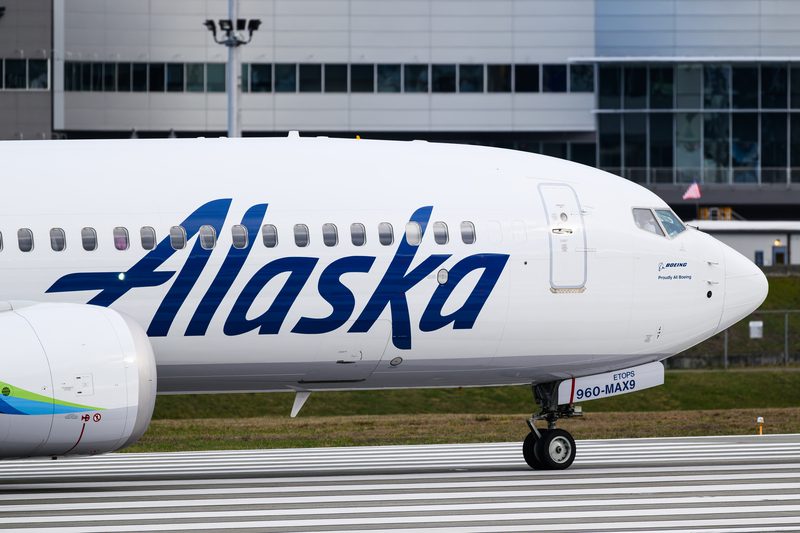
Alaska’s official announcement says something different: both routes will be operated by Alaska Airlines-branded Boeing 737 MAX aircraft. The airline did not identify whether every flight will use the smaller 737-8 or the larger 737-9.
That distinction matters because the two MAX variants have different seating capacities and range characteristics.
As of June 2026, Alaska’s mainline fleet included 19 Boeing 737-8s and 80 Boeing 737-9s. The airline also continued operating 79 Boeing 737-900ERs, but that aircraft is part of the previous-generation 737 Next Generation family rather than the MAX series.
| Alaska aircraft | Typical seats | First Class | Premium Class | Main Cabin |
| Boeing 737-8 MAX | 159 or 161 | 12 or 16 | 36 | 109 or 111 |
| Boeing 737-9 MAX | 178 | 16 | 42 | 120 |
| Boeing 737-900ER | 178 | 16 | 42 | 120 |
Individual booking displays may show a particular aircraft subtype, but assignments almost five months before launch can change for scheduling, maintenance, or fleet-planning reasons.
The safest description is therefore that Alaska plans to use the Boeing 737 MAX family, with the exact version subject to the final operating schedule.
The 737-8 Is Particularly Well Suited to Long, Thin Routes
If Alaska uses the Boeing 737-8, the aircraft would provide an effective balance of range and capacity for both routes.
Alaska publishes a range of approximately 3,500 nautical miles for the type, comfortably exceeding the direct distance from Boise or Spokane to Honolulu. The aircraft has a typical cruise speed of approximately 530 mph and a maximum cruising altitude of 41,000 feet.
The 737-8 is approximately nine feet shorter than the 737-9 and carries fewer passengers, but it provides greater range and requires fewer seats to be filled on a new route.
That can be especially valuable from Spokane, where Alaska is introducing only one weekly flight. A 159- or 161-seat aircraft gives the carrier more opportunity to achieve strong load factors than the 178-seat 737-9.
The larger 737-9 may still make sense during holiday peaks or periods of especially strong demand. Alaska can adjust the variant without introducing a new aircraft family or retraining pilots.
Both MAX versions are powered by CFM International LEAP-1B engines and use Boeing’s Advanced Technology winglets. Those features improve fuel efficiency and range compared with earlier 737 generations, helping make seven-hour narrowbody flights commercially practical.
A Seven-Hour Block Time Does Not Make These Ultra-Long-Haul Flights
The outbound schedules exceed seven hours, but neither route is considered ultra-long-haul by normal airline-industry standards.
The distance is comparable to many transcontinental and shorter transatlantic routes. The unusually long westbound block time is created by headwinds, oceanic routing, taxi time, and the need to build enough schedule reliability into a flight with limited diversion options.
The routes are nevertheless demanding for a single-aisle aircraft.
Passengers will spend most of the operating day aboard a Boeing 737 cabin rather than a widebody with multiple aisles, larger galleys, and greater freedom of movement. Alaska must also carry sufficient food, beverages, potable water, and onboard supplies for a flight lasting as long as some services between the East Coast and Western Europe.
The airplane must carry additional contingency and diversion fuel because the central Pacific provides few alternate airports. Weather or runway problems at Honolulu (HNL) can create significantly greater complications than they would on a continental route surrounded by numerous diversion choices.
Hawaii Flights Require Extended-Range Operating Approval
Flights between the continental United States and Hawaii operate through large areas where a suitable diversion airport may be more than one hour away.
Twin-engine aircraft such as the Boeing 737 must therefore comply with extended-range operating requirements generally known as ETOPS.
ETOPS approval covers more than the aircraft’s theoretical ability to continue flying after an engine shutdown. It includes engine reliability, maintenance procedures, dispatch planning, crew training, fire-suppression capability, communication equipment, weather requirements, and the availability of diversion airports.
The FAA’s Central East Pacific operating framework governs the organized route system used by aircraft traveling between Hawaii and the North American mainland. Operators require appropriate navigation and operational approvals to use the airspace.
Alaska has decades of experience operating Boeing 737s between the West Coast and Hawaii. The Boise and Spokane flights are therefore not technically experimental, even though they will be among the airline’s longer mainland-Hawaii routes.
The new element is the market—not Alaska’s ability to operate a 737 safely across the Pacific.
Honolulu’s Hub Role Strengthens Both Routes
Alaska’s acquisition and operational integration of Hawaiian Airlines has changed the value of Honolulu within the wider network.
Honolulu (HNL) is no longer simply an Alaska destination at the end of a mainland route. It is a major group hub with frequent flights to Maui, Kauai, the Island of Hawaii, and smaller Neighbor Island markets.
Alaska and Hawaiian collectively operate more than 250 daily flights to, from, and within Hawaii. Their combined network provides nonstop access between the islands and more than 20 domestic and international destinations, along with connections across Alaska’s mainland system.
That connectivity allows Alaska to fill Boise and Spokane flights with several passenger groups:
Travelers vacationing on Oahu, residents visiting the mainland, passengers connecting to Maui, Kauai, Kona, or Hilo, and travelers beginning in smaller Hawaiian communities can all use the same Honolulu flight.
A Boise-Maui passenger, for example, can take the nonstop to Honolulu and connect to Kahului Airport (OGG) rather than traveling through Seattle (SEA), Portland (PDX), Los Angeles (LAX), or another mainland hub.
This connection flow helps explain why Alaska selected Honolulu instead of launching separate lower-frequency routes to individual islands.
Alaska and Hawaiian Are Coordinating the Network as One Operation
The routes are being introduced after Alaska Airlines and Hawaiian Airlines completed major portions of their operational integration.
The FAA granted the carriers a single operating certificate in October 2025, while the two brands continue to be maintained separately. Their passenger-service systems, loyalty programs, and booking experience have also become increasingly integrated under Atmos Rewards.
The new flights will carry the Alaska Airlines brand and use Boeing 737 MAX aircraft rather than Hawaiian-branded Airbus jets.
However, the commercial opportunity depends heavily on Hawaiian’s Honolulu hub and Neighbor Island schedule.
That is a practical example of how Alaska Air Group can use the two brands differently. Alaska can deploy efficient 737s from mainland markets where it has strong recognition, while Hawaiian provides the local island network and a distinct Hawaii-focused passenger experience.
The combined group can also move aircraft and capacity across a broader system than either airline could manage independently.
Allegiant Previously Tried Both Routes With Boeing 757s
Boise and Spokane have not had nonstop Honolulu service since Allegiant Air’s short-lived Hawaii expansion more than a decade ago.
Allegiant launched weekly flights from Spokane (GEG) to Honolulu (HNL) on February 8, 2013, followed by Boise (BOI)-Honolulu one day later. The ultra-low-cost carrier used 223-seat Boeing 757-200s.
The routes were part of a much broader Allegiant experiment involving Hawaii flights from smaller cities across the western United States.
Allegiant’s strategy was conceptually attractive. It could connect communities with no nonstop Hawaii service while avoiding direct competition with larger airlines at major West Coast gateways.
The operation proved difficult to sustain.
The Boeing 757s were relatively large for once-weekly seasonal markets, while Allegiant lacked the connecting network that Alaska now has at Honolulu. The airline also had a small, specialized 757 subfleet that created added training, maintenance, and scheduling complexity.
Allegiant withdrew from most of its smaller West Coast-Honolulu routes as the Hawaii strategy contracted. Boise and Spokane service ended during 2014.
Strong Load Factors Did Not Guarantee Allegiant’s Success
DOT-based figures cited in the original route analysis indicate that Allegiant carried approximately 16,185 round-trip Boise-Honolulu passengers and achieved an 84.7% load factor.
Spokane-Honolulu carried approximately 16,079 passengers and recorded an estimated 82.4% load factor.
Those numbers may appear healthy, but load factor alone does not determine profitability.
Allegiant reportedly collected an average base fare of approximately $155 each way before taxes and optional charges. The airline could generate additional revenue through baggage, seat assignments, food, and other purchases, but the route still had to cover the high trip cost of a 223-seat Boeing 757 flying across the Pacific.
A flight can operate more than 80% full and still lose money if fares are too low or operating costs are too high.
Alaska enters with several advantages Allegiant did not have:
A smaller and more efficient Boeing 737 MAX, a large base of existing customers in Boise and Spokane, a loyalty program, a broad mainland network, and extensive onward connections through Honolulu.
Alaska can also offer daily Boise service, making the route considerably more useful than Allegiant’s weekly operation.
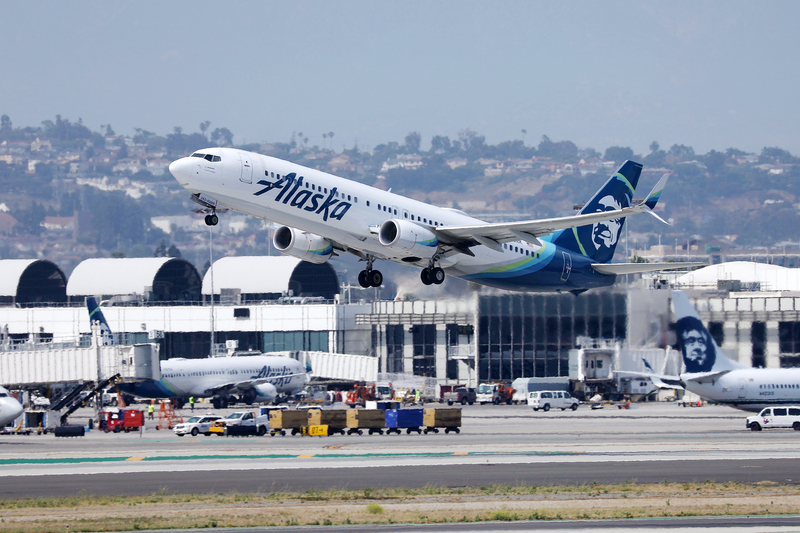
The Boeing 737 MAX Changes the Route Economics
The difference between Allegiant’s Boeing 757 and Alaska’s 737 MAX is central to the new routes.
Allegiant needed to sell seats on a 223-passenger aircraft. Alaska can begin with approximately 159 to 178 seats, reducing the number of passengers required on every departure.
The MAX also belongs to Alaska’s primary aircraft family. Pilots, maintenance personnel, spare parts, and scheduling systems are already integrated across a fleet of more than 250 Boeing 737s.
Allegiant’s 757s were a small subfleet used largely for Hawaii. When those routes weakened, the airline had limited alternative missions for the aircraft.
Alaska can move a MAX from Boise-Honolulu to hundreds of other domestic, international, and Hawaii flights without creating a specialized fleet problem.
The carrier also has far more flexibility to adjust capacity. It can move between the 737-8 and 737-9, reduce frequency after the peak season, or add flights if bookings exceed expectations.
Boise’s Daily Service Is the Larger Commercial Gamble
Of the two routes, Boise-Honolulu carries substantially greater risk.
Alaska is introducing nearly seven times as many weekly flights from Boise as it is from Spokane, even though the estimated local markets are almost identical.
Daily service provides an important competitive advantage. Passengers can choose vacations of almost any length, while tour operators and travel agencies can build more flexible packages.
It also requires Alaska to consistently fill more than 1,100 seats in each direction every week.
The nonstop itself should stimulate demand. Some travelers who previously rejected the journey because of a connection may now choose Hawaii. Others may shift from Maui, Kauai, or Kona to itineraries through Honolulu because the nonstop makes the journey easier.
Price will still matter.
Delta, United, Southwest, and other airlines can offer one-stop Boise-Hawaii itineraries through their own hubs. Alaska may need introductory fares and vacation packages to establish the new service, particularly outside holiday and spring-break peaks.
The carrier’s decision to limit the route to winter and early spring reduces that exposure. Demand for warm-weather vacations is strongest when Idaho is experiencing its coldest months.
Spokane’s Weekly Flight Is a Low-Risk Market Test
The Spokane route represents a much smaller commitment.
A Saturday departure is well suited to traditional seven-night vacations. Travelers can leave Spokane (GEG) on Saturday morning, arrive in Honolulu during the afternoon, and return one or more Saturdays later.
The schedule is less attractive for shorter trips, business travel, and passengers whose vacation dates do not align with the weekly operation.
That limitation may suppress demand, but it also protects Alaska from placing too much capacity into the market.
The carrier can study booking curves, average fares, Neighbor Island connections, premium-cabin demand, vacation-package sales, and the balance between Spokane-originating and Hawaii-originating passengers.
If the Saturday flight performs strongly, Alaska could add a second weekly service during school holidays or expand the route in a future winter season.
If demand is weaker than expected, the airline has committed only 18 seasonal round trips and can redeploy the aircraft elsewhere.
Alaska Is Increasing Its Broader Hawaii Capacity
The Boise and Spokane routes are part of a larger seasonal adjustment across Alaska Air Group’s Hawaii network.
Hawaiian Airlines will add three weekly flights between Honolulu (HNL) and Harry Reid International Airport in Las Vegas (LAS) during peak holiday and spring-break periods, increasing the route from three to four daily flights on selected dates.
At the same time, Hawaiian will not resume its seasonal Honolulu-Auckland Airport (AKL) service because of high fuel costs, weaker international Pacific demand, unfavorable exchange rates, and changing travel patterns.
Alaska says the combined changes will increase seasonal Hawaii capacity by approximately 3% year over year and by as much as 6% during peak holiday periods.
The strategy illustrates how the combined airline is reallocating aircraft toward stronger domestic Hawaii markets rather than restoring every international route previously operated by Hawaiian.
Boise and Spokane offer winter leisure demand, U.S. point-of-sale strength, and the ability to feed passengers into the Neighbor Island network.
Alaska Will Serve Hawaii From Three Washington Airports
The Spokane flight will give Alaska Hawaii service from three airports in Washington state.
The airline already operates extensive Hawaii flying from Seattle-Tacoma International Airport (SEA) and has service from Seattle Paine Field International Airport (PAE) in Everett.
Alaska previously served Hawaii from Bellingham International Airport (BLI), but those flights ended in 2019, several years before the airline introduced Paine Field-Hawaii service.
Spokane therefore adds a new eastern Washington gateway rather than simply restoring Alaska’s previous Bellingham operation.
The route could also attract passengers from northern Idaho, eastern Oregon, western Montana, and communities throughout the Inland Northwest. Some of those customers currently drive to Seattle (SEA), connect through Portland (PDX), or begin their journeys on a regional flight.
A nonstop from Spokane (GEG) removes the hub connection and avoids a winter drive across the Cascade Mountains.
Bottom Line
Alaska Airlines will launch two seasonal Boeing 737 MAX routes to Daniel K. Inouye International Airport in Honolulu (HNL) during December 2026.
Daily service from Boise Airport (BOI) begins December 17 and operates through March 21, 2027. The westbound flight is scheduled for exactly seven hours, while the return takes six hours and three minutes.
Weekly Saturday service from Spokane International Airport (GEG) begins December 19 and continues through April 17. The outbound flight has a scheduled block time of seven hours and three minutes, with the eastbound return taking six hours and nine minutes.
The official announcement says both routes will use Alaska-branded Boeing 737 MAX aircraft. It does not confirm that Spokane will receive the Boeing 737-900ER, as stated in the original report, or permanently assign a specific MAX variant to either route.
Boise represents the boldest part of the expansion. Alaska is committing approximately 95 seasonal round trips and potentially more than 30,000 total seat positions to a market that has not had nonstop Hawaii service since Allegiant’s short-lived Boeing 757 operation in 2014.
Spokane will receive only 18 seasonal round trips, even though DOT-based estimates indicate that its Honolulu and wider Hawaii markets are almost the same size as Boise’s.
The disparity suggests that Alaska sees Boise as a proven opportunity and Spokane as a controlled market test.
Both routes benefit from advantages Allegiant did not have more than a decade ago. Alaska can use smaller, more efficient Boeing 737 MAX aircraft, draw from established customer bases in Boise and Spokane, and connect passengers through Honolulu to Maui, Kauai, Kona, Hilo, and other Hawaiian destinations.
The routes are long for narrowbody domestic flights, but they are well within the 737 MAX’s technical capabilities and Alaska’s extensive ETOPS experience.
Their commercial success will depend on whether nonstop service stimulates enough new demand, whether Alaska can maintain acceptable fares outside holiday peaks, and how many passengers use Honolulu as a connecting point rather than a final destination.
For Boise, Alaska is betting that the answer justifies daily service. For Spokane, one flight each Saturday gives the airline a low-risk opportunity to find out.