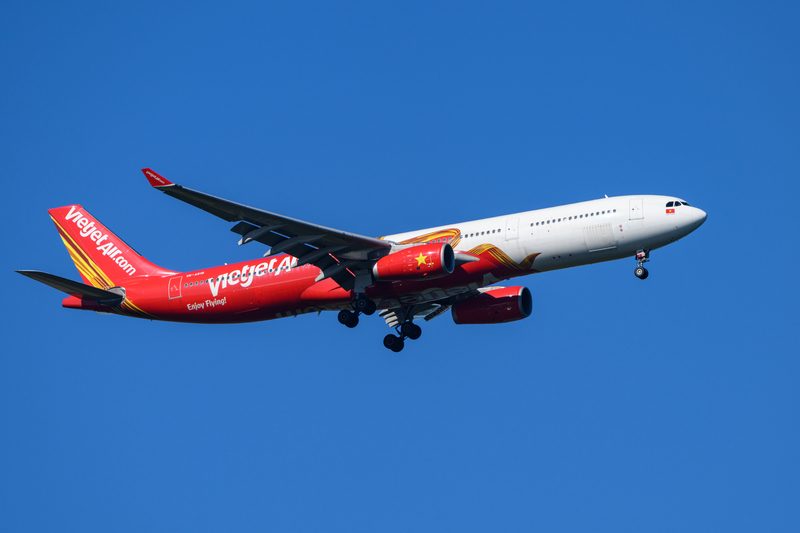
VietJet is set to receive its first Airbus A330-900 in 2026, a delivery that matters far beyond simple fleet renewal. For Vietnam’s largest private airline, the A330neo is the aircraft that could finally turn long-discussed European ambitions into a practical network plan.

The airline has made clear that it wants to expand into Europe, with direct services under consideration to the Czech Republic, Germany, the United Kingdom, and France. Those are serious long-haul markets, and they require more than ambition. They require the right aircraft, enough range, manageable seat economics, and a fleet platform that can support sustained growth beyond Asia. The A330-900 gives VietJet exactly that.
For aviation readers, this is the real significance of the delivery. VietJet is not just taking a newer widebody. It is taking the aircraft type most likely to define its next phase.
Read our stories in your inbox
Two aviation newsletters. Zero fluff.
The First A330neo Delivery Moves VietJet Closer To Europe
The first Airbus A330-900 is expected to arrive in 2026, according to comments from board member Philipp Rösler.
That timeline is important because it gives VietJet its first realistic near-term path into Europe with an aircraft designed for exactly this sort of mission. The airline already operates Airbus A330-300s, but the A330neo changes the economics meaningfully. It offers longer range, better fuel efficiency, and stronger overall operating performance, which is exactly what a low-cost long-haul airline needs if it wants to make Europe work from Vietnam.
Europe has always been one of those markets that looked attractive on paper for VietJet. Large Vietnamese communities, leisure demand, tourism potential, and growing trade links all support the case. But those routes are unforgiving if the aircraft economics are not right.
That is why the first A330neo matters so much.
VietJet’s European Ambitions Are Not Vague Anymore
The cities mentioned by management are not random.
The Czech Republic, Germany, the United Kingdom, and France are all logical long-haul targets from Vietnam, and all four have their own strategic appeal. Germany and France bring strong business, tourism, and diaspora potential. The UK offers premium visibility and a large long-haul market. The Czech Republic has long-standing Vietnamese community ties that could make it particularly attractive for point-to-point demand.
That does not mean all of these routes will launch at once. But it does show the airline is thinking in concrete market terms rather than broad geographic aspiration.
For a carrier like VietJet, that is a meaningful shift. It suggests the Europe plan is moving from idea to execution framework.
The A330neo Is A Better Fit Than The Older A330-300
VietJet already has eight Airbus A330-300s, so the arrival of the A330-900 is not about entering the widebody world for the first time.
It is about upgrading it.
The A330-900 is a materially stronger aircraft for long-haul expansion than the A330-300 because it combines the familiarity of the A330 platform with newer-generation Rolls-Royce Trent 7000 engines, improved aerodynamics, and better fuel burn. For an airline that wants to keep costs tight while stretching into longer international markets, that matters immensely.
This is especially true for potential Europe services out of Ho Chi Minh City Tan Son Nhat Airport (SGN) or Hanoi Noi Bai International Airport (HAN), where route economics will be influenced not just by demand, but by fuel costs, aircraft utilization, and whether the airline can price competitively while still making the service work.
The A330neo improves that equation.
The 40-Aircraft Commitment Shows This Is A Real Strategy
VietJet is not treating the A330neo as a niche subfleet.
The carrier doubled its Airbus A330-900 commitment to 40 aircraft in 2025, a move that signals long-term intent rather than experimental expansion. Airlines do not order widebodies at that scale unless they expect those aircraft to become central to the business.
That is what makes the first delivery more important than a single tail arriving at the airport. It is the front edge of a much bigger fleet transition.
If VietJet follows through on that orderbook in a meaningful way, the airline’s profile changes substantially. It stops being viewed primarily as a Southeast Asian narrowbody low-cost operator with some widebody flying on the side. It becomes a carrier with a serious long-haul platform.
Ho Chi Minh City Is Central To The Story
Rösler also emphasized VietJet’s interest in helping develop Ho Chi Minh City as an aviation finance hub, and that is not an unrelated talking point.
Fleet growth, aircraft financing, leasing, insurance, and capital markets all become more important when an airline moves deeper into widebody operations. If VietJet wants to scale long-haul flying meaningfully, it needs not just airplanes, but a broader ecosystem around those airplanes.
That makes Ho Chi Minh City more than just a traffic origin. It becomes part of the wider strategic architecture the airline is trying to build around itself.
For aviation professionals, this is one of the more interesting parts of VietJet’s direction. The airline is not only thinking about routes. It is thinking about how to embed itself more deeply into the commercial infrastructure of Asian aviation.
The C909 Story Shows VietJet Is Still Keeping Its Options Broad
At the same time, VietJet is not narrowing itself into a single fleet narrative.
The airline has also signed an agreement covering the dry lease of up to ten COMAC C909 aircraft for Vietnam–China services. That indicates a carrier still trying to build flexibility into different parts of its network at different aircraft sizes.
This matters because it shows the A330neo expansion does not stand alone. VietJet is simultaneously thinking about regional growth, China connectivity, and widebody long-haul development. That creates a more layered strategy than simply “more A330s means more Europe.”
The airline appears to be building multiple tools for multiple markets.
Fuel Pressure Makes The A330neo Even More Relevant
One reason the first A330neo delivery stands out now is the current fuel environment.
VietJet has already had to make operational adjustments in 2026 due to concerns around fuel availability and cost pressure. In that kind of environment, a more efficient widebody becomes even more valuable. Airlines can tolerate older aircraft more easily when fuel is stable. When fuel risk rises, efficiency matters much more.
That is another reason the A330-900 is strategically important. It is not just newer. It is more resilient in a volatile cost environment than the A330-300s it is meant to complement and eventually replace.
The Big Question Is Execution, Not Intent
VietJet’s long-haul ambition is now clear. The real question is whether the airline can execute it at scale.
Europe is attractive, but it is also difficult. Long-haul low-cost flying works only when aircraft economics, demand patterns, and ancillary revenue all line up well enough to overcome the structural complexity of operating long sectors. The A330neo gives VietJet a much better chance of making that work, but it does not guarantee success.
That is why this story is important. The first delivery is not the finish line. It is the moment where the airline’s Europe strategy becomes much more testable.
Bottom Line
VietJet’s first Airbus A330-900 delivery in 2026 is more than a fleet milestone. It is the aircraft arrival that could make the airline’s long-haul European ambitions genuinely actionable.
With potential routes under consideration to the Czech Republic, Germany, the United Kingdom, and France, the A330neo gives VietJet the range, fuel efficiency, and fleet platform it needs to think seriously about Europe from Hanoi Noi Bai Airport (HAN) and Ho Chi Minh City Tan Son Nhat Airport (SGN). And with 40 A330neos now on order, this is clearly not a one-aircraft experiment.
If VietJet is going to become a much bigger long-haul player, this is where that story really begins.
Keep reading FlyMag
Get the Daily Brief in the morning or the Route Watch weekly recap on Fridays. Or both.