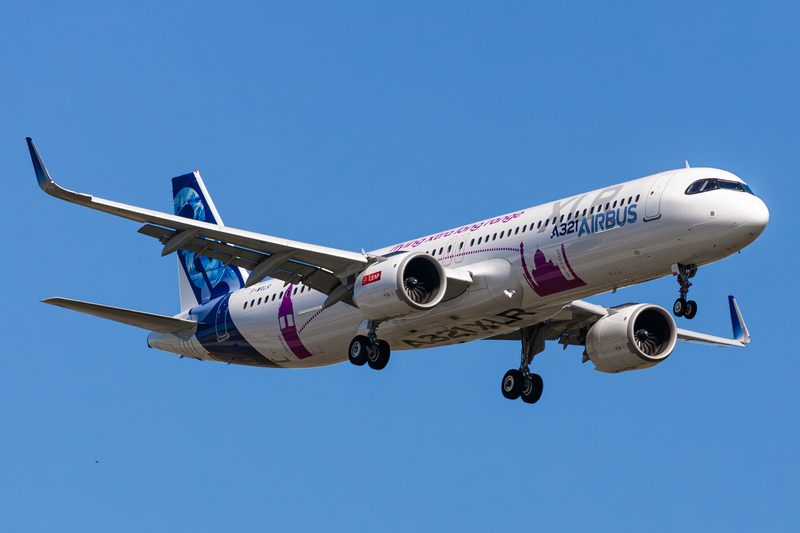
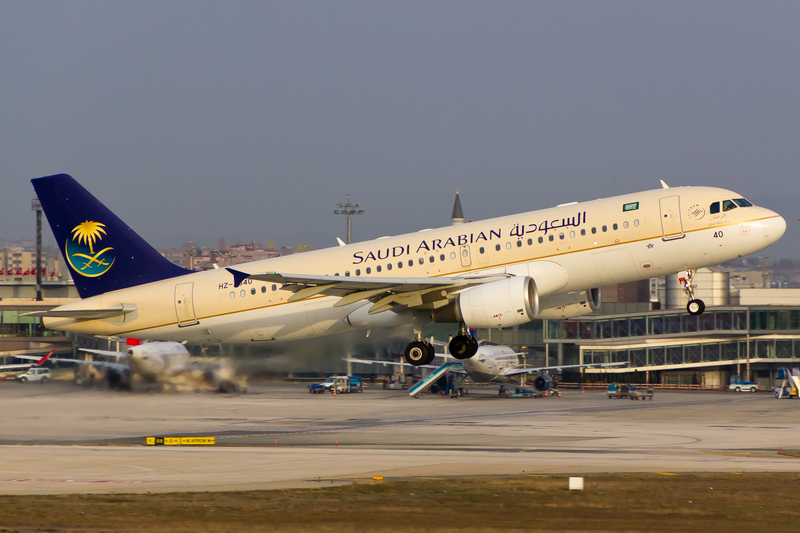
Saudia has taken delivery of its first Airbus A321XLR, becoming the first airline in the Middle East and Africa to operate Airbus’ extra-long-range narrowbody.
That is an important milestone on its own. But the bigger significance is strategic. The A321XLR gives Saudia something it has not really had before: a long-range single-aisle aircraft that can sit between its normal narrowbody operation and its widebody long-haul fleet, opening routes that are too thin for a widebody but too long or too premium-sensitive for a standard short-haul setup.
For aviation readers, that is what makes this delivery interesting. It is not just about being first. It is about what the airline can now try next.
Read our stories in your inbox
Two aviation newsletters. Zero fluff.
This Is The First Of 15
Saudia’s newly delivered A321XLR is only the beginning.
The airline has 15 A321XLRs on order, and that matters because one aircraft can prove a concept, but a fleet of 15 suggests something much larger. This is not a symbolic purchase. It is a real sub-fleet, and that means the airline clearly sees the aircraft as a meaningful part of its future network strategy rather than as a niche experiment.
That is an important distinction. Airlines do not build a 15-aircraft plan around a type unless they expect it to matter.
The Cabin Tells You What Saudia Wants The Aircraft To Be
One of the most revealing things about the delivery is the cabin layout.
Saudia’s first A321XLR is configured with:
- 24 lie-flat Business Class seats
- 120 Economy Class seats
That is a very premium-heavy setup for a single-aisle aircraft. It tells you immediately that Saudia is not planning to use the A321XLR as a high-density leisure narrowbody. It is planning to use it as a premium long-range aircraft for thinner international markets where onboard product still matters.
That makes the aircraft much more interesting commercially. It is not just a smaller long-haul jet. It is a smaller long-haul jet with real premium ambition.
The Aircraft Opens A Different Kind Of Network Logic
This is where the A321XLR becomes strategically useful.
With a range of up to 4,700 nautical miles, the aircraft allows Saudia to serve longer international sectors that might not justify a widebody every day. That gives the airline new flexibility across Europe, Africa, Central Asia, and parts of the Indian Ocean.
For a Gulf carrier, that is a meaningful shift. The traditional model in the region has been built heavily around widebody hub flying. The A321XLR introduces a more surgical tool — one that can open or sustain thinner routes without forcing the economics of a much larger aircraft.
That is exactly why airlines around the world are so interested in the type.
Saudia Is Using The A321XLR To Support Growth, Not Just Replace Older Jets
Saudia is not introducing the aircraft only for fleet renewal.
The airline is positioning the type as part of its broader growth strategy under Saudi Vision 2030, which aims to expand tourism, improve connectivity, and support a much larger aviation ecosystem inside the Kingdom. Saudia already serves more than 100 destinations, and the A321XLR is clearly intended to help push that network further without relying only on larger widebodies.
That matters because the aircraft is being used for expansion logic, not just substitution logic.
Vienna Looks Like The First Real Test
While route plans can always change, current schedule filings suggest that Jeddah–Vienna will likely be one of the first markets to see the A321XLR in regular service, with other planned destinations including Madrid, Geneva, Barcelona, and Malé.
That list makes sense. These are exactly the kinds of markets where a premium-heavy long-range narrowbody can be useful: strong demand, meaningful premium traffic, but not always enough year-round volume for a widebody to be the perfect answer.
The important point is not the exact first route. It is the pattern the route list reveals.
Airbus Gets An Important Regional Win
This delivery also matters for Airbus.
The freighter market is not the only place where Airbus is trying to challenge long-established airline habits. In the Middle East, long-haul growth has traditionally been associated with twin-aisle aircraft, especially at the big Gulf carriers. Putting the A321XLR into service with Saudia gives Airbus a very visible regional proof point for the idea that long-range growth in the Middle East does not always need a widebody.
That is strategically important, especially if other carriers in the region start watching closely.
Bottom Line
Saudia’s first Airbus A321XLR is a meaningful fleet milestone, but more importantly, it gives the airline a new kind of aircraft for a new kind of route. With a premium-heavy layout, long-range capability, and a 15-aircraft order behind it, the type is clearly intended to become a real part of Saudia’s growth strategy rather than just a novelty delivery.
The next big question is how the airline deploys it in practice. But the first answer is already clear: this aircraft is not here to do ordinary narrowbody work.