Turkish Airlines is planning a major new step in Latin America: scheduled service to Lima, Peru.
The Istanbul-based carrier has disclosed its intention to launch flights to Jorge Chávez International Airport (LIM) in the Peruvian capital. The airline said the route would move ahead “based on market conditions,” but it has not yet announced a start date, frequency, routing or aircraft type.
If the route launches, Lima (LIM) would become Turkish Airlines’ 10th destination in Latin America and the Caribbean. It would also give Istanbul Airport (IST) another deep long-haul link into South America.
Read our stories in your inbox
Two aviation newsletters. Zero fluff.
For Turkish, the appeal is clear. Lima is a major South American capital, a growing tourism market and an increasingly important international gateway. It also fits the airline’s strategy of using Istanbul as a global transfer point between Europe, the Middle East, Asia, Africa and the Americas.
Lima Is A Logical Next Step
Lima is one of the largest unserved South American opportunities in Turkish Airlines’ network.
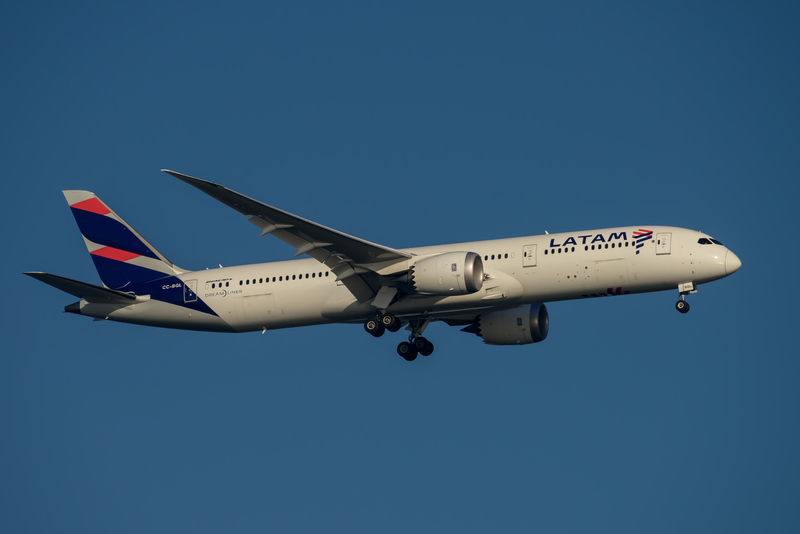
The city is Peru’s political, commercial and tourism center. It is also the main gateway to destinations such as Cusco, Machu Picchu, Arequipa, the Sacred Valley and the Amazon region.
For travelers from Turkey, the Middle East, Eastern Europe, Central Asia and parts of Asia, a Turkish Airlines link could create a new one-stop path to Peru through Istanbul (IST).
That is where Turkish Airlines is strongest.
The airline does not need Lima to rely only on Istanbul–Peru traffic. It can feed the route from dozens of cities across its global network.

That connecting power is what makes a difficult ultra-long-haul route more realistic.
A Very Long Flight From Istanbul
A nonstop Istanbul (IST)–Lima (LIM) flight would be a serious long-haul mission.
The great-circle distance is roughly 12,200 kilometers, or about 6,590 nautical miles. Depending on winds, routing and airspace restrictions, a westbound flight could approach or exceed 15 hours.
That would place Lima among Turkish Airlines’ longest possible routes.
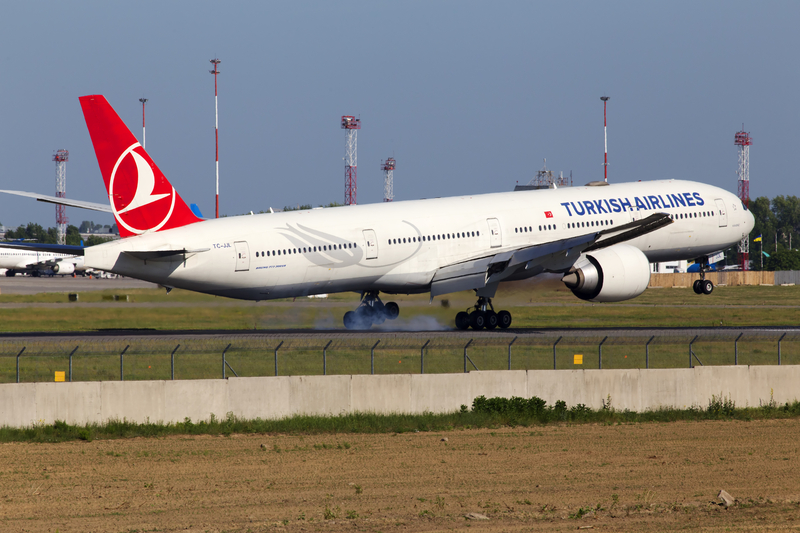
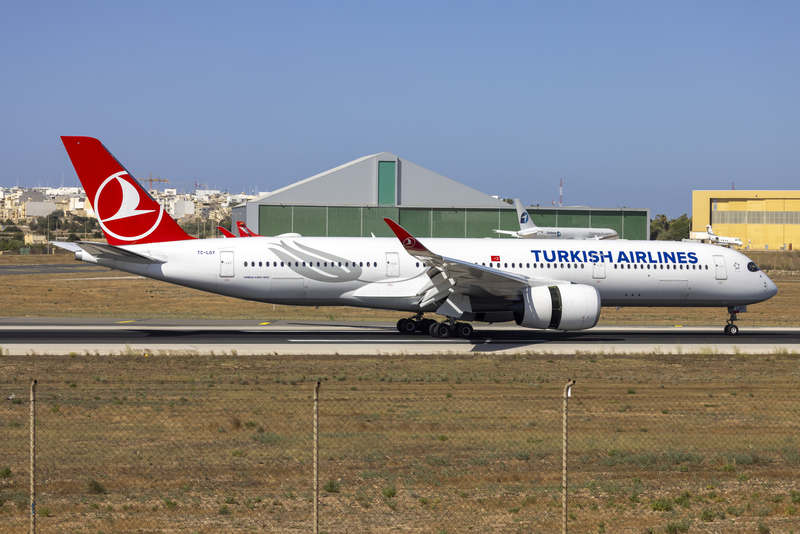
It would not be impossible. Turkish already operates very long sectors with the Boeing 787-9 Dreamliner and Airbus A350-900. Both aircraft are central to the airline’s modern long-haul network.
However, Lima is not a simple mission.
Aircraft performance would depend on payload, season, winds, diversion requirements and operational routing. That is one reason Turkish may choose a one-stop or tag-on pattern rather than a nonstop launch.
Turkish Often Uses Tags In Latin America
Turkish Airlines has a history of using tag-on sectors in Latin America.
That is a practical choice. Istanbul is far from many Latin American cities, and demand can be uneven across individual markets.
A tag-on route allows Turkish to serve two cities with one widebody rotation. It can also reduce the commercial risk of launching a new destination.
The airline has used this model across parts of its Latin America network. Several routes operate through another regional gateway before continuing to a second destination.
That makes Lima especially interesting.
A nonstop Istanbul–Lima flight would be high profile. But a one-stop service through another Latin American city may be more realistic at launch.
Possible structures could include Lima as an extension of an existing regional route. Turkish has not confirmed any such plan, so any routing remains speculative.
The Current Latin America Network
Turkish Airlines already has a meaningful Latin America and Caribbean footprint.
Its regional network includes Bogotá (BOG), Buenos Aires (EZE), Cancún (CUN), Caracas (CCS), Mexico City (MEX), Panama City (PTY), São Paulo (GRU) and Santiago (SCL).
Havana (HAV) is also part of the carrier’s broader regional history, although service has been suspended amid operational challenges affecting Cuba.
That existing network gives Turkish a base for Lima.
The airline already understands the long stage lengths, complex rotations and demand profile of Latin America. It also has experience balancing local traffic with passengers connecting through Istanbul.
Adding Lima would deepen that footprint and give Turkish access to a major Andean market.
Lima Would Strengthen Europe–Peru Competition
Lima already has nonstop links to several European cities.
The strongest market is Madrid (MAD), where Iberia, Air Europa, LATAM and Plus Ultra compete. Madrid remains the natural European gateway for Peru because of language, historical ties and strong Latin America connectivity.
Lima also has direct service to Paris Charles de Gaulle Airport (CDG), Amsterdam Schiphol Airport (AMS) and Barcelona (BCN).
If Turkish enters the market, Istanbul would become a new kind of European option for Lima.
It would not compete with Madrid in the same way. Madrid is a point-to-point and Europe–Latin America powerhouse. Istanbul is a global transfer hub with stronger reach into the Middle East, Central Asia, the Caucasus, India, Southeast Asia and parts of Africa.
That gives Turkish a different selling point.
It could connect Lima to markets that are not as naturally served through Spain, France or the Netherlands.
Why Istanbul Matters
Istanbul Airport (IST) is one of the world’s most important connecting hubs.
It sits at the crossroads of Europe, Asia, Africa and the Middle East. Turkish Airlines has built one of the broadest international networks in the industry from that position.
That is the central logic behind Lima.
Turkish does not need to win only passengers traveling between Istanbul and Peru. It can also target passengers from cities such as Dubai, Riyadh, Cairo, Athens, Tel Aviv, Delhi, Mumbai, Bangkok, Tbilisi, Baku and many more.
That network effect is powerful.
For Lima, the route would open access to parts of the world that currently require more complex routings.
For Turkish, Lima would add another high-value destination to its “most countries served” strategy.
The Aircraft: 787-9, A350-900 Or Future A350-1000
Turkish has not announced the aircraft for Lima.
The obvious current candidates would be the Boeing 787-9 and Airbus A350-900. Both types already operate long-haul missions for the airline.
The 787-9 is a flexible long-range aircraft. It offers strong fuel efficiency and a passenger cabin designed for long sectors. Turkish uses the type on many thinner long-haul markets where range and economics both matter.
The A350-900 offers similar long-haul efficiency with a larger cabin and strong payload-range performance. It is also well suited to premium routes and long-distance sectors where comfort and operating economics are both important.
Over time, the Airbus A350-1000 may become even more relevant.
Turkish has ordered 15 A350-1000s as part of a broader Airbus widebody order. That aircraft could support some of the airline’s most demanding future long-haul routes.
For now, however, Lima would likely need to be planned around the 787-9 or A350-900 unless Turkish waits for future aircraft.
Lima’s New Airport Capacity Helps The Case
The timing is also important because Lima has just entered a new airport chapter.
The new Jorge Chávez International Airport terminal opened in 2025. Airport operator Lima Airport Partners said the new terminal is three times the size of the previous facility and is designed to support up to 40 million passengers annually.
That gives Lima more room to attract new long-haul service.
A larger and more modern terminal can improve the passenger experience, add gate capacity and support future hub ambitions. It also makes the airport more attractive to airlines evaluating new intercontinental routes.
Still, infrastructure alone does not guarantee new service.
Airlines also need competitive costs, strong demand and good connectivity. Lima has improved its physical platform, but it still needs to prove that long-haul carriers can make new routes profitable.
Airport Charges Could Be A Factor
One issue Turkish will likely watch is airport cost.
IATA has warned that competitive airport charges will be important for Peru’s connectivity. The association said eliminating the domestic transfer fee could help support investment in fleet, routes and connectivity.
That matters because Lima wants to grow as a regional hub.
If connecting passengers face higher costs, Lima becomes less competitive against hubs such as Bogotá (BOG), Panama City (PTY) and Santiago (SCL).
For Turkish, this is relevant.
A Lima route would likely depend on a mix of local passengers and connections. If the airport wants more long-haul service, keeping transfer costs competitive will be important.
Peru Offers Strong Tourism Demand
Tourism is one of the strongest arguments for Turkish Airlines entering Lima.
Peru has global recognition because of Machu Picchu, Cusco, the Sacred Valley, the Amazon and its food culture. Lima itself has become one of Latin America’s strongest culinary capitals.
That demand is not limited to Europe.
Peru attracts travelers from Asia, the Middle East and other emerging markets. Turkish Airlines could provide a useful one-stop link for many of those passengers.
This is where Turkish has an advantage over some European competitors.
Its network reaches deep into regions that may not have simple access to Peru today. A Lima route could therefore stimulate new traffic, not just shift passengers from existing carriers.
Cargo Could Help The Route
Cargo may also play a role.
Peru exports high-value and time-sensitive goods, including agricultural products, seafood, textiles and pharmaceuticals. Air cargo is important for products that need speed, temperature control or reliable international access.
Turkish Cargo is one of the world’s largest air cargo brands and is deeply integrated with the airline’s global network.
A passenger flight to Lima could provide belly cargo capacity. That would not replace dedicated freighter service, but it could support the route’s economics.
This is especially useful on long-haul routes where passenger demand alone may not carry every season equally.
Competition Will Be Tough
Turkish would not enter an easy market.
European airlines already have strong positions in Peru. Iberia has the most natural advantage because Madrid is the dominant Europe–Latin America hub. Air France and KLM offer strong connections through Paris and Amsterdam. LATAM also remains a major force in Lima.
Turkish would need to compete with a different value proposition.
That means a large global network, strong onboard service, competitive fares and unique connections beyond Istanbul.
The airline’s strength is not necessarily nonstop Europe–Peru local traffic. It is the ability to connect Lima with places that are underserved through traditional Western European hubs.
That could be enough to make the route work.
The Australia Comparison Matters
Turkish’s Lima plan also fits into a broader ultra-long-haul strategy.
The airline has already launched one-stop service to Australia, serving Melbourne and Sydney through intermediate points in Asia. Those routes show how Turkish is willing to stretch its network into markets that once looked too far from Istanbul.
The long-term goal is even more ambitious.
Turkish executives have discussed future nonstop Australia flying once the right aircraft is available. The A350-1000 is expected to be important for that next phase.
Lima sits in a similar category.
It is far enough to be operationally challenging. It is also strategically attractive enough to remain on the airline’s radar.
A Route That Could Start Conservatively
The most likely outcome is a conservative launch.
That could mean limited weekly frequencies, a tag-on routing or a phased approach that tests demand before moving toward nonstop service.
This would fit Turkish’s normal Latin America strategy.
The airline can build market awareness, establish sales channels and develop connecting flows before committing to a larger operation.
That approach also protects aircraft utilization.
A 15-hour nonstop would tie up a widebody for a long time. A tag-on or triangular operation may be easier to integrate into the existing network.
For passengers, nonstop would be ideal. For the airline, a one-stop launch may be more practical.
What To Watch Next
The next key signs will be schedule filings, airport slot requests and aircraft assignments.
Until those appear, the route remains a planned expansion rather than a confirmed scheduled operation.
The most important details will be:
- Whether Turkish flies Istanbul (IST)–Lima (LIM) nonstop or through another Latin American city
- How many weekly frequencies it launches
- Whether it uses the 787-9 or A350-900
- How the flight is timed for connections over Istanbul
- Whether Lima becomes a standalone route or part of a triangular pattern
Those details will determine whether the service is a headline-grabbing ultra-long-haul nonstop or a more practical Latin America network extension.
Either way, the strategy is clear.
Turkish Airlines wants a bigger role in the Europe–Latin America market.
Bottom Line
Turkish Airlines’ plan to serve Lima is one of the most interesting long-haul developments in Latin America.
The airline has confirmed its intent to launch scheduled flights to Jorge Chávez International Airport (LIM), subject to market conditions. It has not yet announced a start date, routing, frequency or aircraft type.
If launched, Lima would become Turkish Airlines’ 10th destination in Latin America and the Caribbean.
A nonstop Istanbul (IST)–Lima (LIM) flight would be an ultra-long-haul mission of roughly 12,200 kilometers. It would likely require the Boeing 787-9 or Airbus A350-900 and could approach 15 hours westbound.
Still, a one-stop or tag-on routing may be more likely at first.
For Turkish, Lima adds another strategic South American capital. For Peru, it could open a new bridge to Istanbul, the Middle East, Central Asia, Asia and Africa.
The route is not scheduled yet. But if Turkish makes it work, Lima would become one of the airline’s most ambitious additions in the Americas.