Air Transat is adding another long-haul link to Türkiye, with new nonstop service between Montréal–Trudeau International Airport (YUL) and Istanbul Airport (IST) beginning October 29, 2026.

The route will operate twice weekly on Tuesdays and Thursdays using Airbus A330 aircraft, giving Air Transat a second Canadian gateway to Istanbul (IST) alongside its existing Toronto Pearson (YYZ) service. For Montréal (YUL), it adds a significant long-haul connection to one of the world’s most important global connecting hubs. For Air Transat, it is another step in a strategy that increasingly combines leisure demand, partnership feed, and long-haul network discipline.
The new service is not just about Montréal–Istanbul point-to-point traffic. It is also about giving Canadian travelers access to Turkish Airlines’ vast onward network across Türkiye, the Middle East, Central Asia, Africa, the Caucasus, and South Asia. That makes Istanbul (IST) a particularly useful addition for Air Transat, whose long-haul business has historically leaned heavily toward leisure markets in Europe, the Caribbean, Latin America, and North Africa.
Read our stories in your inbox
Two aviation newsletters. Zero fluff.
Montréal Gets A New Nonstop To Istanbul
Air Transat’s Montréal–Trudeau (YUL) to Istanbul (IST) service will launch as a year-round route, rather than a short seasonal experiment. That is notable because Istanbul is not a traditional winter sun market in the same way as Cancún (CUN), Punta Cana (PUJ), or Cartagena (CTG). The timing points to a broader commercial strategy built around both local demand and connecting traffic beyond Istanbul (IST).
The route covers roughly 4,150 nautical miles, or about 7,690 kilometers, making it a substantial long-haul sector for Air Transat’s Airbus A330 operation. Depending on winds, season, and schedule assumptions, the flight will sit in the 10-to-11-hour range, with the westbound return typically carrying the longer block time.
Current schedule filings have shown Air Transat flight TS314 departing Montréal (YUL) in the evening and arriving in Istanbul (IST) the following afternoon. The return, TS315, is planned to leave Istanbul (IST) in the late afternoon and arrive back in Montréal (YUL) the same evening local time.
That timing is operationally useful. An evening departure from Montréal (YUL) allows for same-day Canadian feed, while the afternoon arrival at Istanbul (IST) gives passengers a window into Turkish Airlines’ evening and late-night connecting banks. On the return, the late-afternoon Istanbul (IST) departure supports inbound connections before the long westbound flight to Montréal (YUL).
The Airbus A330 Remains Central To Air Transat’s Long-Haul Network
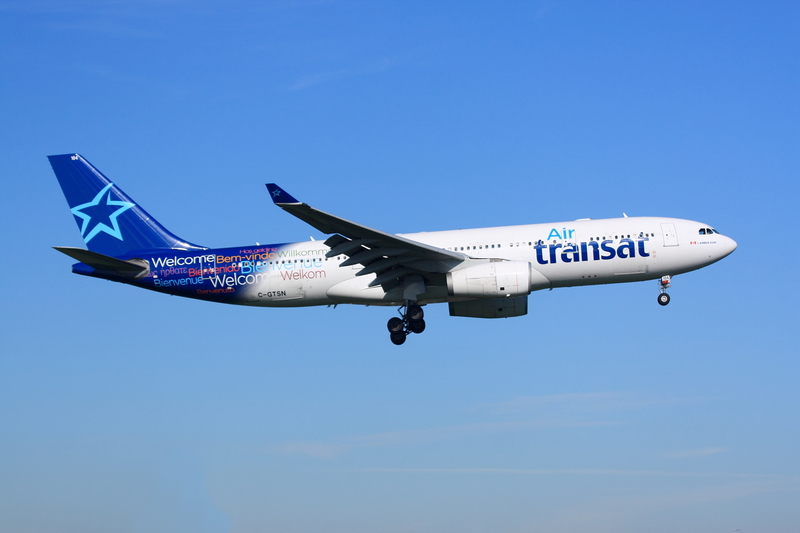
Air Transat will operate the Montréal (YUL) to Istanbul (IST) route with Airbus A330 equipment. The A330 is a familiar platform for the carrier and remains the backbone of many of its higher-capacity long-haul services.
The Airbus A330-200 is particularly well suited to this type of mission. Air Transat’s A330-200 aircraft are powered by Rolls-Royce Trent 772B engines and have a published maximum range of about 6,000 nautical miles, giving the aircraft enough capability for Montréal (YUL) to Istanbul (IST) with the usual operational considerations for payload, winds, and seasonal performance.
Air Transat’s A330-200 fleet is not uniform. The airline lists multiple seating configurations: 330, 332, and 345 seats, all with 12 Club Class seats at the front of the aircraft. The difference is in the Economy Class cabin, where aircraft density varies depending on the specific layout.
That matters on a route like Montréal (YUL) to Istanbul (IST). The service needs enough capacity to support leisure traffic, visiting-friends-and-relatives demand, and connecting flows, but the airline must also avoid overcommitting in a market where it is starting with only two weekly flights. The A330 gives Air Transat the right mix of range and seat count without requiring a new aircraft type or a different long-haul operating model.
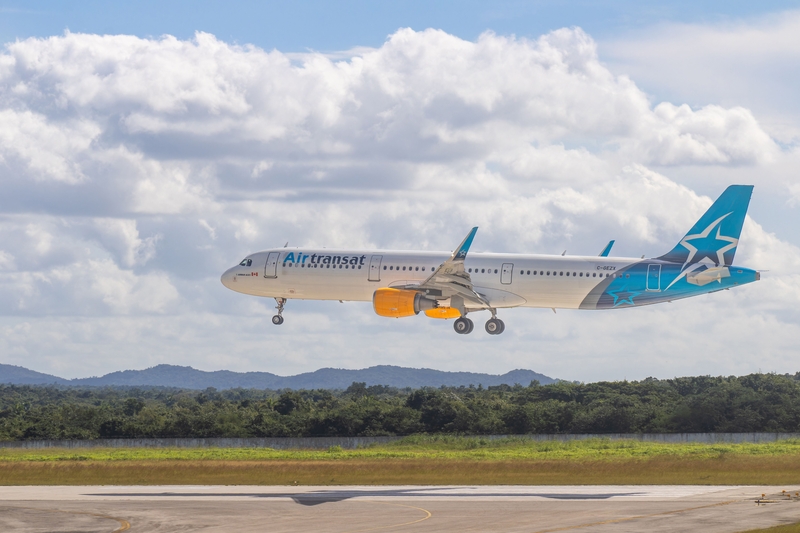
Air Transat also has Airbus A321LR aircraft in its fleet, but Istanbul (IST) from Montréal (YUL) is outside the practical commercial sweet spot of that aircraft for this mission. The A330 is the more logical choice, especially given the distance, winter westbound conditions, and the need to carry a meaningful passenger load.

Istanbul Is More Than A Destination
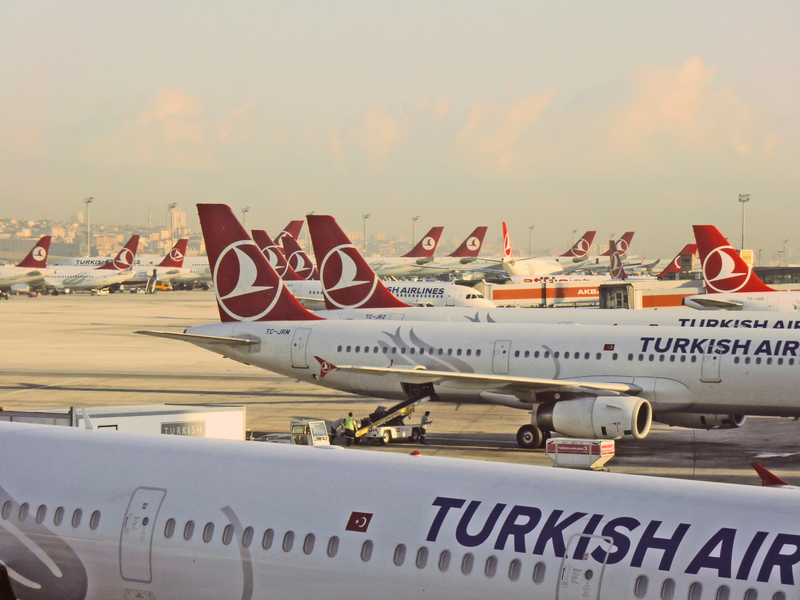
Air Transat’s Istanbul growth is closely tied to its partnership with Turkish Airlines.
Istanbul Airport (IST) is one of the most powerful connecting hubs in global aviation. Turkish Airlines has built its business model around geographic reach, connecting Europe, Asia, Africa, the Middle East, and the Americas through a single massive hub on the European side of Istanbul.
For Air Transat, that network is the key to the route. Istanbul itself is a major city with enormous cultural, commercial, and tourism appeal, but the broader opportunity is beyond Istanbul (IST). Air Transat customers can use the route to connect onward to destinations across Türkiye and to many markets that are difficult to reach nonstop from Canada.
That gives the Montréal (YUL) route a different demand profile from many of Air Transat’s traditional European leisure routes. A Montréal (YUL) to Lisbon (LIS), Paris (CDG), Málaga (AGP), or Athens (ATH) flight may be heavily driven by local leisure traffic. Istanbul (IST), by contrast, can combine leisure demand with ethnic traffic, business traffic, and long-haul connecting demand to markets such as the Caucasus, Central Asia, the Gulf, and parts of Africa.
That blend is what makes the route strategically interesting. Air Transat is not trying to become a Gulf-style super-connector. But through Turkish Airlines, it can give Canadian passengers access to a much larger network while still operating its own aircraft on the Canada–Türkiye trunk route.
Toronto Helped Prove The Concept
The Montréal (YUL) launch follows Air Transat’s move into the Toronto Pearson (YYZ) to Istanbul (IST) market.
Air Transat began Toronto (YYZ) to Istanbul (IST) service in December 2025 and later added a third weekly frequency from May 2026. That route gave the carrier a practical test of demand between Canada and Türkiye, as well as traffic flowing beyond Istanbul (IST) through Turkish Airlines.
The fact that Montréal (YUL) is now being added suggests the Toronto (YYZ) route has performed well enough to justify a second Canadian gateway. Air Transat has said the Toronto–Istanbul service demonstrated strong Canadian demand for Türkiye and beyond, and Montréal is the airline’s home market, making it a logical next step.
With Montréal (YUL) and Toronto (YYZ) combined, Air Transat will offer up to five weekly flights to Istanbul (IST). That is still a modest schedule compared with large network carriers, but it is meaningful for a leisure-focused airline operating long-haul Airbus widebodies from Canada.
It also strengthens Air Transat’s position in the Canadian long-haul market. Rather than simply adding more frequencies to established Western Europe routes, the carrier is using partnerships to reach beyond its own network limits. That gives it access to more diverse traffic flows without having to build every spoke itself.
Istanbul’s Airport Ranking Needs Context
The source article’s reference to Istanbul (IST) as Europe’s busiest airport is directionally understandable, but it requires nuance.
For the full year 2025, London Heathrow (LHR) narrowly retained the title as Europe’s busiest airport by passenger volume, handling 84.48 million passengers. Istanbul (IST) was close behind with 84.44 million, leaving a margin of only about 40,000 passengers across the entire year.
That margin is tiny in airport terms. Istanbul (IST) has grown rapidly since its full transition from the former Atatürk Airport, and it has become one of the most important airports in the world by passenger traffic, aircraft movements, network breadth, and connecting power.
In 2026, the competition with Heathrow (LHR) became even more interesting. Istanbul (IST) moved ahead of Heathrow in January 2026, handling about 6.9 million passengers compared with Heathrow’s 6.5 million. Rankings can shift depending on whether the measurement is annual traffic, monthly traffic, scheduled seats, international-only traffic, aircraft movements, or rolling-year passengers.
The more accurate way to frame Istanbul (IST) is that it is one of Europe’s two busiest passenger airports and one of the most important global connecting hubs. For Air Transat, that is the more relevant point. The airport’s scale gives the Montréal (YUL) route a much larger addressable market than Istanbul alone.
Why Montréal Matters For This Route
Montréal–Trudeau International Airport (YUL) is Air Transat’s home base and one of its most important long-haul gateways. Adding Istanbul (IST) from Montréal (YUL) gives the airline a new eastbound long-haul market that fits both its local customer base and its partnership strategy.
The Montréal region has strong international travel demand, a large immigrant and multicultural population, and established traffic flows to Europe, North Africa, and the Middle East. Istanbul (IST) sits at the intersection of many of those flows.
The route should appeal to several types of travelers. Some will be visiting Istanbul and Türkiye directly. Others will be connecting onward to Turkish Airlines destinations that are otherwise difficult or inconvenient to reach from Montréal (YUL) with a single connection. There will also likely be demand from travelers heading to destinations in the Caucasus, Central Asia, the Balkans, the Middle East, and Africa.
Air Transat’s partnership with Porter Airlines also gives it additional Canadian feed opportunities. Through Porter, Air Transat can reach passengers from cities across Canada and help channel some of that demand over Montréal (YUL) or Toronto (YYZ). That is important because a twice-weekly long-haul route benefits from broader feed, especially when the local market alone may not support higher frequency at the outset.
A Disciplined Long-Haul Expansion
What stands out about this route is the restraint.
Air Transat is not launching daily flights. It is not placing an unfamiliar aircraft into the market. It is not trying to build a full-scale hub operation in Istanbul. Instead, the airline is adding two weekly flights from its home base, using a known widebody type, and tying the route to a powerful partner network.
That is a disciplined way to expand long-haul flying.
For passengers, the drawback is frequency. Twice-weekly service is less attractive for corporate travelers and for itineraries requiring precise date flexibility. But for leisure travelers, diaspora traffic, and connecting passengers with flexible schedules, the route can still be highly useful.
For Air Transat, the lower frequency reduces risk. The airline can test demand, build awareness, and rely on Turkish Airlines’ network to support traffic beyond Istanbul (IST). If the route performs well, additional frequencies could become possible later. If demand is more seasonal or connection-dependent, the airline has not overexposed itself.
That matters in long-haul flying, where aircraft time is expensive and route economics can be unforgiving. An A330 assigned to Montréal (YUL) to Istanbul (IST) is tied up for a long rotation. The route must produce enough revenue across Club Class, Economy Class, baggage, seat selection, and connecting traffic to justify that commitment.
A Stronger Canada–Türkiye Market
The Air Transat–Turkish Airlines relationship is becoming a more important part of the Canada–Türkiye market.
Turkish Airlines already serves Canada with its own flights to Toronto (YYZ), Montréal (YUL), and Vancouver (YVR). Air Transat’s own Istanbul (IST) flights add Canadian-operated capacity into the market and create more options for travelers who want to book through Air Transat while still accessing Turkish Airlines’ wider network.
That is especially useful in a market where bilateral access, aircraft availability, airport slots, and network priorities all influence how much service can be added by Turkish Airlines alone. Air Transat’s role gives the partnership more flexibility.
It also gives Air Transat a different competitive angle. Rather than competing only on vacation routes to traditional leisure destinations, the airline can now sell a broader long-haul proposition: Canadian-origin flights to Istanbul (IST), with onward connectivity to dozens of destinations beyond.
For a carrier that has long been associated with leisure travel, that is a meaningful evolution.
Bottom Line
Air Transat’s new Montréal (YUL) to Istanbul (IST) route is a strategic addition, not just another long-haul leisure flight.
The twice-weekly Airbus A330 service gives Montréal (YUL) a new nonstop link to one of the world’s most important connecting hubs, while giving Air Transat a second Canadian gateway to Türkiye after Toronto (YYZ). The route also deepens the airline’s partnership with Turkish Airlines, turning Istanbul (IST) into both a destination and a gateway for Canadian travelers heading far beyond Türkiye.
The launch date is now officially October 29, 2026, with year-round service planned on Tuesdays and Thursdays. The aircraft choice is logical, the frequency is measured, and the network rationale is clear.
For Air Transat, Istanbul (IST) is not just about selling seats to Türkiye. It is about using partnership connectivity to make its long-haul network more relevant, more global, and more resilient.