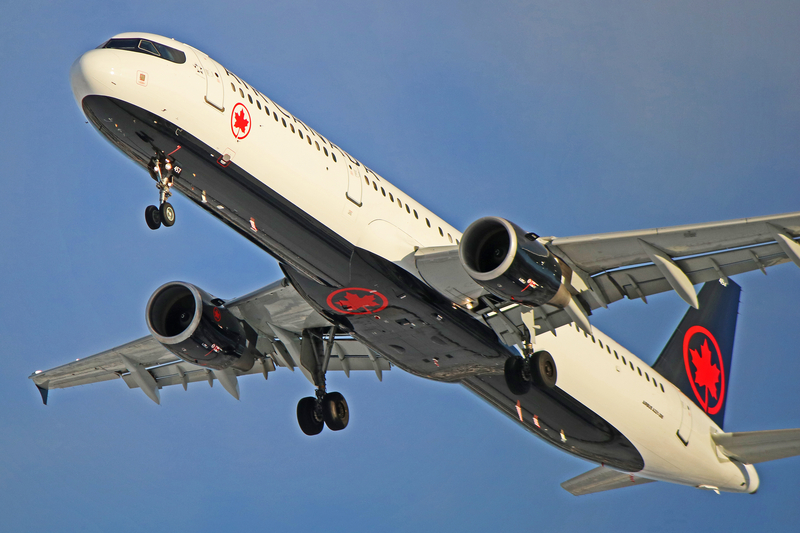
Air Canada is preparing to launch a new nonstop Airbus A321XLR service between Montréal–Trudeau International Airport (YUL) and Dublin Airport (DUB), giving the airline one of its clearest examples yet of how it plans to use the long-range narrowbody across the North Atlantic.

The route is now scheduled to begin on May 2, 2027, operating four times weekly during the month of May before wider summer adjustments take over. That matters because Montreal–Dublin had already appeared in earlier Air Canada planning, only to be pulled back and reshaped more than once. Its reappearance now suggests the airline still sees real long-term value in the market, but wants to approach it in a much more deliberate way.
For aviation readers, this is not just a route launch. It is a case study in how airlines are learning to fit the A321XLR into real network planning rather than broad theoretical maps.
Read our stories in your inbox
Two aviation newsletters. Zero fluff.
Dublin Is Back In The XLR Plan — But On A Delayed Timeline
One of the most important things to understand is that Air Canada’s XLR deployment to Dublin has not followed a straight line.
The airline had previously intended to use the A321XLR on Montreal–Dublin earlier, but those plans were revised as aircraft allocation across the wider network shifted. The route has now returned in the schedule for May 2027, which is a much more telling sign than the earlier, more tentative filings.

That matters because route reappearances often mean the airline still likes the market, even if the timing or aircraft fit needed to be reworked.
The A321XLR Is Exactly The Kind Of Aircraft This Route Was Waiting For
Montreal–Dublin is the sort of market the A321XLR was designed to make more attractive.
It is long enough to benefit from a fuel-efficient long-range narrowbody, but not so dense that it automatically needs a widebody year-round. That gives the airline a more flexible way to serve the route, especially in shoulder-season or moderate-demand periods where a Boeing 787 or Airbus A330 may simply offer too much capacity.
For Air Canada, the A321XLR creates a middle ground that did not previously exist at this level of range and economics.
Four Weekly Flights Is A Disciplined Way To Start
The current plan calls for four weekly flights from May 2 to May 30, 2027.
That is a sensible launch structure. It gives the route enough presence to matter while still keeping the risk under control. Airlines usually do not need daily service on every transatlantic city pair to make a market work. Often, what matters more is matching the aircraft and frequency to the demand curve.
This schedule suggests Air Canada is trying to do exactly that.

Widebodies Will Still Play A Role Before And After
Another important point is that the A321XLR is not replacing widebodies permanently on Montreal–Dublin.
Air Canada’s planning has already shown the route continuing to rely on larger aircraft in other periods, including Boeing 787-9 service in peak season and earlier A330-300 or 787-9 use in interim planning cycles. That tells you the airline still sees Montreal–Dublin as a route with enough strength to justify larger aircraft when demand is highest.
The A321XLR’s role is therefore not to make the route possible from nothing. It is to make the route more adaptable.
This Is Exactly The Sort Of “Long-Thin” Atlantic Route The XLR Should Own
Montreal–Dublin is not one of the Atlantic’s giant trunk markets.
That is precisely why it is interesting. It sits in the category often described as “long-thin” — a route with real value and steady demand, but not necessarily the year-round volume for a large widebody at full frequency. That is where airlines increasingly want the A321XLR to prove itself.
For Air Canada, Dublin is one of the clearest examples of how the type can support transatlantic flying without forcing the airline to choose between oversizing the market or giving up on frequency and connectivity.
Montreal Remains A Key Atlantic Gateway For Air Canada
The route also reinforces the role of Montreal (YUL) in Air Canada’s transatlantic strategy.
YUL has long been one of the airline’s most important gateways for Europe, supported by strong local demand, deep cultural and linguistic links, and useful connecting flows from Eastern Canada. A market like Dublin fits naturally into that structure. It is not the biggest European destination in the network, but it is the kind of city that adds quality and breadth to Montreal’s long-haul profile.
That makes the route more strategically useful than its frequency alone might suggest.
The Real Story Is Flexibility
The best way to understand this route is not as a grand new expansion, but as a sign of increasing fleet flexibility.
Air Canada is learning where the A321XLR works, where it does not, and where it can complement — rather than replace — widebody flying. Montreal–Dublin fits squarely into that learning curve. It is a market with enough transatlantic relevance to justify being in the system, but not necessarily in the same way all year round.
That is exactly the kind of judgment the XLR allows an airline to make more precisely.
Bottom Line
Air Canada’s new Montréal–Dublin A321XLR route, now scheduled to begin on May 2, 2027 at four weekly flights, is one of the clearest examples yet of how the airline intends to use its new long-range narrowbody fleet.
The route had appeared and disappeared in earlier planning, but its return suggests Air Canada still sees Dublin as a valuable market from Montreal. More importantly, it shows how the A321XLR can help the airline keep thinner transatlantic routes in the network with a more precise fit than a widebody always allows.
This is not just about one flight to Ireland. It is about how Air Canada is starting to turn the A321XLR into a real transatlantic tool.
Keep reading FlyMag
Get the Daily Brief in the morning or the Route Watch weekly recap on Fridays. Or both.