India’s regional aviation ambitions may be about to get a new—and very unconventional—tool. On the sidelines of Wings India 2026 at Begumpet Airport (BPM), Hindustan Aeronautics Limited (HAL) executives publicly outlined a plan to bring the Russian-built SJ-100 “Superjet” family into the Indian market—first through leasing, then via domestic assembly—while projecting demand that could run into the hundreds as India pushes harder on regional connectivity.
For airline planners, lessors, and network teams, the subtext is clear: India’s aircraft delivery bottleneck is now shaping fleet strategy in real time, and HAL wants to position the SJ-100 in the gap between 70-seat turboprops and 180-seat narrowbodies.
Read our stories in your inbox
Two aviation newsletters. Zero fluff.
Why India’s “Missing Middle” Matters
Most Indian domestic growth has been pulled in two directions:
-
High-frequency trunk routes served by A320/737-class aircraft
-
Thin regional routes where ATR 72s and similar turboprops dominate
But there’s a sizeable operational “missing middle” that’s increasingly hard to ignore: sectors that can support 90–120 seats, where a jet can offer faster block times and higher utilization than a turboprop, without the trip cost burden of a larger narrowbody.
That’s particularly relevant under India’s regional connectivity drive—where the goal isn’t just to add seats, but to create reliable, repeatable schedules that business travelers will actually trust. A 100-seat jet, correctly deployed, can turn once-a-day marginal routes into twice-daily utility flying—often the difference between a route being “available” and being “useful.”
The Aircraft in Focus: What the SJ-100 Actually Is
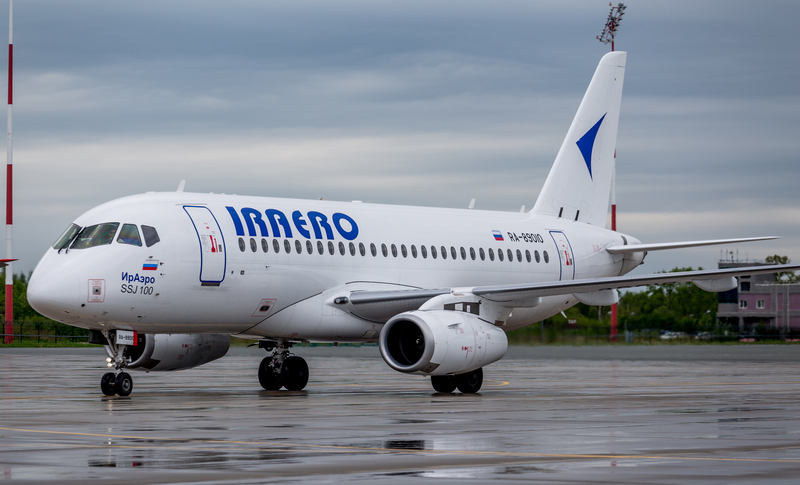
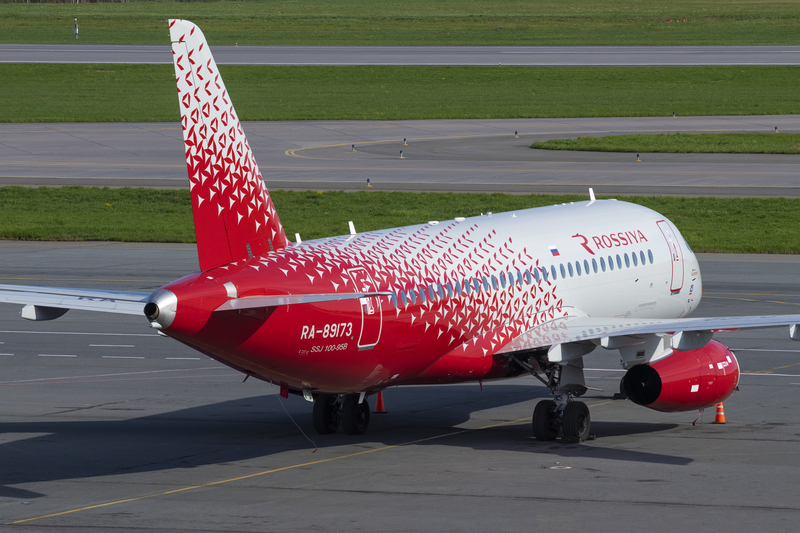
The SJ-100 is the latest evolution of the Superjet program: a twin-engine, five-abreast regional jet designed for short- to medium-haul sectors, with a maximum seating figure around 103 passengers in a high-density layout.
From an airline-ops standpoint, a few details matter more than the marketing:
-
Category fit: It sits in the same broad mission space as the larger Embraer E-Jets, but with a cabin cross-section that’s designed to feel “mainline” rather than commuter-tight.
-
Network reach: Range is sufficient for most intra-India missions and selective near-international flying from India into nearby regions, depending on payload, airport performance, and reserves.
-
Runway and performance reality: Like most jets in this class, it’s not a magic bullet for every short-strip airport—so its strongest economics typically show up where runway performance and turnaround reliability are predictable.
HAL’s pitch is that the SJ-100 is “right-sized” for India’s next layer of growth: not the biggest routes, not the thinnest routes, but the ones in between—exactly where India’s domestic system tends to get congested, both in the air and at the slot level.
From Talk to Metal: HAL’s Lease-First, Build-Later Roadmap
HAL’s public timeline is unusually specific for an early-stage program discussion:
-
Near term: bring in an initial batch via leasing to seed the market and start building operational familiarity
-
Medium term: shift to semi-knocked-down (SKD) assembly in India, with major assemblies shipped in and final integration performed domestically
-
Stated target: an SKD rollout on a roughly three-year horizon after the program’s start
This structure is strategically telling. Leasing aircraft ahead of local assembly is a common play when an ecosystem needs time to mature—training pipelines, spares, tooling, manuals, reliability data, and regulatory comfort. It also allows the operator community to answer the most important question quickly: does the aircraft’s dispatch profile match Indian operational expectations?
Equally important: placing the early aircraft in revenue service forces every stakeholder—maintenance, flight ops, ground handling, and regulators—to build the “muscle memory” that determines whether a new type becomes a dependable fleet cornerstone or a niche experiment.
The Hard Part Isn’t the Airframe: It’s Support, Spares, and Dispatch
Regional jets live or die on one metric that matters far more than cabin finishes or press releases: dispatch reliability.
India is a punishing environment for reliability management—high utilization targets, intense schedule pressure, and a network that increasingly depends on quick-turn connectivity. Any new aircraft type entering the market will be tested immediately on:
-
parts availability and pooling strategy
-
line maintenance capability at outstations
-
MEL discipline and engineering response time
-
training throughput for pilots, cabin crew, and certifying engineers
That makes HAL’s manufacturing angle more than political positioning. Local assembly—and eventually deeper localization—can be as much about supply chain control as it is about industrial policy. If the program is to scale meaningfully, airlines will want to see a credible plan for spares provisioning, engine support, and MRO capacity that doesn’t depend on last-minute logistics.
And because India’s airline industry runs on tight margins and tight schedules, “good enough” support won’t cut it. The market will demand predictable turnaround times for components, clear reliability improvement programs, and a maintenance ecosystem that can stand up to peak-season stress.
Where a 100-Seater Could Make the Most Sense in India
Assuming the aircraft clears the practical hurdles, the most logical use cases are straightforward:
-
Slot-constrained metros: Add frequency without stepping up into larger-gauge aircraft on routes that don’t need it.
-
Tier-2 business pairs: Create same-day connectivity where a turboprop schedule is too slow or too sparse to stimulate demand.
-
Selective “long thin” domestic missions: Routes that can support jet speed but not narrowbody trip cost.
As examples only (not predictions): a 100-seat jet can be a compelling tool on business-heavy domestic links out of Indira Gandhi International Airport (DEL) or Chhatrapati Shivaji Maharaj International Airport (BOM), where frequency matters and schedules are shaped as much by operational constraints as by pure demand.
The Broader Signal From BPM: Russia Is Pitching a Full Regional Portfolio
Another detail from BPM that airline strategists will notice: this isn’t a one-aircraft conversation.
Russian industry players are clearly positioning India as a long-run regional aircraft market not just for jets, but also for turboprops—suggesting an eventual portfolio approach where different aircraft types serve different tiers of India’s network.
That matters because India’s geography favors mixed solutions. Jets win on speed and utilization where infrastructure supports them; turboprops win where runway constraints and thinner demand are decisive. A realistic fleet plan for true nationwide connectivity will likely need both.
Bottom Line
HAL’s SJ-100 push is less about a single aircraft announcement and more about a strategic response to India’s fleet-growth choke points: delivery delays, rising regional demand, and the need for an efficient 100-seat platform that can scale beyond niche deployment.
If HAL can translate SKD assembly plans into a credible, airline-grade support ecosystem—and if early leased aircraft can demonstrate dependable dispatch performance in Indian conditions—the SJ-100 could become a serious contender in the country’s “missing middle” segment. But the market will judge it on operations, not optimism: spares, training, turn times, and reliability will determine whether this becomes India’s next regional workhorse or just an airshow headline.
Keep reading FlyMag
Get the Daily Brief in the morning or the Route Watch weekly recap on Fridays. Or both.