A disrupted United Airlines flight from Houston to Newark has gone viral after passengers said the aircraft returned to the gate at 3 a.m. because a pilot exceeded his duty limit by “one minute.”

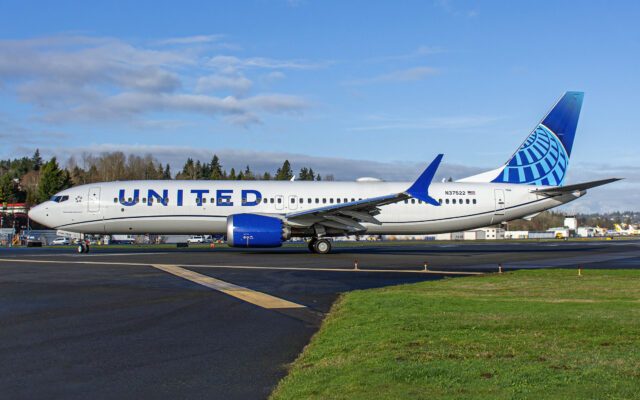
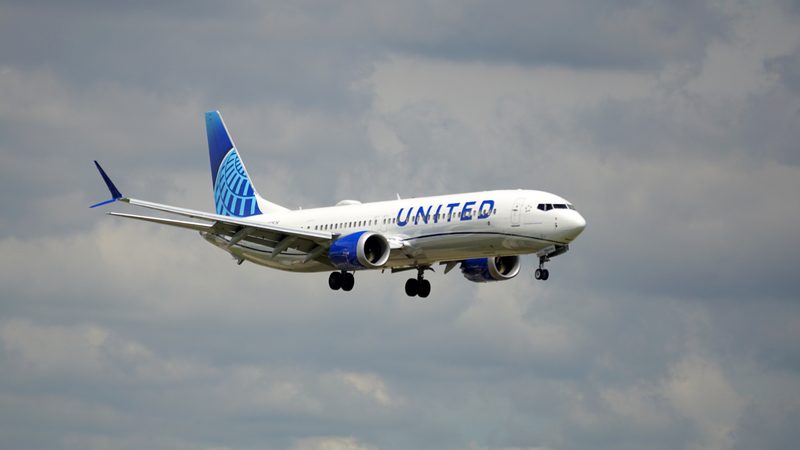
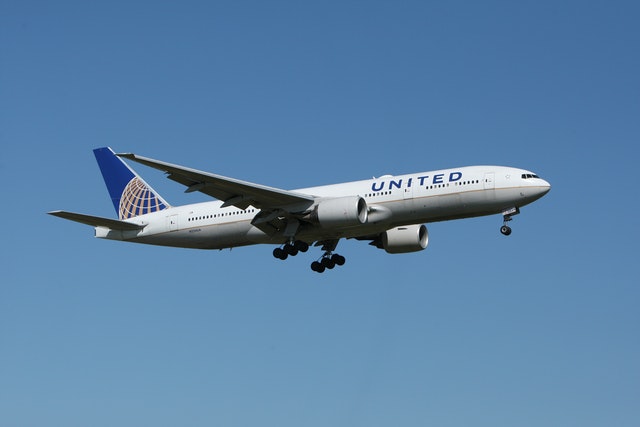
The flight was United UA404 from Houston George Bush Intercontinental Airport (IAH) to Newark Liberty International Airport (EWR). It was operated by a Boeing 737 MAX 9, registration N17589.
The aircraft left Houston more than two hours late, diverted to Washington Dulles International Airport (IAD) because of weather near Newark, then attempted to continue to EWR after refueling.
Read our stories in your inbox
Two aviation newsletters. Zero fluff.
Instead, the aircraft taxied back to the gate at Dulles. Passengers were told the crew had timed out.
That made for a brutal night. It also created a debate over pilot duty rules, passenger care and whether a flight should be cancelled when it is seemingly minutes from departure.
The answer is not as simple as the viral posts make it sound.
A Houston–Newark Flight Becomes A Dulles Diversion
United UA404 was scheduled to operate from Houston (IAH) to Newark (EWR), a route of roughly 1,400 miles.
The flight was blocked at about 3 hours and 42 minutes. It was scheduled to depart Houston at 6:17 p.m. and arrive in Newark at 10:59 p.m.
Instead, the Boeing 737 MAX 9 departed Houston around 8:17 p.m.

As the aircraft approached the Northeast, weather around Newark forced the flight to divert. The aircraft landed at Washington Dulles (IAD) at about 1:04 a.m.
That alone is frustrating, but not unusual.
Newark is one of the most delay-prone airports in the United States when weather and congestion combine. A diversion to Dulles can happen when holding fuel, arrival delays or weather conditions make continuing to EWR impractical.
The Flight Tried To Continue To Newark
After landing at Dulles, the aircraft refueled and prepared to continue to Newark.
The most controversial part came later.
According to flight-tracking analysis cited in aviation reporting, the aircraft pushed back from the Dulles gate at about 2:48 a.m. It then returned to the gate at about 3:16 a.m.
Passengers said the aircraft had reached the runway area before the crew announced it could not continue because of duty-time limits.
Former U.S. soccer player Landon Donovan, who was on the flight, said publicly that the pilot was “one minute” over the limit.
That detail has not been verified by United.
It is possible the situation was close to the legal limit. It is also possible the “one minute” phrasing was how the situation was explained onboard, or how passengers understood it after hours of delays.
Either way, the operational reality is clear. Once a crew can no longer legally or safely complete a flight, the aircraft cannot continue.
Why Pilot Duty Time Is Not A Suggestion
Pilot duty limits in the United States are governed by 14 CFR Part 117, the FAA’s flight and duty limitation rules for flightcrew members.
These rules are not customer-service guidelines. They are safety regulations.
Part 117 defines a flight duty period as the time that begins when a crew member reports for duty with the intention of operating a flight. It ends when the aircraft is parked after the last flight and there is no plan for further aircraft movement by that same crew member.
That matters in this case.
The crew’s duty day did not begin when the aircraft left Dulles. It likely began many hours earlier, before the original Houston departure.
Delays, diversion handling, refueling, weather planning, taxi time and the expected flight time to Newark all count in the operational decision.
By 3 a.m., the crew was no longer dealing with a normal Houston–Newark flight. They were dealing with a delayed flight, a weather diversion, a late-night continuation and a duty clock that was running out.
The Clock Is Only One Part Of The Story
The “one minute” claim makes the situation sound absurd.
In reality, pilot legality is more complicated.
Maximum duty time depends on several factors. These can include report time, number of flight segments, crew acclimation, prior duty, rest history, reserve status, cumulative limits and whether the crew is operating an augmented or unaugmented flight.
The time of day also matters. The FAA specifically recognizes the “window of circadian low,” the overnight period when human alertness is naturally reduced.
That is relevant here because the Dulles decision happened around 3 a.m.
Even if a crew is technically close to legal limits, the captain still has to decide whether the crew is fit to continue. FAA rules require flightcrew members to report rested and prepared. They also prevent crews from continuing if they are too fatigued to safely perform their duties.
In other words, this is not only about a stopwatch.
It is about legality, fatigue, operational risk and whether the crew can safely complete the flight.
Could The Crew Have Extended?
This is where the story becomes interesting.
Under 14 CFR 117.19, a flight duty period can be extended in some cases when unforeseen operational circumstances arise before takeoff.
The pilot in command and the airline may extend the maximum flight duty period by up to two hours, subject to limits and reporting requirements.
However, that does not mean every flight can continue automatically.
An extension cannot be used if it would cause a crew member to exceed certain cumulative duty limits. Airline procedures, union contract rules, dispatch requirements and fatigue reporting can also affect what happens.
Most importantly, the captain must still be fit to fly.
If the crew is not comfortable continuing, or if the operation is no longer legal under the applicable limits, the aircraft must return to the gate.
That may be deeply frustrating for passengers. But it is still the correct safety outcome.
Why This Happened After Pushback
Passengers often wonder why a flight would push back if the crew was close to timing out.
There are several possible explanations.
The operation may have looked legal when the continuation was planned. Then taxi time, updated weather, runway sequencing, dispatch timing or revised calculations may have changed the outcome.
The crew may also have needed updated takeoff data, release information or operational clearance before departure. If any of that took longer than expected, the duty clock could have become the deciding factor.
Another possibility is that the crew had legal room only if the flight departed quickly.
That is risky at a busy airport, even at night. Taxi delays, runway changes, air traffic control spacing and weather reroutes can add minutes quickly.
This is why flights near crew limits are so fragile.
A delay that looks small to passengers can be decisive to the crew and dispatch team.
The Boeing 737 MAX 9 Was Not The Issue
The aircraft itself was not the problem.
United’s Boeing 737 MAX 9 is a modern narrowbody used on domestic and medium-haul routes across the carrier’s network. United lists the aircraft with 179 seats, including 20 United First seats, Economy Plus and standard Economy.
For a Houston (IAH)–Newark (EWR) route, the MAX 9 is a logical aircraft.
It has the range, capacity and economics for a high-demand domestic route. The flight’s disruption was caused by weather, diversion handling and crew duty limits, not by an aircraft-type issue.
That distinction matters.
The story is not about a technical failure. It is about what happens when a normal scheduled flight becomes an overnight irregular operation.
Passenger Frustration Was Still Understandable
The safety logic does not erase the passenger experience.
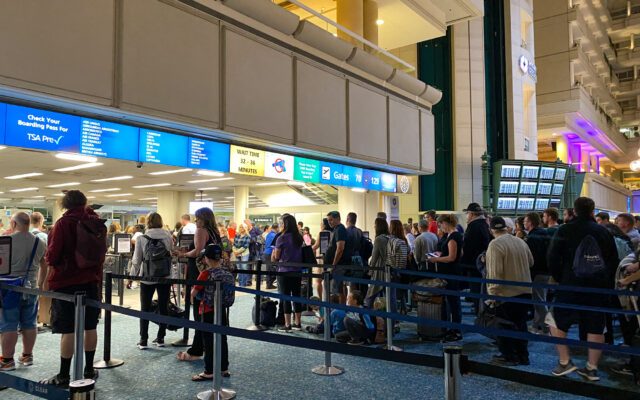
By the time UA404 returned to the Dulles gate, passengers had already dealt with a delayed departure, a diversion, a late-night refueling stop and a failed attempt to continue to Newark.
They were tired. They had missed plans. Some had onward travel. Others, including Donovan and commentator Ian Darke, were reportedly traveling for World Cup coverage.
The lack of hotel accommodation became another point of anger.
Passenger anger in that situation is understandable. Communication often matters as much as the disruption itself.
Travelers can usually accept weather and safety decisions. What they struggle with is uncertainty, poor updates and feeling abandoned in an airport overnight.
That appears to be why this incident gained so much attention.
The Airline Also Had A Hard Problem
United also faced a difficult operational problem.
The airline had a diverted aircraft at Dulles, passengers bound for Newark, a crew near or beyond duty limits, weather affecting the original destination and limited replacement-crew options in the middle of the night.
Finding a fresh crew at 3 a.m. is not always simple.
Even at a large United hub like Dulles, crews must be legal, rested, qualified on the aircraft type and available for the route. A pilot sitting at the airport is not automatically usable.
The aircraft also had to be released again, fueled and sequenced into the air traffic system.
That does not excuse poor passenger care. But it explains why a quick fix may not have been available.
The Replacement Flight Left In The Morning
After the overnight cancellation, United operated the continuation to Newark later that morning.
The replacement flight departed Dulles around 9:23 a.m. and arrived at Newark around 10:05 a.m.
For passengers who made that flight, the arrival delay was roughly 11 hours.
That is a major disruption for any traveler. It is especially difficult when much of the delay happens overnight and away from the original destination.
The incident also shows why diversions can become so complex.
A diversion is not just a landing at another airport. It creates a new operational chain: fuel, gates, crews, legality, maintenance checks, passenger care, bags, airport staffing and onward routing.
If one link breaks, the entire recovery can fail.
What This Case Says About Crew Planning
For airlines, this type of event is a reminder that duty margins matter.
When a crew is already close to its limit, weather diversions can quickly push an operation over the edge.
Airlines have to balance efficiency with resilience. Too much slack raises costs. Too little slack makes recovery harder when something goes wrong.
That is especially true in the evening.
A delayed late-day flight has fewer recovery options. If it diverts after midnight, hotels may be scarce, terminal staffing may be limited and reserve crews may not be immediately available.
This is where airline planning becomes visible to passengers.
When everything works, nobody notices. When it fails, the result can look chaotic.
Safety Still Comes First
The key point should not be lost.
No passenger wants a fatigued crew operating a late-night flight after a diversion.
Pilot fatigue has played a role in past aviation accidents and incidents. That is one reason the FAA’s modern duty rules are strict.
The rules are designed to reduce the chance that tired crews continue flying simply because passengers are frustrated, aircraft are out of position or the airline wants to avoid a cancellation.
That can create painful outcomes.
A flight may be cancelled even when the destination is close. A crew may return to the gate even after pushback. A delay of minutes may become an overnight disruption.
Still, the alternative is worse.
Airlines should be judged harshly for poor communication and weak passenger support. They should not be criticized for stopping a flight that no longer meets crew legality or safety requirements.
Bottom Line
United Flight UA404 became a viral example of how quickly a routine domestic flight can unravel.
The Boeing 737 MAX 9 left Houston (IAH) late, diverted to Washington Dulles (IAD) because of weather near Newark (EWR), then returned to the gate after an attempted overnight continuation when the crew reportedly timed out.
The passenger claim that the pilot was “one minute” over duty time has not been verified by United. But the broader issue is clear.
Pilot duty limits are safety rules, not suggestions.
Could United have handled communication and passenger care better? Based on passenger accounts, yes. Could the crew legally or safely continue if it had timed out or was no longer fit to fly? No.
That is the uncomfortable truth of this story.
From the cabin, it may have looked like one minute ruined the night. From an operational standpoint, the flight had already become a weather diversion, a fatigue-risk problem and a crew-legality case.
At 3 a.m., the safest decision was the least popular one: return to the gate and try again with a legal crew.