Wizz Air has returned to high-volume growth, with the recovery of grounded aircraft and a rapid increase in Airbus A321neo deliveries giving the carrier considerably more capacity to deploy across Europe.

The airline carried 8.7 million passengers in August 2026, up 25.9% from a year earlier. Its traffic figures show that load factor also improved, rising 0.8 percentage points to 95.6%. Based on those figures, available seats increased about 24.8% to 9.1 million.
The expansion continued after the summer peak. Wizz carried 7.8 million passengers in September, 24.2% more than in September 2025, although load factor slipped 0.8 points to 92%. Across the six months from April through September, it transported 46.1 million passengers, an increase of 26.2%.
Read our stories in your inbox
Two aviation newsletters. Zero fluff.
That pace is substantially faster than Ryanair’s. It does not, however, mean Wizz is close to overtaking Europe’s largest airline group. The two carriers are expanding from very different fleet, network and financial positions.
Wizz Is Adding Depth Rather Than More Experiments
Wizz’s current expansion differs from the more geographically adventurous growth that preceded the closure of its Abu Dhabi operation and withdrawal from Vienna. The airline is concentrating capacity in Central and Eastern Europe, Italy, the Balkans and selected Western European markets, including Spain.
Its September Capital Markets Day presentation said summer 2026 seat capacity grew 25% while the number of airports served remained almost unchanged at 185, compared with 186 the previous summer. Wizz added 340 routes but also removed 58, and 80% of the new routes connected airports already present in its network.
The result is a denser schedule rather than a much wider map. Average weekly frequency on retained routes rose from 5.2 to 5.4 round trips, while the proportion operating at least four times weekly increased from 61% to 64%. The airline said 84% of growth on existing routes came from additional frequencies rather than larger aircraft alone.
This matters because Wizz still has a relatively high proportion of capacity on routes operating less than daily. Increasing frequency can improve schedule relevance, stimulate repeat business and strengthen pricing once routes mature. It also gives the airline more leverage when negotiating with airports where it is adding aircraft rather than merely opening a thin new spoke.
The Grounded Fleet Is Gradually Returning
The expansion is partly a fleet-recovery story. Wizz had 45 aircraft grounded by Pratt & Whitney geared-turbofan inspections at the peak of the disruption. That figure had fallen to 30 by March 2026 and 27 by June.
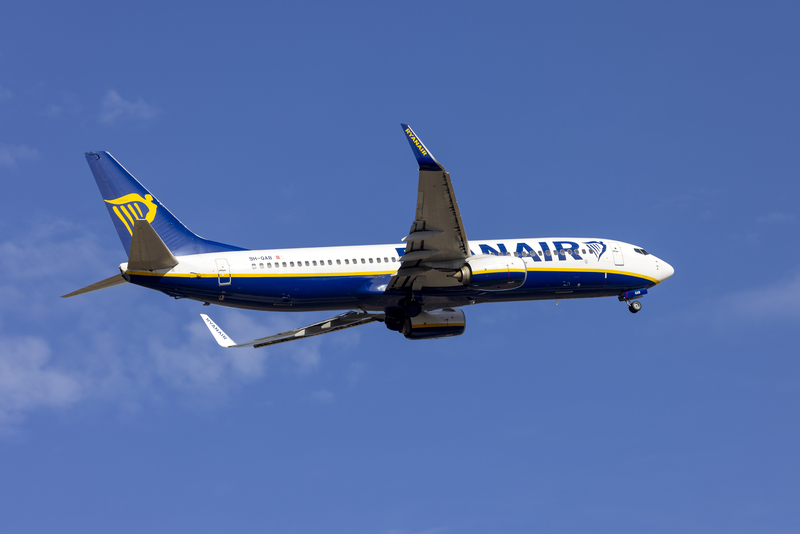
Wizz’s first-quarter results projected 15 to 20 aircraft on the ground at the end of the current financial year, with the remaining affected fleet due back by the end of calendar 2027. Returning aircraft combine with new deliveries to produce unusually high near-term seat growth.
The group had 270 aircraft at June 30, including 191 Airbus A321neos and nine A321XLRs. The A321neo is central to Wizz’s economics: its 239-seat, all-economy cabin spreads crew, ownership and airport costs across a larger number of seats than the airline’s older A320s and A321ceos. Wizz says the type also burns about 20% less fuel than the aircraft generation it replaces.
The airline plans to have 335 aircraft by the end of its 2030 financial year, with the older ceo fleet retired by then. It is targeting average annual seat growth of 10% to 12% between its 2027 and 2030 financial years, after the current growth rate peaks in the 20% range.
Ryanair Still Operates on Another Scale
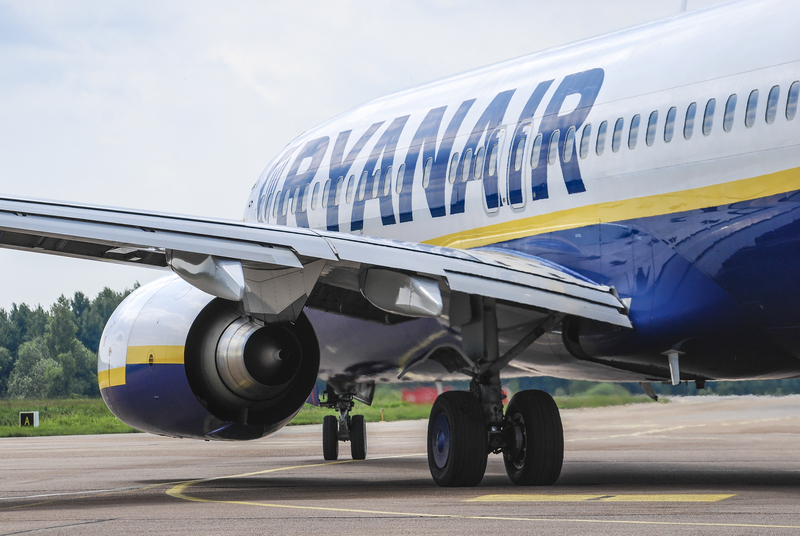
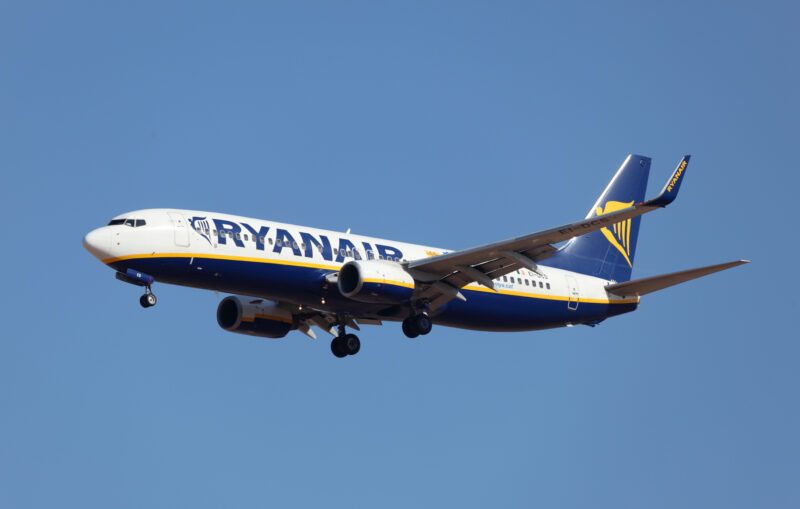
Ryanair carried 22.2 million passengers in August and 20.1 million in September, according to its monthly traffic data. Wizz’s August passenger total was therefore about 39% of Ryanair’s, while its September total was slightly below that level.
For the April-to-September half-year, Ryanair carried approximately 125.7 million passengers against Wizz’s 46.1 million. Wizz is growing much faster, but Ryanair still transported nearly 80 million more passengers during those six months alone.
The gap is equally clear in the annual accounts. Wizz’s 2026 financial results recorded 69.7 million passengers, €5.69 billion in revenue and net profit of €1.3 million. Ryanair carried 208.4 million passengers and reported €2.26 billion in pre-exceptional profit, while ending its financial year with 647 aircraft.
Ryanair’s fleet included all 210 of its Boeing 737 MAX 8-200 “Gamechangers.” The 197-seat aircraft provides four percent more seats than its 189-seat Boeing 737-800s while reducing fuel consumption per seat. Ryanair’s annual report also sets out a path toward 300 million annual passengers by its 2034 financial year, supported by 300 Boeing 737 MAX 10s.
Wizz, meanwhile, is targeting more than 125 million passengers in its 2030 financial year. That would represent a major increase, but Ryanair is likely to remain substantially larger throughout the period.
Fast Growth Has Not Yet Produced Ryanair-Level Returns
The more immediate test is whether Wizz can convert growth into revenue and profit. In the quarter ended June 30, passenger numbers rose 25.1%, but revenue increased only 5.5%. Revenue per available seat kilometer fell 8.1%, and the company posted a €198.2 million net loss.
Some deterioration reflected higher fuel costs and the deliberate introduction of large amounts of new capacity. Newly opened routes generally require lower fares while demand develops. Wizz is betting that reduced route churn and higher frequencies will allow more of the network to mature, lifting fares and ancillary sales without surrendering its cost position.
Ryanair faced its own fuel and fare pressures in the same quarter, but its first-quarter results still showed profit after tax of €538 million. Its size, balance sheet, airport bargaining power and mature network give it more room to absorb weak pricing than Wizz currently possesses.
Wizz can nevertheless compete directly where its network has sufficient density. It holds leading positions across much of Central and Eastern Europe, where its brand, bases and high-capacity A321neo fleet are difficult to dislodge. Its challenge is not proving that it can add seats. It is demonstrating that those seats can earn sustainable returns as the initial growth phase passes.
Bottom Line
Wizz Air’s strongest opportunity is not a network-wide contest with Ryanair. It is the ability to defend Central and Eastern Europe while building a limited number of dense positions in Italy, Spain and the Balkans. Airports in those markets gain another carrier capable of basing multiple aircraft, while passengers are likely to see sustained fare competition as Wizz introduces capacity and Ryanair protects its own share.
The strategy also marks a more disciplined phase for Wizz. Capacity is moving away from costly or operationally complicated experiments and toward markets where the airline already has infrastructure, recognition and enough frequency to influence pricing. The A321neo gives it an effective aircraft for that task, but its 239 seats become an advantage only when demand is deep enough to fill them without prolonged discounting.
The next indicators are unit revenue, winter load factors and the pace at which Pratt & Whitney-affected aircraft return. Continued passenger growth is already built into the fleet plan. The more consequential question is whether route maturity and improved aircraft utilization can rebuild margins before another wave of deliveries adds further pressure to fares.
Keep reading FlyMag
Get the Daily Brief in the morning or the Route Watch weekly recap on Fridays. Or both.