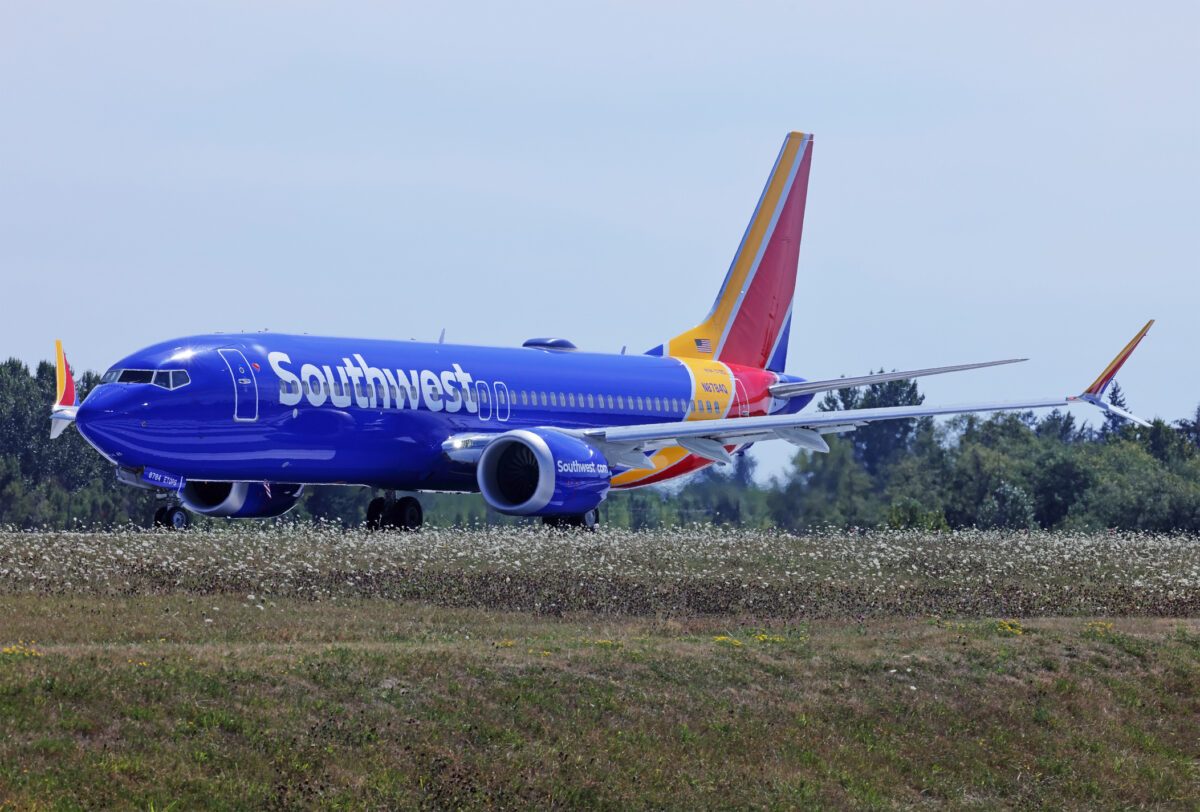
Southwest Airlines has launched a flight-shopping plugin in ChatGPT, allowing travelers to explore its network and search for booking options through a conversation rather than beginning at the airline’s website or app.

The carrier introduced the plugin on October 6, calling it the first product of its kind from a U.S. airline. According to Southwest’s announcement, the project was developed with OpenAI and Amazon Web Services and forms the opening phase of a broader AI-powered booking strategy.
The initial product concentrates on destination discovery and flight shopping. A traveler can start with a broadly framed trip request, review Southwest options and continue narrowing the search within ChatGPT. That gives the airline a presence at the inspiration stage, before a customer has necessarily chosen a destination, airport or travel date.
Read our stories in your inbox
Two aviation newsletters. Zero fluff.
Southwest describes the plugin as a more direct path from discovery to its booking options, rather than a replacement for every function on Southwest.com. The distinction is important: the launch brings the airline’s shopping capability into ChatGPT, while Southwest has framed the larger booking proposition as a phased development.
A New Front Door to Southwest’s Inventory
The plugin changes the interface through which a search begins. Instead of repeatedly entering airports and dates into a conventional booking form, a traveler can express preferences in ordinary language and refine the request through follow-up prompts.
That format is particularly suited to flexible leisure searches. A customer could begin with a departure city, a date range and the type of destination sought, then narrow the results by schedule or price. For Southwest, the commercial opportunity is to place its inventory inside the conversation before another airline or online travel agency captures the customer.
OpenAI’s documentation for ChatGPT plugins says users can find products through the plugin directory and invoke installed plugins automatically, through an @ mention or from the composer. Availability of an individual plugin can vary by plan, region, workspace and interface.
Southwest said OpenAI and AWS are providing the AI and cloud technology behind the experience. The airline has not presented the October launch as a finished end-to-end platform. Chief Information Officer Lauren Woods instead described the underlying work as a secure, scalable foundation on which Southwest can add capabilities over time.
Part of a Wider Distribution Shift
The move is notable because Southwest historically relied more heavily than its large U.S. competitors on direct sales. Its low-cost distribution model centered on Southwest.com, the Southwest app and the airline’s own business-booking channels, limiting the fees and customer-acquisition costs associated with intermediaries.
That approach has been changing. Southwest’s 2025 annual report said 78% of passenger revenue originated through Southwest.com or the Southwest app during 2025, down from 81% in 2024 as bookings through online travel agencies increased.
The airline added Expedia and Priceline while continuing to work with metasearch platforms including Google Flights, Kayak and Skyscanner. It also expanded international distribution through airline partnerships and agency channels. Southwest characterized those moves as an effort to reach new and less frequent customers where they were already searching for travel.
ChatGPT extends that strategy into generative search. Unlike a metasearch listing, a conversational tool can remain involved while the traveler changes dates, considers another destination or asks for a different schedule. The practical value to Southwest will depend on whether those conversations produce qualified traffic and completed bookings rather than adding another comparison layer between the airline and the customer.
A More Complex Product to Explain
The plugin also arrives after Southwest made its booking proposition more complicated. The airline replaced its familiar open-seating model with assigned seating and introduced Basic, Choice, Choice Preferred and Choice Extra fare bundles for travel beginning January 27, 2026.

Those products combine different seat-selection, baggage, flexibility, boarding and Rapid Rewards benefits. Southwest’s assigned-seating rollout also added preferred and extra-legroom seats, making the shopping process closer to the merchandising structures used by other major U.S. airlines.
A conversational interface gives Southwest another way to present those choices. Rather than requiring a traveler to interpret a fare table unaided, the plugin can form part of a dialogue about timing, price and the type of trip being planned. That role becomes more commercially important as the airline sells a broader range of fare and seat products.
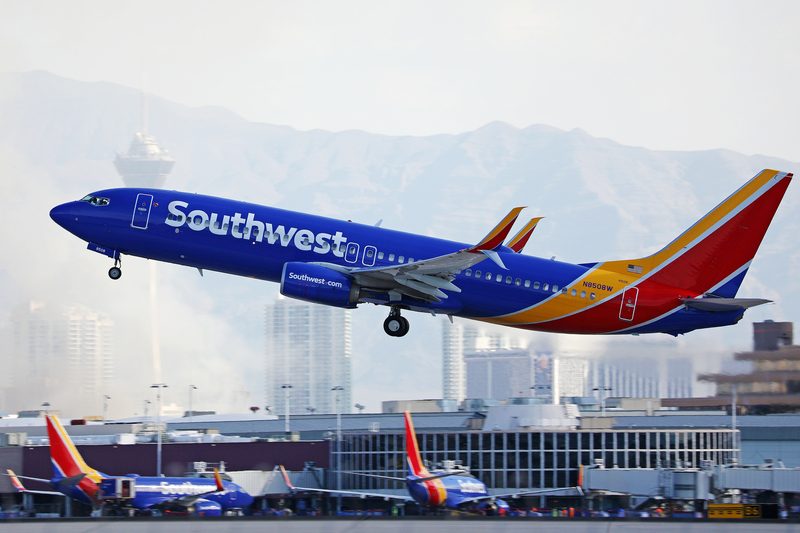
The underlying operation remains standardized around the Boeing 737. At the end of 2025, Southwest reported 305 Boeing 737-700s, 198 Boeing 737-800s and 300 Boeing 737 MAX 8s. Following cabin modifications, the 737-700 carries 137 seats, while the 737-800 and 737 MAX 8 carry 175. That common-fleet structure supports a broad point-to-point network, while the different cabin layouts give travelers varying seat inventories depending on the aircraft assigned.
Southwest Builds Out Its AI Platform
The customer-facing plugin follows AI work already underway inside the airline. Southwest’s annual report said it had used generative AI for marketing-message testing, enhanced AI-based customer-service replies and invested in modernizing its data-processing capabilities.
The airline also sets out principles covering accuracy, explainability, security, regulatory compliance, privacy and human oversight in its responsible AI framework. Those controls become more visible when AI moves from internal support functions into a public shopping channel that handles live travel requests.
Sabrina Callahan, Southwest’s chief digital and marketing officer, characterized the launch as a test-and-learn initiative. That suggests the airline will use the first phase to assess how customers search conversationally before deciding which booking, account and trip-management functions should follow.
Bottom Line
Southwest’s ChatGPT plugin is less a standalone technology experiment than the next step in a sustained broadening of the airline’s distribution. The carrier once depended overwhelmingly on customers reaching Southwest.com deliberately. It is now putting its fares on more third-party surfaces while attempting to preserve a direct path into its own booking environment.
The launch also gives Southwest a practical setting in which to determine whether conversational shopping improves conversion for flexible travelers. The most consequential later steps would be secure Rapid Rewards integration, payment, seat selection and post-booking servicing. Adding those functions would turn the plugin from a discovery channel into a meaningful alternative sales interface.
For now, Southwest gains earlier access to travelers who begin with a question rather than a city pair. What matters next is whether the airline can convert that visibility into bookings without surrendering the economics, customer relationship and operational control that made direct distribution central to its model.