Icelandair will add St. Louis to its North American network in May 2027, pairing a seasonal nonstop to Iceland with connecting traffic from partner Southwest Airlines.


The carrier will fly between St. Louis Lambert (STL) and Reykjavík’s Keflavík (KEF) up to four times per week from May 14 through October 24, 2027. According to the joint announcement published by the airport, flights are scheduled on Mondays, Wednesdays, Fridays and Sundays.
Icelandair has opened reservations, with its St. Louis booking page showing travel from the May 14 launch date. The airline says passengers will have access through KEF to more than 35 European destinations.
Read our stories in your inbox
Two aviation newsletters. Zero fluff.
A Boeing 737 MAX Route Across the Atlantic
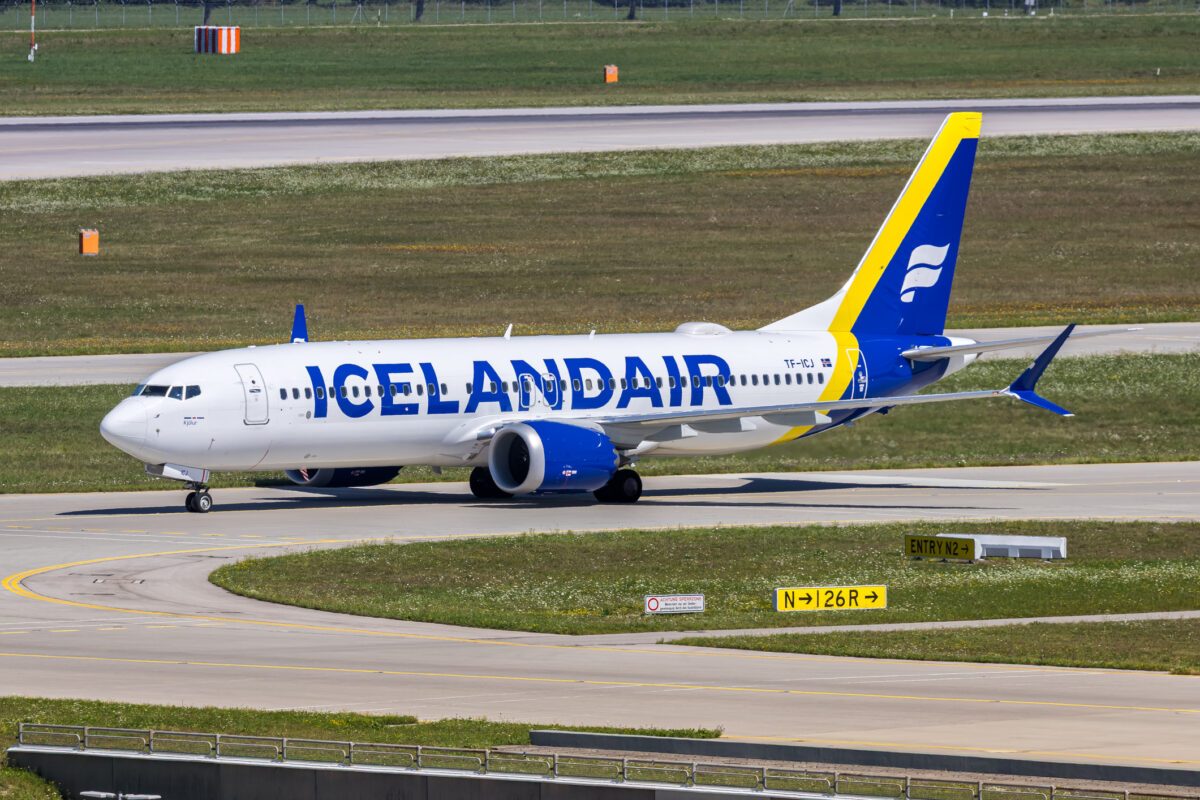
Icelandair plans to operate the route with the Boeing 737 MAX 8, continuing its use of narrowbody aircraft to develop North American markets that do not require widebody capacity.
The airline configures its MAX 8s with 160 seats, including a 2-2 Saga Premium cabin and 3-3 economy seating. The aircraft has a published maximum range of 4,045 miles, making it well suited to medium-length North Atlantic sectors such as St. Louis-Keflavík. Icelandair’s fleet information also lists a cruise speed of 521 mph and CFM International LEAP-1B engines.
At four weekly rotations, the planned schedule represents up to 640 seats in each direction per week. That is a measured level of capacity for a new seasonal gateway and allows Icelandair to combine local St. Louis demand with connections at both ends of the route.
The 737 MAX 8 is central to that calculation. Its capacity sits below the widebody aircraft used by St. Louis’ other European operators, reducing the number of passengers Icelandair must assemble for each departure while preserving the range needed to reach KEF. The type also gives the airline a consistent product with many of its other secondary North American routes.
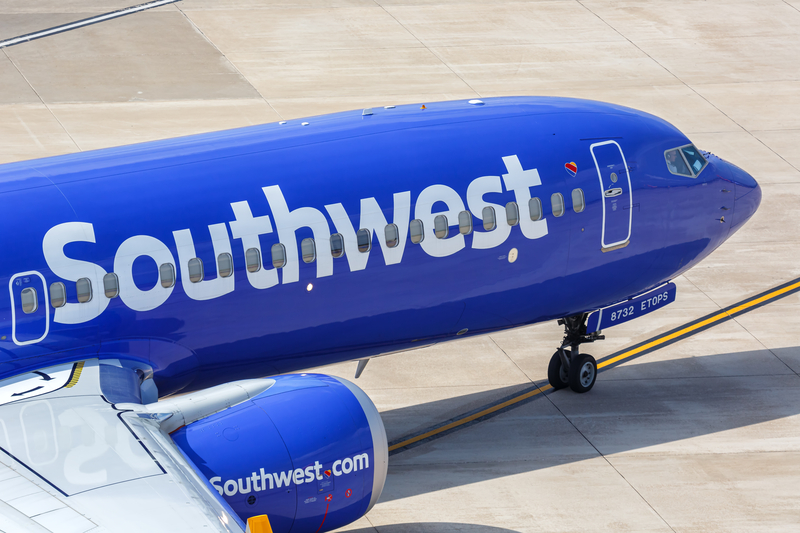
Southwest Feed Strengthens the Case for St. Louis
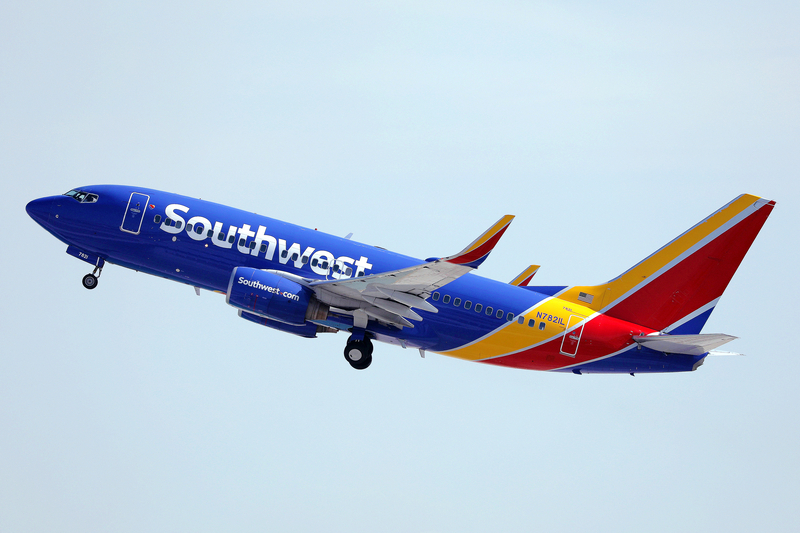
The route’s importance extends beyond nonstop demand between Missouri and Iceland. Icelandair and Southwest are designating St. Louis as another connecting point in their commercial partnership, creating itineraries between Southwest’s domestic network and Icelandair flights to Iceland and Europe.

Southwest is the dominant airline at STL. The airport’s 2025 annual report put its share of enplaned passengers at 63.8%, compared with 13.2% for American Airlines, the second-largest carrier. That concentration gives Icelandair access to a considerably broader catchment than the St. Louis metropolitan area alone.
Icelandair became Southwest’s first international airline partner when the carriers began interline operations in February 2025. The arrangement initially used Baltimore-Washington as a connecting gateway and subsequently expanded to five additional U.S. airports. Icelandair said at the time that the six-gateway network was designed to feed passengers between Europe and Southwest destinations across North America.
St. Louis advances that strategy by placing an Icelandair flight at one of Southwest’s most important connecting airports. It also differentiates the route from a service built entirely around local passengers: Southwest can deliver traffic from cities that may be too small to support their own Icelandair gateway, while Icelandair provides an eastbound outlet through KEF.
Iceland Service Returns to St. Louis
The route restores a nonstop market that St. Louis has served before. WOW air began four-times-weekly STL-KEF flights in May 2018 with Airbus A321 aircraft, later adding a fifth weekly frequency. The service ended when WOW air ceased operations in March 2019, according to the airport’s planning documents.
WestJet’s 2026 International Expansion Adds Europe, South America And More Sun Flying
Icelandair’s approach differs in two important respects. It brings a two-cabin product rather than WOW air’s ultra-low-cost model, and it arrives with Southwest feed already embedded in the route plan. Icelandair also operates a more mature connecting structure at KEF, selling both Iceland trips and onward journeys across Europe.
The addition comes during a broader expansion of St. Louis’ transatlantic network. Lufthansa has served Frankfurt from STL since 2022 and increased its peak 2026 schedule to five weekly flights. British Airways launched London Heathrow service in April 2026 and will operate portions of summer 2027 daily, with its 2027 capacity rising 80% from its first season.
Icelandair therefore enters a market that has recently demonstrated support for multiple European links. Its proposition is distinct from the nonstop access offered by British Airways and Lufthansa: KEF functions as a compact connecting point for northern and continental Europe, while the 160-seat MAX limits the capacity committed to each departure.
Bottom Line
St. Louis gains more than another pin on its route map. Icelandair is testing whether a dominant domestic carrier’s feed can support a comparatively small transatlantic aircraft in a market already served by two European network airlines. Southwest gains an additional international outlet at an airport where it controls nearly two-thirds of passenger traffic, while Icelandair can draw from well beyond the local catchment without deploying a widebody.
The route also illustrates how Icelandair can use the Boeing 737 MAX 8 to pursue thinner U.S. markets selectively. A 160-seat aircraft flown four times weekly offers enough capacity to matter without demanding the passenger volumes of a daily widebody operation. If Southwest connections develop as intended, STL could become one of the clearest demonstrations of the commercial value behind the two airlines’ partnership.
The main measure will be whether Icelandair can sustain both the four-weekly peak schedule and a full May-to-October season after the launch year. Strong connecting flows could support additional frequency or a longer operating window, while weak feed would leave the route more dependent on seasonal leisure traffic between St. Louis, Iceland and Europe.
Keep reading FlyMag
Get the Daily Brief in the morning or the Route Watch weekly recap on Fridays. Or both.