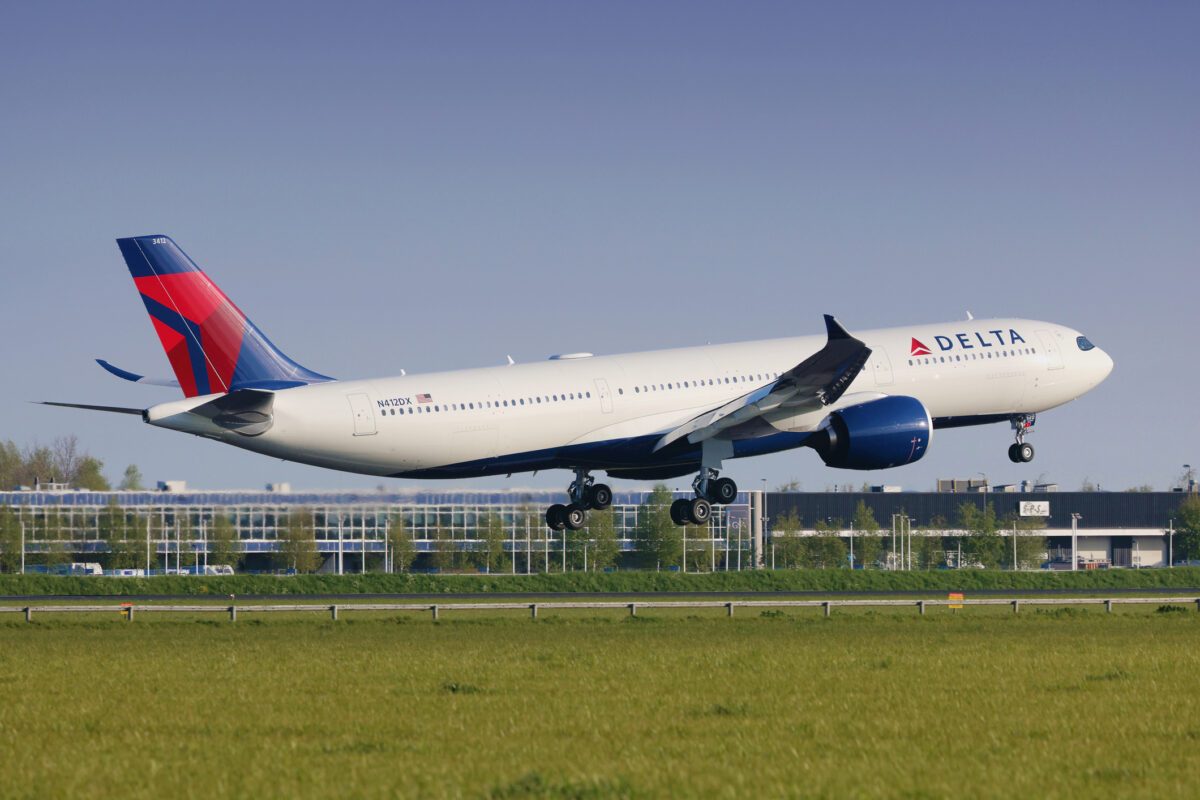
A Delta Air Lines Airbus A330-900neo was isolated and searched at Tel Aviv Ben Gurion (TLV) on Tuesday, October 13, after an anonymous bomb threat was reported against the aircraft.
The widebody had arrived from New York John F. Kennedy (JFK) as flight DL234. Instead of proceeding through the normal arrival process at Terminal 3, the aircraft was moved to a remote parking position and its passengers were taken off.
In a statement issued after the search, the Israel Airports Authority said every passenger had left the aircraft safely. Ben Gurion security personnel completed a thorough inspection and found nothing unusual, allowing the airport to return to normal operations.
Read our stories in your inbox
Two aviation newsletters. Zero fluff.
The authority did not report any injuries or aircraft damage. It also did not indicate that the alert led to a wider suspension of arrivals or departures at TLV.
Aircraft Kept Away From Terminal Operations
Moving the A330 to a remote position separated the aircraft from the passenger terminal, neighboring gates and the equipment concentrated around an active widebody stand. It also gave security teams space to inspect the jet without tying up a contact gate or conducting the operation amid normal passenger traffic.
The response meant that deplaning, baggage handling and the aircraft inspection had to be managed away from Delta’s usual facilities. The airport authority lists Delta as a Terminal 3 operator and identifies QAS as the airline’s ground services provider at Ben Gurion.
For a long-haul arrival, the operational effect extends beyond moving passengers. Checked baggage and cargo occupy the lower-deck compartments, while catering vehicles, cleaning crews, maintenance personnel and fueling equipment would ordinarily begin servicing the aircraft for its next assignment. A security isolation interrupts that turnaround sequence until authorities release the jet.
The authority’s announcement that operations had returned to normal confirmed that the response ended without a continuing threat to the airport. It did not say how long the aircraft remained isolated after the search was completed.
Daily New York Service Had Recently Returned
The incident came a little more than five weeks after Delta restored its daily JFK–TLV operation. The airline restarted the route on September 6, with the first eastbound flight arriving in Israel the following morning.
Delta said before the relaunch that the decision followed a review of the regional security environment. The carrier also said it would continue monitoring conditions in coordination with aviation authorities and government agencies.
That background makes the handling of Tuesday’s alert operationally significant. Delta’s Tel Aviv flying has been repeatedly adjusted in response to regional conditions, and the current service represents its sole daily nonstop link between Israel and the United States. An aircraft-specific threat therefore requires authorities to protect the flight without unnecessarily disrupting the rest of the airport or the broader schedule.
Published schedule data for DL234 identifies the service as the daily New York-to-Tel Aviv flight, normally leaving JFK in the afternoon and arriving at TLV the following morning.
Delta Uses Its Newest A330 Variant on the Route
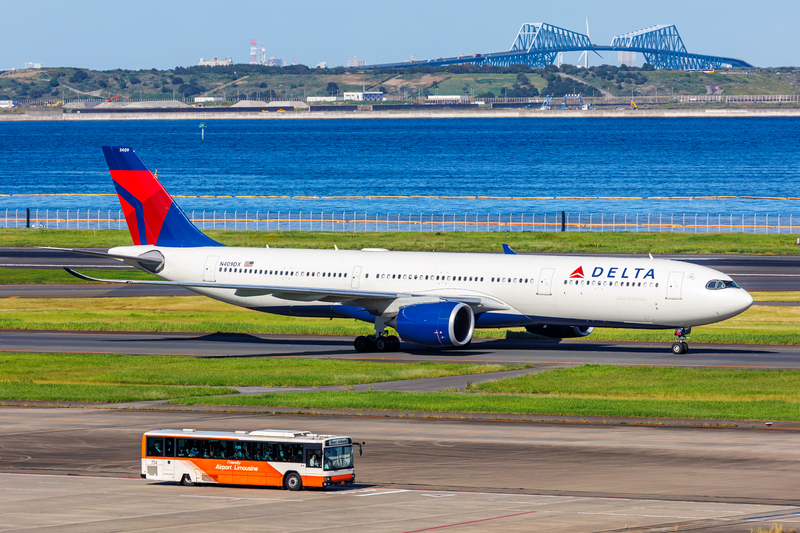
Delta assigns the Airbus A330-900neo to the New York–Tel Aviv route. The aircraft is a particularly important asset for the carrier because it combines long-haul range with Delta’s complete international cabin lineup.
Delta’s 281-seat configuration has 29 Delta One suites, 28 Delta Premium Select seats, 56 Delta Comfort seats and 168 Main Cabin seats. The aircraft is powered by Rolls-Royce Trent 7000 engines, and Delta publishes a range of 6,995 miles for its version.
That capacity places a substantial number of passengers and premium seats on each rotation. The four-cabin layout is also central to the route’s commercial role, serving a mix of business, visiting-friends-and-relatives and connecting traffic through JFK.
Airbus describes the A330-900 as a long-range widebody capable of flying up to 7,350 nautical miles, depending on configuration and operating conditions. Its range comfortably covers the roughly 10- to 11-hour transatlantic sector between New York and Tel Aviv while providing lower-deck capacity for baggage and freight.
The same characteristics that make the type useful on the route also raise the cost of an extended security hold. A delayed release can affect crew duty limits, ground-service sequencing and the aircraft’s onward rotation. In this case, the airport authority’s return-to-normal announcement indicated that the alert was resolved without a prolonged airport-wide interruption.
Bottom Line
The episode shows the value of containing an aircraft-specific security alert without allowing it to become an airport-wide shutdown. Ben Gurion’s decision to use a remote stand kept the response physically separated from Terminal 3 while passengers were removed and security personnel inspected the A330. Once the aircraft was cleared, the airport could resume its regular operating pattern.
For Delta, the event touches a route that has only recently returned to daily operation and remains closely tied to security assessments. The A330-900neo gives the airline meaningful capacity and a strong premium product between New York and Tel Aviv, but each daily rotation also concentrates 281 seats in a single aircraft. Even a threat that proves unfounded can therefore disrupt hundreds of travelers and place pressure on a tightly planned long-haul turnaround.
The immediate issue is closed: all passengers left safely, the inspection produced no unusual findings and TLV returned to normal operations. What matters next is whether the threat produces any additional operational measures for Delta’s Tel Aviv service or remains an isolated event handled within Ben Gurion’s existing security procedures.
Keep reading FlyMag
Get the Daily Brief in the morning or the Route Watch weekly recap on Fridays. Or both.