American Airlines has restored scheduled service to Haiti, opening a daily nonstop route between Miami (MIA) and Cap-Haïtien (CAP) on November 1.

The flight makes American the first major U.S. network carrier to return to Haiti since the security crisis forced airlines to withdraw in 2024. It also puts the carrier back at CAP for the first time in more than six years, although the destination—and the regulatory conditions surrounding the operation—make this a narrower return than the resumption of service to Port-au-Prince would be.
American marked the occasion with an all-Haitian, Creole-speaking operating crew led by Captain Oliver Jean. The airline confirmed the crew arrangement in its announcement following the inaugural flight, placing the employees at the center of a restart with particular significance for South Florida’s Haitian community.
Read our stories in your inbox
Two aviation newsletters. Zero fluff.
Daily Boeing 737 Service From Miami
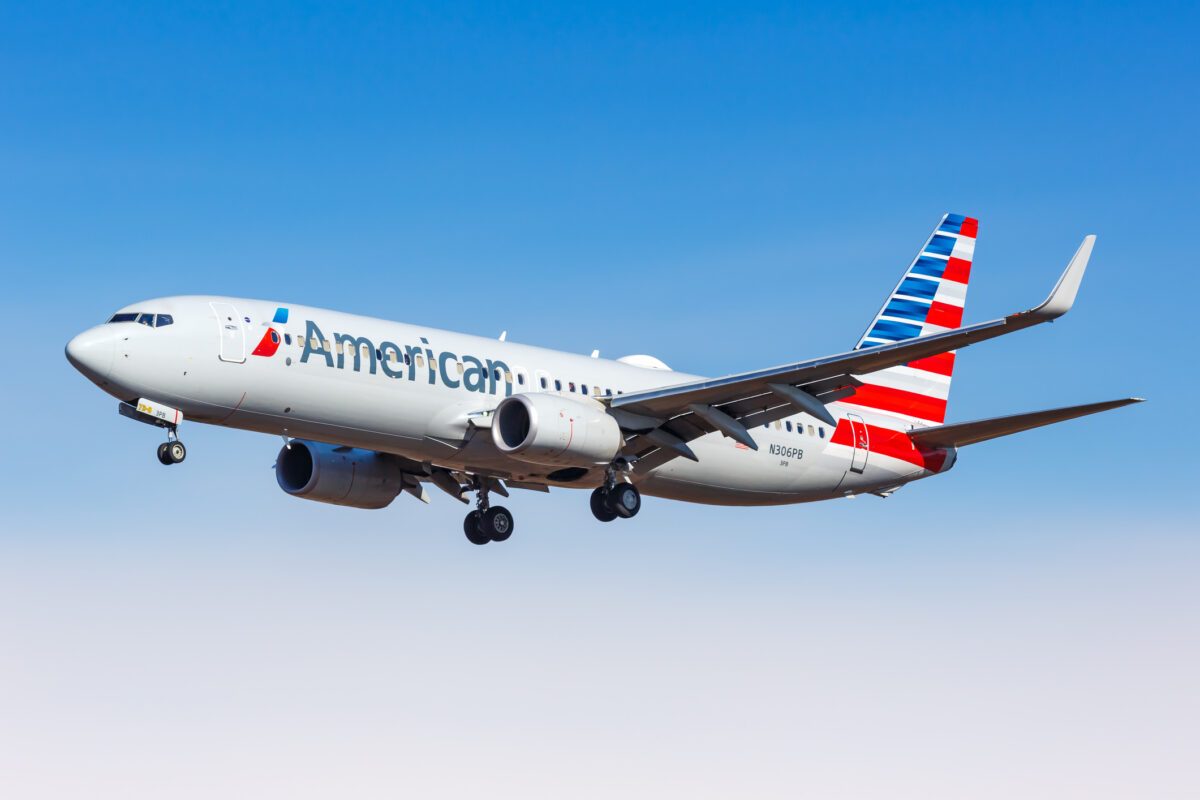
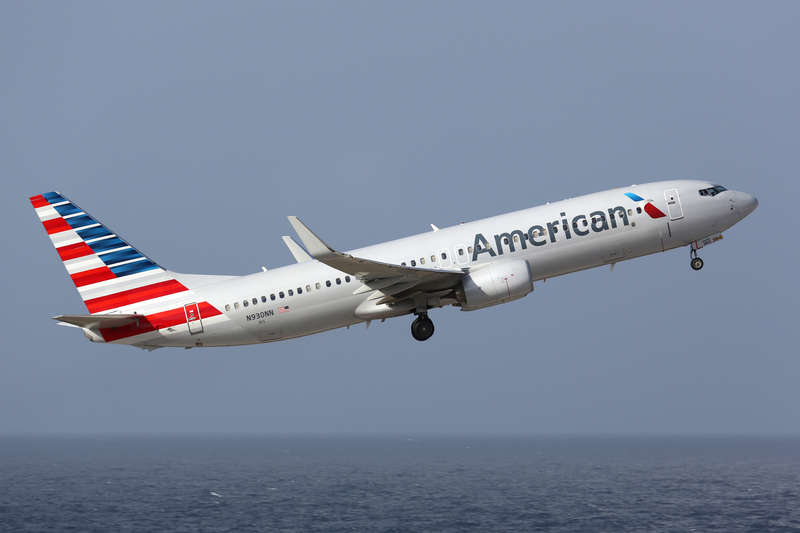
American is operating the route daily with Boeing 737 aircraft. The service is year-round, according to Miami airport’s published destination schedule, rather than a short seasonal program or a limited-frequency test of the market.

The carrier has not restricted the assignment to one 737 variant. American’s Boeing 737-800 and Boeing 737 MAX 8 share the same 172-seat configuration: 16 First Class seats, 24 Main Cabin Extra seats and 132 Main Cabin seats. That common layout allows the airline to exchange the two variants without altering the route’s scheduled capacity or cabin mix.
The narrowbody offers considerably more volume than a regional jet while remaining well suited to a short Caribbean sector from MIA. American is also advertising a premium cabin and complimentary high-speed Wi-Fi on the route, extending its standard two-class 737 product to a market where connectivity with the U.S. has been constrained.
Miami airport’s operating records identified the November 2 return flight, AA494 from CAP, as a Boeing 737 MAX 8. The airport listed the flight as arriving at 3:42 p.m., providing an early indication that the MAX will form part of the normal aircraft rotation rather than the route relying solely on the older 737-800 fleet.
Cap-Haïtien Sits Outside the Port-au-Prince Restriction
The choice of Cap-Haïtien is central to how American can serve Haiti while the security environment around the capital remains unsettled. This is not a restoration of flights to Port-au-Prince (PAP), historically the country’s principal international gateway and the focus of the violence that halted U.S. airline operations.
On November 11, 2024, Spirit Airlines Flight 951 was damaged by gunfire while attempting to land at PAP. The Airbus diverted to Santiago in the Dominican Republic, while other inbound flights also turned away. The FAA subsequently recorded the incident and initially prohibited U.S. civil operations below 10,000 feet across Haitian territory.
The regulator later narrowed the prohibition geographically. The current FAA security NOTAM, effective from September 1, 2026, through March 2, 2027, bars covered U.S. operators below 10,000 feet in specified parts of Haiti affected by instability. Operations outside those defined areas do not require special FAA authorization.
Cap-Haïtien lies outside the prohibited zone. In its supporting security assessment, the FAA said armed groups have a limited presence elsewhere in the country, including at CAP, and identified no history of attacks against aviation or airports in that region. That geographic distinction in the FAA’s risk assessment gives American a regulatory path back into Haiti without operating into the capital.
It does not remove the need for close monitoring. The route’s viability depends not only on demand but on American’s continuing assessment of security on the ground, the operating environment around CAP and the evolution of the FAA’s restricted area.

A Return to a Route Opened in 2014
American first served Haiti in 1971 and has long used Miami as its principal U.S. gateway to the country. Its original Miami–Cap-Haïtien route began in October 2014, supplementing the airline’s established Port-au-Prince operation.
The 2014 launch also used a Boeing 737-800, giving northern Haiti a daily mainline connection to American’s Miami network. That service ended in 2020 and did not return during the subsequent recovery in Caribbean flying.
The new operation therefore restores a known route rather than opening an untested city pair. What has changed is its role: CAP is now American’s only Haitian destination and the point through which the carrier has chosen to rebuild scheduled access to the country.
American Reaches 100 Regional Destinations
Cap-Haïtien is American’s 100th destination in Mexico, the Caribbean and Latin America, a milestone reached during the airline’s centennial year. The carrier first announced the route in June alongside its return to Maracaibo, identifying the two cities as its 99th and 100th destinations in the region.
The Haiti flight feeds a Miami operation that American says will reach more than 410 peak daily departures to over 170 destinations in 46 countries. Passengers arriving from CAP can connect to more than 90 U.S. destinations, making the route more than a local South Florida service despite the importance of Miami’s Haitian population.
The launch also forms part of American’s broader effort to restore links where political or security conditions previously made scheduled U.S. service impractical. The carrier resumed Venezuela flying earlier in 2026 and is using its Miami hub to rebuild parts of its regional network selectively rather than waiting for every market in a country to reopen simultaneously.
Bottom Line
The immediate beneficiaries are travelers between northern Haiti and South Florida, particularly passengers who previously depended on indirect itineraries, charter capacity or long surface journeys from other airports. Daily mainline service also creates consistent access to American’s domestic network, which is more valuable to the diaspora market than a route designed only around point-to-point leisure traffic.
American’s decision should not be read as a signal that normal airline access to all of Haiti has returned. It demonstrates instead that carriers and regulators are drawing increasingly precise distinctions within difficult operating environments. CAP is serviceable under the present FAA framework; PAP remains a different security and regulatory proposition.
The points to watch are schedule durability, aircraft utilization and whether other U.S. network airlines follow American into CAP. Continued daily 737 operation would show that the market can support substantial year-round capacity. Any broader restoration, however, will remain tied to changes in the FAA’s restricted area and measurable improvement around Port-au-Prince.