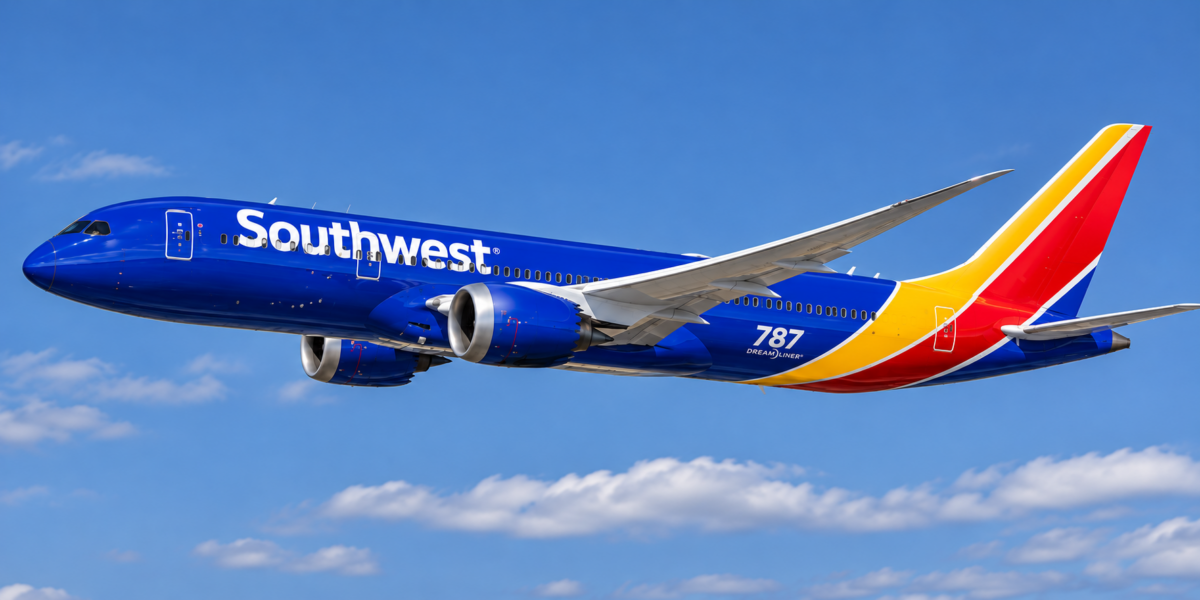
Southwest Airlines has rejected reports that it is close to ordering widebody aircraft, leaving no official basis for claims that the Boeing 787 Dreamliner is about to join its fleet.

President and CEO Bob Jordan addressed the subject during Southwest’s third-quarter earnings call on October 22. Asked about reports of a possible widebody acquisition, Jordan said there was “no credibility” to suggestions that Southwest was close to an order.
Jordan said Southwest continues to evaluate products that could attract and retain customers, but he did not announce a widebody program or set out a timetable for long-haul flying. His answer was a denial of an impending transaction rather than a promise that Southwest would never consider larger aircraft.
Read our stories in your inbox
Two aviation newsletters. Zero fluff.
That distinction matters. Southwest has changed several longstanding policies since 2025 and continues to broaden its commercial offering. But a widebody fleet would be a much larger operational step than assigned seats, premium rows or new airline partnerships.
Southwest’s Filed Order Book Contains Only 737 MAX Aircraft
Southwest’s latest regulatory filing supports Jordan’s position. The carrier’s third-quarter Form 10-Q lists firm orders with Boeing for 487 737 MAX aircraft through 2031, comprising 240 Boeing 737 MAX 7s and 247 Boeing 737 MAX 8s. That total was before subtracting 46 MAX 8s delivered by October 21. Southwest also held 130 options that can be exercised for either MAX variant.
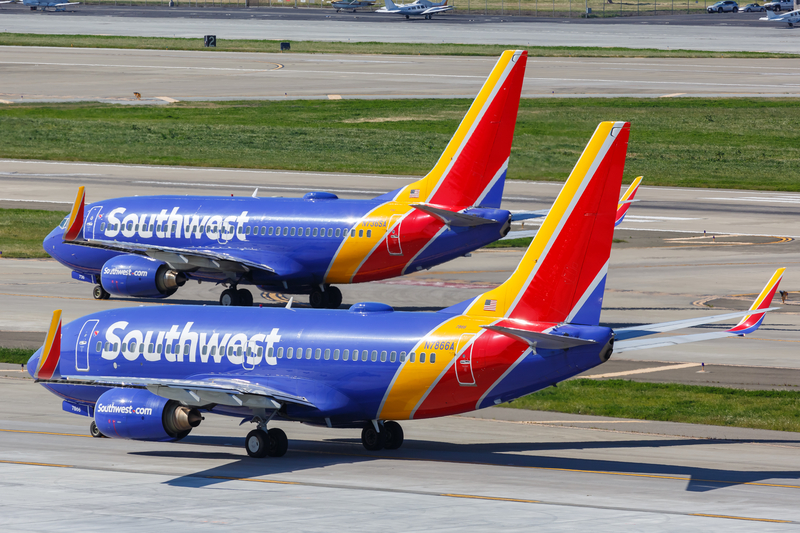
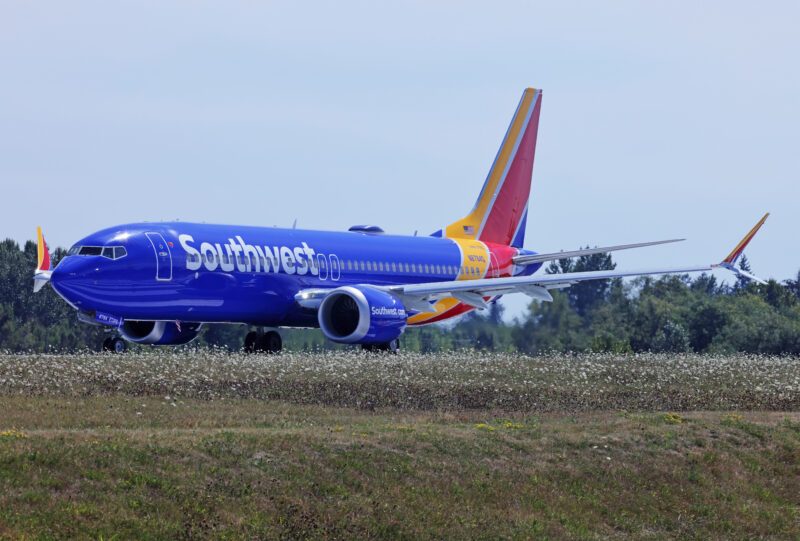
The filing contains no Boeing 787 commitment. Southwest’s in-service fleet also remains entirely within the 737 family: 271 Boeing 737-700s, 189 Boeing 737-800s and 343 Boeing 737 MAX 8s at the end of September, for a total of 803 aircraft.
Southwest received 20 MAX 8s and retired 20 older aircraft during the third quarter. It expected 67 MAX 7 and MAX 8 deliveries across 2026 while retiring about 60 aircraft, according to its third-quarter results.
That is a substantial narrowbody replacement program in its own right. The airline still has more than 450 Boeing 737 Next Generation aircraft, and replacing those aircraft with MAX 7s and MAX 8s offers fuel and maintenance savings without creating another pilot qualification, maintenance system or spare-parts inventory.
A Dreamliner Would Require a Different Operating Model
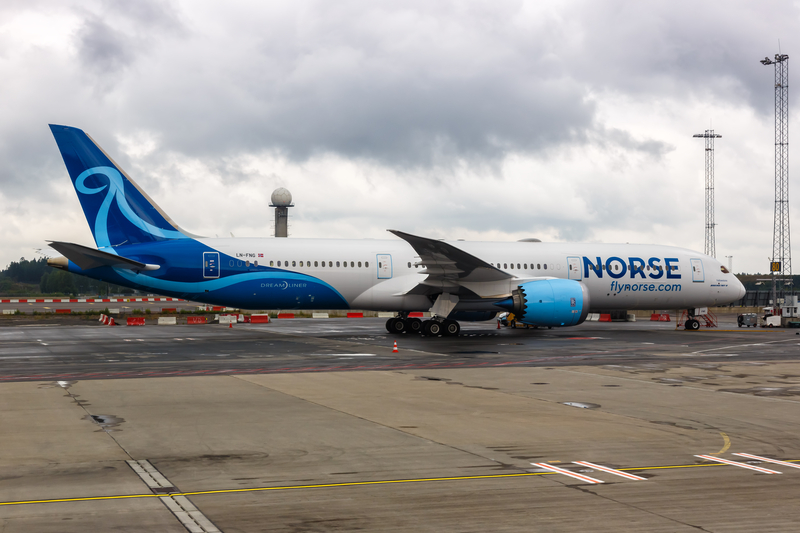
The Boeing 787 would not be a simple capacity increase. Boeing lists typical two-class seating of 200 to 275 passengers for the 787-8, 250 to 325 for the 787-9 and 300 to 375 for the 787-10. Depending on variant, the 787 family offers up to 7,500 to 8,300 nautical miles of range.
Those capabilities would allow Southwest to enter long-haul intercontinental markets that are beyond the practical scope of its 737 operation. They would also bring new training requirements, maintenance and engineering programs, ground equipment, spare engines, onboard-service processes and long-haul scheduling considerations.
Labor would be another issue. Southwest Chief Operating Officer Andrew Watterson said during the earnings call that operating aircraft with more than 175 seats would require the airline to return to its pilots. Jordan added that a widebody would involve a major negotiation, while incorporating another 737 variant would be significantly easier.
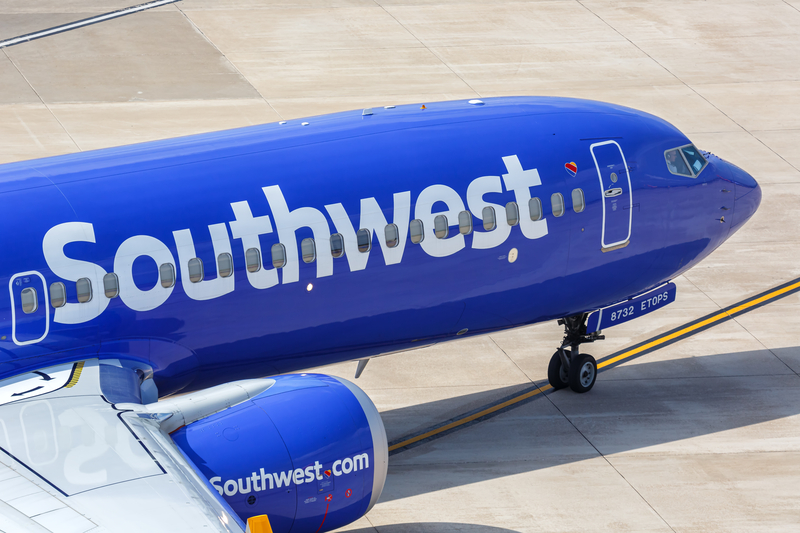
The 175-seat threshold is already visible in Southwest’s fleet. Both its Boeing 737-800 and MAX 8 are configured with 175 seats, while the 737-700 has 137. A larger 737 variant could still require discussions over seating, but it would retain far more commonality with the airline’s existing operation than a twin-aisle aircraft.
Commercial Changes Do Not Yet Point to Widebodies
Speculation about the 787 has gained attention because Southwest no longer looks as rigidly tied to its historical product as it once did. The airline began charging most customers for checked luggage on tickets issued or changed from May 28, 2025. The initial charges were $35 for the first bag and $45 for the second, according to Southwest’s baggage policy announcement.
Southwest subsequently increased those fees to $45 and $55 for reservations ticketed or voluntarily changed from April 9, 2026. Elite members, qualifying fare customers and eligible credit cardholders continue to receive varying checked-bag benefits.
The airline also introduced assigned seating on January 27, 2026, ending the open-seating process that had defined its boarding model for decades. Its cabins now include extra-legroom, preferred and standard seating, supported by an eight-group boarding process.
Southwest is moving farther into premium travel through its first airport lounges, a new premium credit card and fleetwide Starlink connectivity. The first lounges are scheduled to welcome customers in late 2027, with at least seven additional locations planned.
Those initiatives make Southwest more competitive for business travelers and higher-spending leisure passengers. They do not, by themselves, establish a requirement for widebody aircraft. Southwest can monetize those products throughout its existing domestic and near-international network.
Partnerships Offer International Reach Without a New Fleet
Southwest is also using airline partnerships to provide access beyond the range of its own aircraft. Its third-quarter release said the company had welcomed its 10th and 11th airline partners, while broader loyalty changes will allow members to earn and redeem points with selected international carriers.
That strategy gives Southwest customers access to long-haul itineraries while preserving the economics and simplicity of a single aircraft family. It also lets the carrier test demand, connecting flows and customer behavior before deciding whether operating intercontinental flights itself would produce better returns.
The financial case for concentrating on the present transformation remains strong. Southwest reported third-quarter operating revenue of $8.4 billion, up 21.2% from a year earlier. RASM increased 21.6% to an all-time company record even as capacity declined 0.4%. Adjusted operating margin rose 4.8 percentage points to 5.4% despite an $821 million year-over-year increase in fuel expense.
Southwest now expects to set out its next multi-year financial framework at a Capital Markets Day on March 2, 2027. Until then, its official fleet plan remains centered on replacing older 737s, introducing the MAX 7 and continuing MAX 8 deliveries—not launching a Boeing 787 operation.
Bottom Line
Jordan’s response closes down the idea that a Southwest widebody order is imminent, but it does not permanently remove long-haul flying from consideration. Management continues to describe product decisions as responses to customer demand, the same framework it used while dismantling open seating and introducing bag fees, premium seating and lounges.
For Boeing, Southwest’s immediate value remains in one of the industry’s largest 737 MAX backlogs. The airline has hundreds of older 737s left to replace, and the newly certified MAX 7 gives it a smaller narrowbody optimized for markets where 175 seats would be excessive. That replacement cycle can absorb substantial capital and management attention without the disruption of creating a separate 787 operation.
The next signal to watch will be Southwest’s March 2027 Capital Markets Day. Any serious move toward long-haul flying would need to appear in capital plans, labor discussions, commercial infrastructure and network strategy well before the first aircraft entered service. At present, none of Southwest’s disclosed fleet commitments points in that direction.