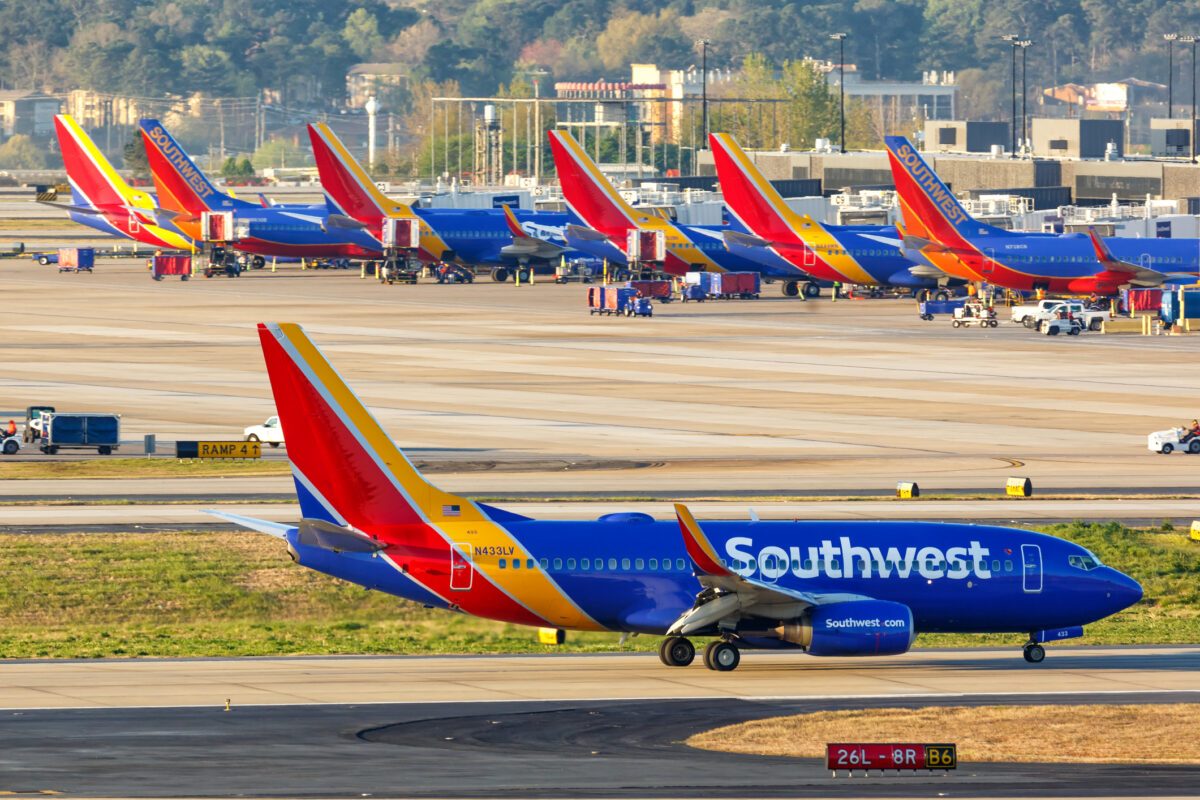
Southwest Airlines has withdrawn from Chicago O’Hare (ORD) and Washington Dulles (IAD), removing 15 routes from its network and ending the carrier’s attempt to maintain operations at multiple airports in each metropolitan area.

The closures are not a new round of flight cancellations. Southwest announced the decision on March 13, 2026, and closed both stations effective June 4, 2026. Travelers with current Southwest bookings in Chicago or the Washington region therefore should not expect flights at ORD or IAD.
Southwest continues to serve Chicago Midway (MDW), Baltimore/Washington (BWI) and Washington Reagan National (DCA). The change concentrates the airline’s aircraft, crews and airport resources at stations where it already has considerably greater schedule depth.
Read our stories in your inbox
Two aviation newsletters. Zero fluff.
Thirteen O’Hare Routes Were Removed
Southwest’s planned July schedule at ORD had included 104 weekly departures across 13 routes. Most were daily, while Las Vegas carried additional frequency and two leisure routes operated weekly.
- Austin (AUS): one daily flight
- Cancun (CUN): one daily flight
- Dallas Love Field (DAL): one daily flight
- Denver (DEN): one daily flight
- Las Vegas (LAS): 18 weekly flights
- Myrtle Beach (MYR): one weekly flight
- Nashville (BNA): one daily flight
- Orlando (MCO): three daily flights
- Panama City (ECP): one weekly flight
- Phoenix (PHX): one daily flight
- Punta Cana (PUJ): one daily flight
- San Juan (SJU): one daily flight
- Tampa (TPA): one daily flight
The schedule mixed business-oriented domestic links with Florida and Caribbean leisure flying. Orlando was the largest individual market, while the Las Vegas schedule accounted for 18 departures each week.
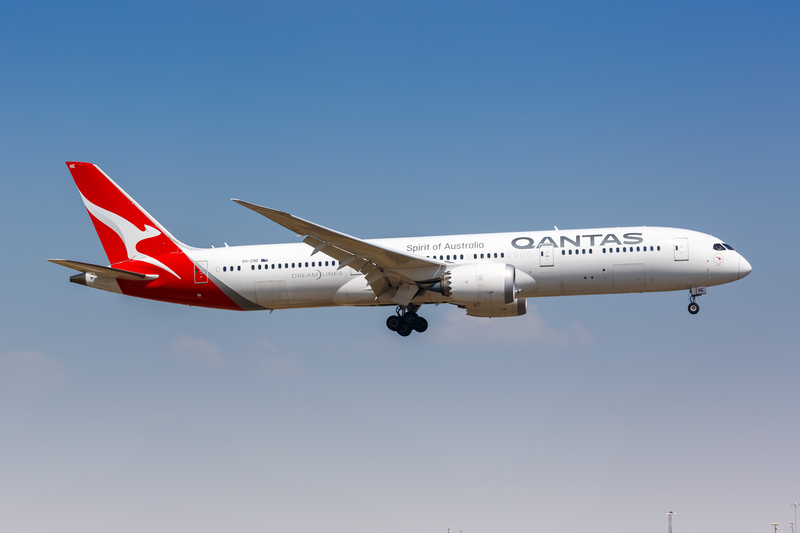
Southwest entered ORD on February 14, 2021, initially linking the airport with Baltimore, Dallas, Denver, Nashville and Phoenix. An archived Southwest O’Hare station profile shows that the operation had grown to as many as 15 departures a day by late 2024.
That remained small beside Southwest’s operation at MDW. The carrier’s Midway station profile listed as many as 250 daily departures to 79 cities in November 2024. Many of the markets removed from ORD remain available nonstop from MDW, often with substantially more frequency.
The move therefore represents consolidation within Chicago rather than withdrawal from the market. It also removes the costs and complexity associated with staffing and supporting a comparatively small second station in a city where Southwest already has one of its largest operations.
Dulles Closure Ends Nearly 20 Years of Service
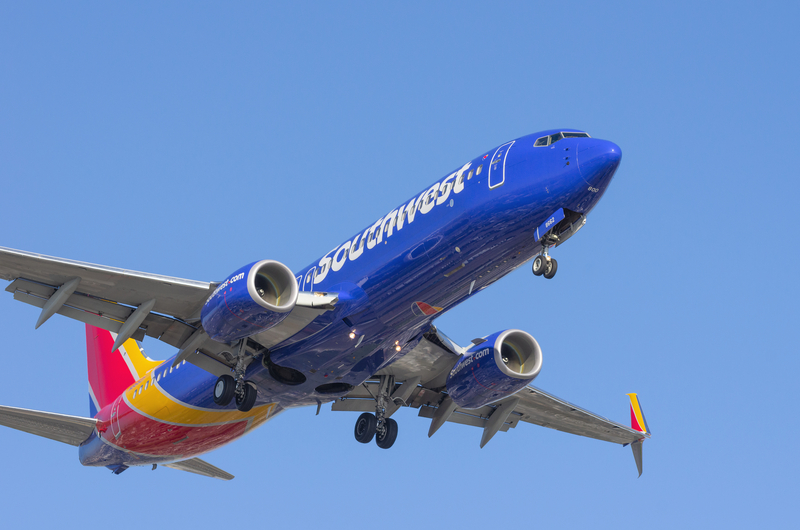
At IAD, the final planned network was much smaller: twice-daily service to Denver and one daily flight to Phoenix, totaling 21 weekly departures.
Southwest began serving Dulles on October 5, 2006. Its operation reached as many as four departures a day to Atlanta, Denver and Phoenix in late 2024, according to the airline’s archived IAD station profile. Atlanta was subsequently removed before the station closed.
The airline retains two much larger stations in the region. Southwest’s published station material listed up to 235 daily departures from Baltimore/Washington and up to 45 from Reagan National in late 2024. BWI provides the airline with broad domestic and international connectivity, while DCA offers access closer to central Washington within the constraints of the airport’s slot and perimeter regimes.
Closing IAD removes Southwest from the western side of the Washington airport system, but it also eliminates a thin three-flight-per-day station whose Denver and Phoenix links overlapped with broader connecting options elsewhere in the airline’s network.
An All-Boeing 737 Operation
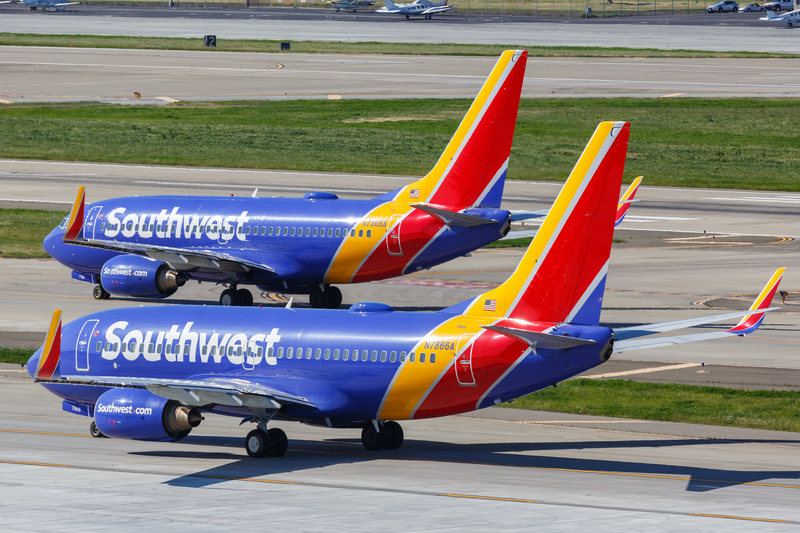
The discontinued flying formed part of Southwest’s single-family Boeing 737 operation. The airline’s June 2026 fleet filing listed 803 aircraft: 288 Boeing 737-700s with 137 seats, 192 Boeing 737-800s with 175 seats and 323 Boeing 737 MAX 8s with 175 seats.
The smaller 737-700 gives Southwest some flexibility in thinner markets, but even a 137-seat aircraft requires sufficient local demand or connecting contribution to support a route. At secondary stations with limited frequency, the airline also has fewer opportunities to recover passengers when disruption breaks the schedule.
Southwest is keeping system capacity disciplined while reallocating aircraft toward markets where schedule depth and connectivity can produce stronger returns. In its second-quarter results, the airline reported capacity growth of just 0.2% year over year and said it remained focused on optimizing its network, product and pricing.
Bottom Line
Southwest’s retreat from ORD and IAD is a move toward operational density rather than a retreat from Chicago or the Washington region. MDW, BWI and DCA give the airline deeper schedules, larger employee groups and more opportunities to connect passengers. Concentrating flying at those stations should also make aircraft recovery and customer reaccommodation easier when weather or maintenance disrupts the operation.
The trade-off is airport-specific access. Travelers who preferred O’Hare or Dulles lose Southwest as an option and may face a longer ground journey to another airport. That matters particularly in two metropolitan areas where airport choice can add significant time to a trip, even when the airline continues to serve the broader market.
The closures also signal a harder threshold for small, parallel stations. Southwest now has more ways to generate revenue from each passenger, but its capacity plan remains restrained. The next measure of its network strategy will be whether aircraft removed from marginal stations are used to add frequency at established bases, improve connecting banks or open markets capable of supporting more than a token daily schedule.
Keep reading FlyMag
Get the Daily Brief in the morning or the Route Watch weekly recap on Fridays. Or both.