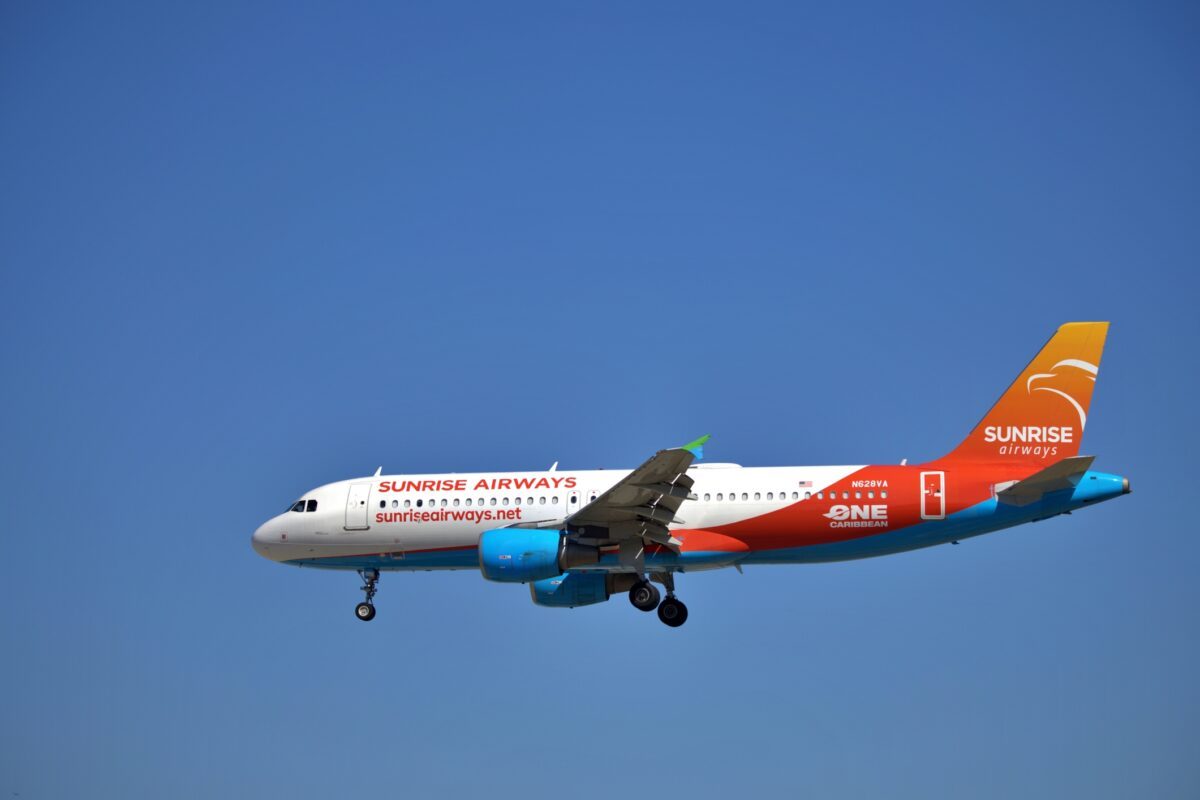
Sunrise Airways will transfer its New York service from Newark (EWR) to New York John F. Kennedy (JFK) for the northern winter season, ending its short-lived Newark operation on October 25, 2026.

The Haitian carrier confirmed the airport change in an official passenger notice, saying the direct link between Cap-Haïtien (CAP) and New York would continue at JFK. Sunrise described the move as part of an effort to strengthen the operation and preserve continuity.
The change is more than an airport substitution. Published schedules show Sunrise increasing the market from one weekly Newark round trip to two weekly JFK round trips, giving the airline a larger presence in New York after its initial entry through EWR.
Read our stories in your inbox
Two aviation newsletters. Zero fluff.
JFK Flights Begin in Mid-November
The first CAP-JFK departure is filed for November 16. Flight S6 626 will leave Cap-Haïtien at 6:30 p.m. on Mondays and Thursdays, arriving at JFK at 11 p.m. after a scheduled block time of four hours and 30 minutes.
The return service, S6 625, begins November 17 and operates on Tuesdays and Fridays. It is scheduled to depart JFK at 6 a.m. and reach CAP at 10:30 a.m. All times are local.
The pattern places the aircraft at JFK overnight after each northbound flight. That avoids a late-night turn at Cap-Haïtien and gives Sunrise an early-morning departure from New York, with passengers arriving in northern Haiti before midday.
As presently filed, the change includes a break between the Newark and JFK programs. Sunrise says EWR operations end October 25, while the JFK schedule begins November 16. The carrier could still revise the transition schedule before the winter operation starts.
Sunrise launched the Newark route on June 1, making its stay at EWR less than five months. Its current U.S. network from Cap-Haïtien also includes Fort Lauderdale and Boston, part of a wider expansion of international flying from Haiti’s second-largest city.

Frequency and Capacity Increase
The EWR service is operating once a week, with Monday departures from CAP. Moving to JFK therefore doubles the scheduled frequency in each direction.
Schedule filings identify Airbus A320-family equipment for the new operation, with inventory listed at 170 seats. The outgoing Newark schedule carries 164 seats. On that basis, Sunrise will increase weekly one-way capacity in the New York market from 164 to 340 seats.
The aircraft is well matched to the approximately 1,455-mile sector. The filed four-and-a-half-hour block time includes ample operational margin for a route that remains comfortably within the A320 family’s capabilities. Airbus lists the standard A320neo with up to 3,400 nautical miles of range, while the family spans aircraft designed for roughly 120 to 244 passengers depending on variant and configuration.
At 170 seats, the scheduled aircraft provides enough capacity to carry meaningful local traffic without requiring the scale of a widebody or the higher unit costs of a smaller regional type. It also leaves Sunrise with the flexibility to adjust the operating aircraft within the A320 family if demand changes.
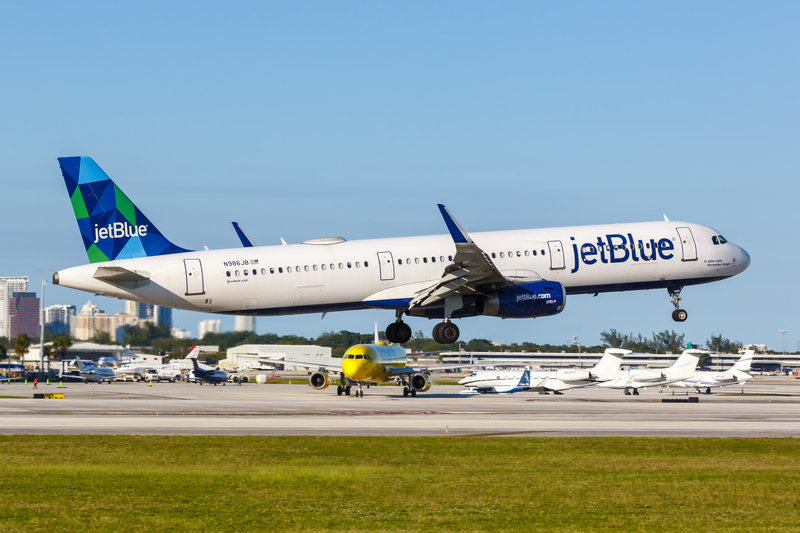
The move barely changes the air distance. CAP-JFK is approximately 1,455 miles, compared with about 1,461 miles between CAP and EWR. Its significance instead lies in airport catchment, terminal arrangements and access to New York’s largest international gateway.
A Different Operating Environment
JFK brings greater international connectivity but also a more tightly managed scheduling environment. The Federal Aviation Administration classifies JFK as a Level 3 airport, with seasonal slot allocation and schedule coordination applying to regular commercial service.
Newark is handled as a Level 2 airport, although it has been subject to additional operating limits. A current FAA order restricts EWR to 72 scheduled operations per hour through October 24, 2026. Sunrise’s stated Newark end date falls immediately after that order’s expiration, though the airline has not attributed its move to the restrictions.
For passengers, the most visible effect will be the shift in ground access. EWR favors New Jersey and Manhattan journeys from the west, while JFK provides a more direct gateway for Queens, Brooklyn and Long Island. The early southbound departure will also require passengers to reach JFK well before the morning peak.
Sunrise has said it will support customers through the transition. Travelers holding Newark bookings around the end of October will need to check their itineraries carefully, particularly given the interval before the first scheduled JFK flight.
Bottom Line
JFK gives Sunrise a stronger platform for serving New York, but the more important change is the increase from one to two weekly flights. A twice-weekly pattern is still a thin schedule, yet it is materially more useful for travelers and spreads fixed station costs across twice as many rotations. The overnight aircraft pattern also creates a consistent timetable rather than forcing a same-day turn at the edge of operating hours.
The move shows Sunrise treating Cap-Haïtien as an international origin in its own right rather than merely an extension of a Port-au-Prince network. Direct service allows northern Haiti traffic to avoid repositioning through the capital, while the 170-seat A320-family aircraft gives the airline enough scale to build the market without committing excessive capacity.
What matters next is whether Sunrise can maintain the twice-weekly program beyond its first winter and close the transition gap between EWR and JFK. If bookings support the additional frequency, JFK could become the carrier’s principal New York gateway rather than another seasonal experiment. Stable operations through the winter would also strengthen the case for further frequency growth from CAP.
Keep reading FlyMag
Get the Daily Brief in the morning or the Route Watch weekly recap on Fridays. Or both.