Delta Air Lines has postponed the launch of nonstop service between Atlanta (ATL) and Riyadh (RUH), moving the planned October 23, 2026, start to March 2027 as it assesses security conditions in Saudi Arabia.

In an October 12 statement, Delta cited “evolving developments in the region” and said the safety of its passengers and employees would continue to guide its operational decisions. The airline is consulting government authorities and aviation partners, including Saudia and Riyadh Air.
Delta did not announce a specific March departure date or publish a replacement timetable. It nevertheless described Saudi Arabia as an important long-term market and said it still intended to connect the kingdom with its global network.
Read our stories in your inbox
Two aviation newsletters. Zero fluff.
Attacks Put Riyadh Airport Operations Under Scrutiny
The decision followed several attacks on Riyadh’s airport during the days immediately preceding Delta’s announcement.
Saudi Arabia’s General Authority of Civil Aviation said two attacks on October 8 targeted airport facilities and a Saudia aircraft. Three Saudi citizens were killed, several other people were injured and property was damaged, according to the GACA statement carried by the Saudi Press Agency. The authority subsequently said flight operations had resumed while damage assessments and security work continued.
GACA reported another attack on October 11, which caused further injuries and prompted safety inspections of airport infrastructure. Delta announced its postponement the following morning.
Delta did not tie its decision to an individual attack. However, the proximity of those incidents to its launch date left little time to complete the final operational preparations for a new long-haul station while conditions at RUH remained unsettled.
The route would have required more than operating an aircraft between two airports. A new international station involves crew planning, security arrangements, ground handling, catering, passenger processing and irregular-operations procedures. Those systems must function reliably from the first arrival, particularly on a route of more than 7,000 miles with limited recovery options elsewhere in the airline’s network.
Daily Launch Week Scrapped
Delta announced the Atlanta-Riyadh route in October 2025, initially planning three round trips per week. It later scheduled daily flights from October 23 through October 30, 2026, before reverting to the three-times-weekly pattern.
The service was to become Delta’s first passenger route to Saudi Arabia and the first nonstop connection between the United States and Riyadh operated by a US airline. Delta expected ATL to supply substantial connecting traffic, advertising one-stop access to more than 150 US cities for passengers originating in Saudi Arabia.
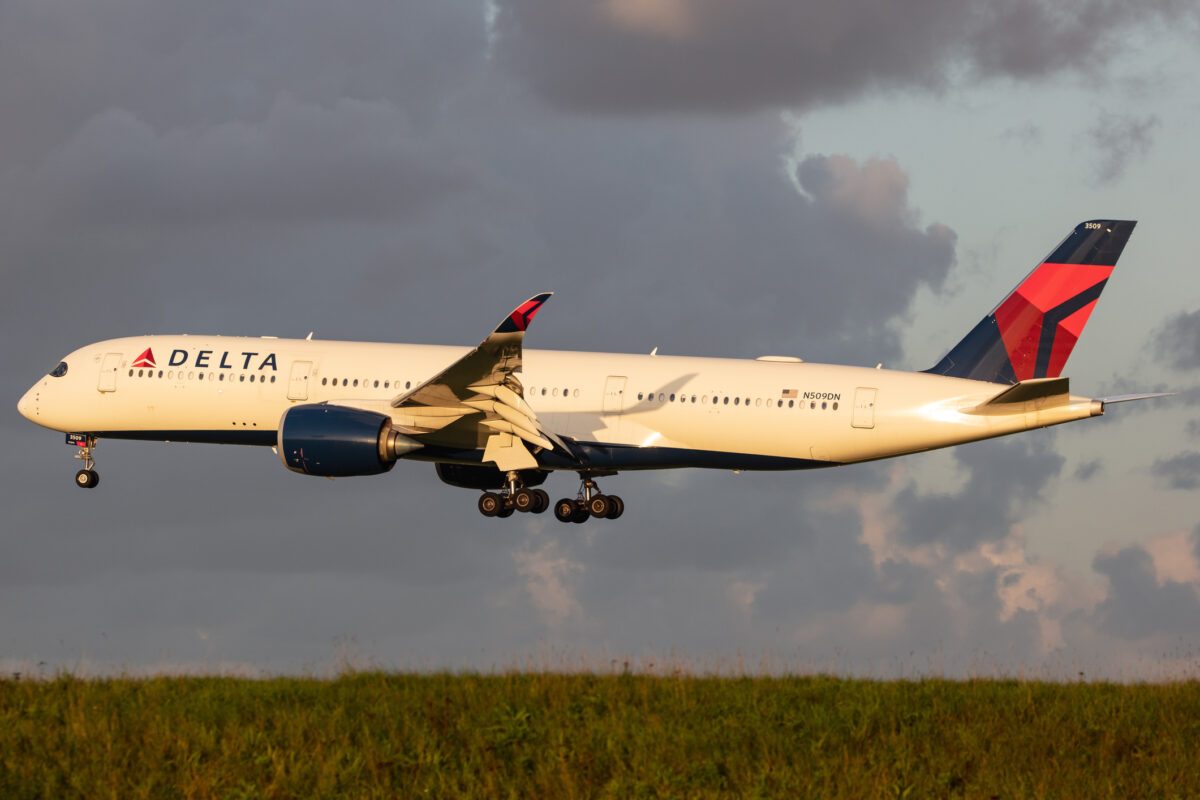
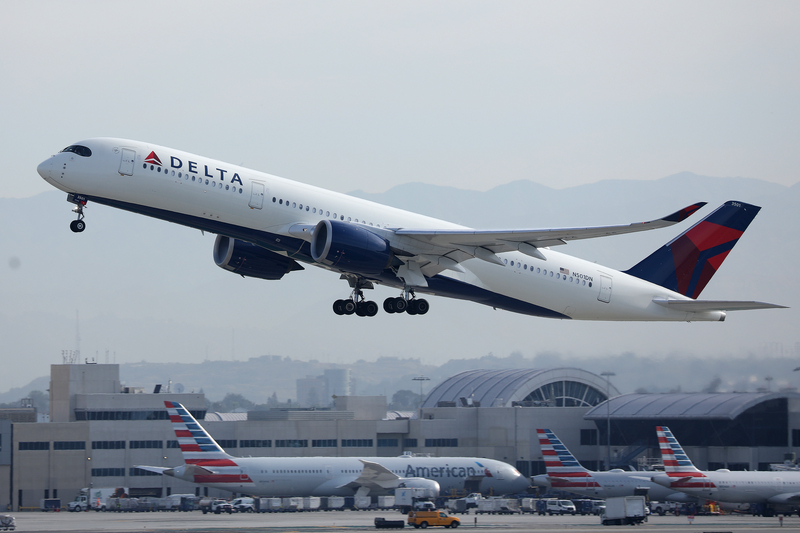
The planned aircraft was the Airbus A350-900, Delta’s principal long-range widebody. Delta markets two A350 cabin layouts, and its published seat maps show versions with 275 or 306 seats. Both offer Delta One, Delta Premium Select, Delta Comfort and Delta Main cabins.
The A350 is well matched to a route of this length. Its range allows Delta to operate ATL-RUH without the payload and fuel limitations that can affect older widebodies on long sectors, while the premium-heavy cabin supports the corporate, government and connecting demand on which the route is likely to depend.
The delay also removes the planned daily opening week, which would have given Delta additional capacity to accommodate launch events, introductory traffic and passengers connecting from across its domestic network. Delta has not yet said whether it will repeat that pattern when the route is rescheduled.
Travel Waiver Extends Through March 26
Delta has issued a Riyadh travel waiver covering itineraries from October 23, 2026, through March 26, 2027, for tickets issued by October 12.
Passengers may change eligible trips within the waiver’s conditions or cancel and receive an eCredit or refund. Rebooked travel must begin by May 31, 2027, for Delta to waive the fare difference when the passenger remains in the same cabin.
The waiver’s end date provides the clearest current indication of the revised launch window. As written, it treats travel through March 26 as affected, leaving March 27 through March 31 as the remaining dates for a March inauguration. Delta could amend the waiver or load a different schedule as its security and operational reviews progress.
Riyadh Air Partnership Remains Central
ATL-RUH is a strategic route for Delta rather than a stand-alone addition to its long-haul map. Delta and Riyadh Air signed a cooperation agreement in July 2024 that made Delta Riyadh Air’s exclusive North American airline partner and Riyadh Air Delta’s exclusive partner in Riyadh and beyond.
The framework contemplates interline and codeshare connectivity, reciprocal loyalty benefits and cooperation in areas including customer service, digital systems, maintenance, ground handling and training, subject to regulatory approval. The airlines also said they would explore a deeper joint venture.
That relationship is important to the route’s economics. Atlanta can deliver passengers from Delta’s large US network, while Riyadh Air can provide connections beyond RUH. Without those flows, Delta would have to rely more heavily on local Atlanta-Riyadh demand and passengers willing to connect at ATL from elsewhere in North America.
Postponing the flight therefore delays the most visible component of the partnership, but it does not dismantle the broader strategy. Delta specifically named Riyadh Air among the partners with which it is coordinating and repeated its commitment to the Saudi market.
Bottom Line
The postponement shows how quickly security considerations can overtake network strategy, even when an airline has spent a year selling and preparing a high-profile route. Delta was less than two weeks from the planned inaugural flight, meaning much of the commercial, crew and station work was already in place. Moving the launch now carries a cost, but beginning service without a stable operating environment would expose the airline to repeated cancellations and difficult aircraft and crew recovery.
For Delta, the larger question is whether March provides enough time for conditions at RUH to stabilize and for passenger confidence to recover. The route still has strategic value as the physical link between Delta’s Atlanta network and Riyadh Air’s developing hub, while the A350 gives Delta an efficient platform for testing a long, relatively new US-Middle East market at three weekly frequencies.
The next signals will be a firm inaugural date, restoration of bookable flights after March 26 and details of the connecting itinerary that Delta and Riyadh Air can offer. Until those appear, March 2027 should be treated as a target rather than a settled relaunch.
Keep reading FlyMag
Get the Daily Brief in the morning or the Route Watch weekly recap on Fridays. Or both.