Riyadh Air has opened reservations for a new nonstop service between Riyadh and Jakarta, with the first flight scheduled for November 16, 2026.
The carrier will operate three weekly rotations between Riyadh (RUH) and Jakarta Soekarno-Hatta (CGK), using Boeing 787-9 Dreamliners. Jakarta is the 16th destination Riyadh Air has placed on sale as it builds out its initial long-haul network from the Saudi capital.
Riyadh Air said the route will serve business, leisure and religious travel between Saudi Arabia and Indonesia. It also gives the carrier an entry into Southeast Asia’s largest national market, complementing its services to Kuala Lumpur, Bangkok and Manila.
Read our stories in your inbox
Two aviation newsletters. Zero fluff.
Three Weekly Flights From November 16
According to Riyadh Air’s launch announcement, flight RX869 will leave RUH on Mondays, Wednesdays and Fridays. The return flight, RX870, will operate from CGK on the same days, with its first departure from Jakarta scheduled for November 17.
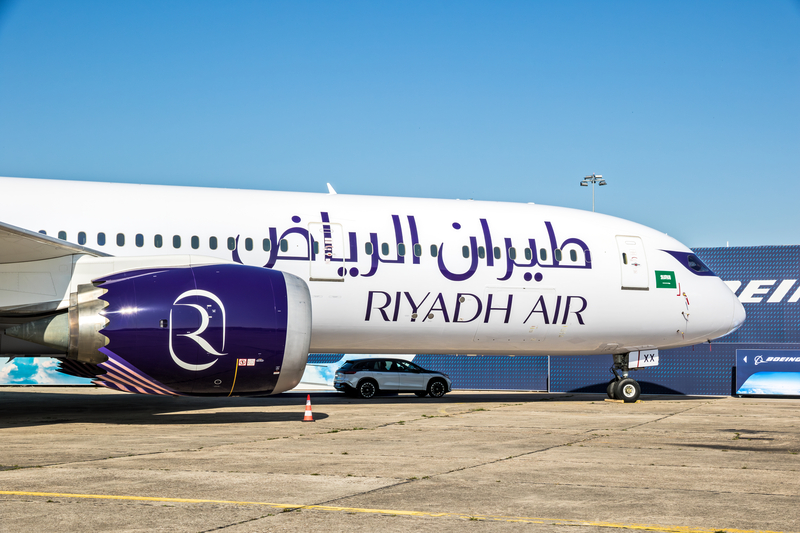
The airline’s initial timetable listed a 10:50 p.m. departure from Riyadh, arriving in Jakarta at noon the following day. The return was scheduled to leave CGK at 3 p.m. and reach RUH at 8:15 p.m. All times are local.
However, Riyadh Air’s live Jakarta destination page now shows an earlier outbound schedule, with departures from RUH Terminal 2 at 9:45 p.m. and arrivals at CGK Terminal 3 at 10:30 a.m. The airline gives a journey time of approximately eight hours and 45 minutes. The booking display should therefore be treated as the current schedule as the November launch approaches.
The overnight eastbound timing provides a late-evening departure from Riyadh and a mid-morning arrival in Jakarta. Westbound, the timetable published with the launch announcement would place passengers in Riyadh during the evening, allowing Riyadh Air to combine local traffic with selected connections over RUH.
A three-times-weekly pattern is a measured entry into a long-haul market. It gives Riyadh Air regular coverage without committing a daily widebody at launch, while leaving room to add capacity if point-to-point demand and connections through Riyadh develop.

Boeing 787-9 Assigned to Jakarta
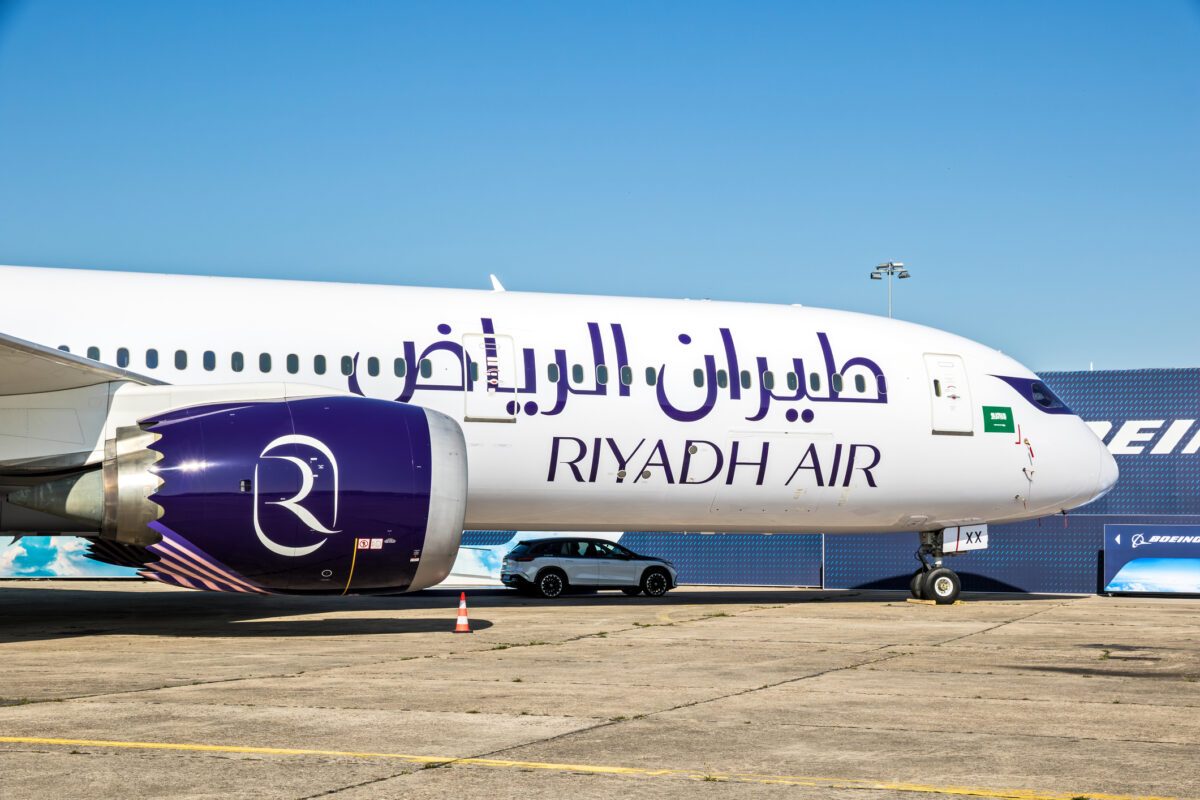
Riyadh Air will use its Boeing 787-9 fleet on the route. The type is the core long-haul aircraft in the airline’s opening network and is well matched to a sector of this length, providing substantial passenger and belly-cargo capacity without requiring the scale of a larger widebody.
Boeing lists the 787-9 with a range of up to 8,300 nautical miles and typical two-class capacity of 250 to 325 passengers. The Riyadh-Jakarta mission uses only part of that range capability, giving the aircraft operational margin for payload, weather and routing considerations.
Riyadh Air’s aircraft have four cabin products: Business Elite, Business, Premium Economy and Economy. The carrier is positioning the 787-9 as both a premium long-haul platform and a network-building aircraft, rather than concentrating its higher-end product only on European services.
The airline’s Panasonic Astrova entertainment system includes 4K OLED displays and Bluetooth audio. Economy seats have 13.3-inch screens, Premium Economy receives 15.6-inch displays and Business has 22-inch screens. The first row of Business Elite features a 32-inch display.
Riyadh Air currently describes its Dreamliner commitment as 39 confirmed 787-9s with 33 more to follow. The scale of that fleet plan is central to its ambition to serve more than 100 destinations by 2030, with the 787-9 supporting routes ranging from regional sectors to long-haul Asian and European flying.
Jakarta Extends Riyadh Air’s Asian Buildout
Jakarta follows a series of Asian additions during Riyadh Air’s first year of commercial operations. The airline has already put destinations including Mumbai, Kuala Lumpur, Islamabad, Lahore, Bangkok and Manila into its schedule, creating a growing eastern side to the RUH network.
The Indonesian route also broadens Riyadh Air’s addressable traffic beyond conventional corporate and leisure demand. Indonesia is the world’s largest Muslim-majority country, and travel to Saudi Arabia includes substantial religious traffic. Riyadh is not the final destination for most pilgrimage journeys, making domestic or onward connections an important part of the route’s commercial proposition.
Business links provide another source of traffic. Indonesia’s Ministry of Trade recorded bilateral commerce with Saudi Arabia at approximately $6.53 billion in 2025, including $2.88 billion of Indonesian exports. Trade reached $2.19 billion during the first five months of 2026, with vehicles and parts, processed foods, vegetable and animal oils, chemicals and plastics among the traded products.
That commercial base gives Riyadh Air an opportunity to sell both premium seats and lower-deck freight. The 787-9’s cargo capability is particularly relevant on a service operating only three times per week, where freight can help support revenue while passenger demand develops.
Ticket sales are available through Riyadh Air’s website, mobile application and travel distribution partners. Members of the carrier’s Sfeer program receive complimentary onboard Wi-Fi and access to its best-offer guarantee.
Bottom Line
Jakarta gives Riyadh Air a strategically important market rather than simply another pin on its route map. Indonesia offers a combination of government, corporate, leisure and religious traffic, while the lack of a daily schedule limits the amount of aircraft time exposed during the route’s development phase. Passengers gain a new capital-to-capital option, and Indonesian businesses gain additional widebody cargo access to Saudi Arabia.
The service also shows how Riyadh Air intends to use the 787-9: not only on flagship European routes, but as the standard tool for building an Asian connecting network through RUH. Jakarta’s performance will depend on the quality of those connections, particularly for passengers traveling beyond Riyadh within Saudi Arabia or across Riyadh Air’s expanding regional and European schedule.
The next points to watch are schedule stabilization, frequency growth and whether Riyadh Air can turn three weekly flights into a daily service. A move to daily operation would indicate that the airline is securing enough local, connecting and cargo demand to justify a full long-haul commitment in the Indonesian market.