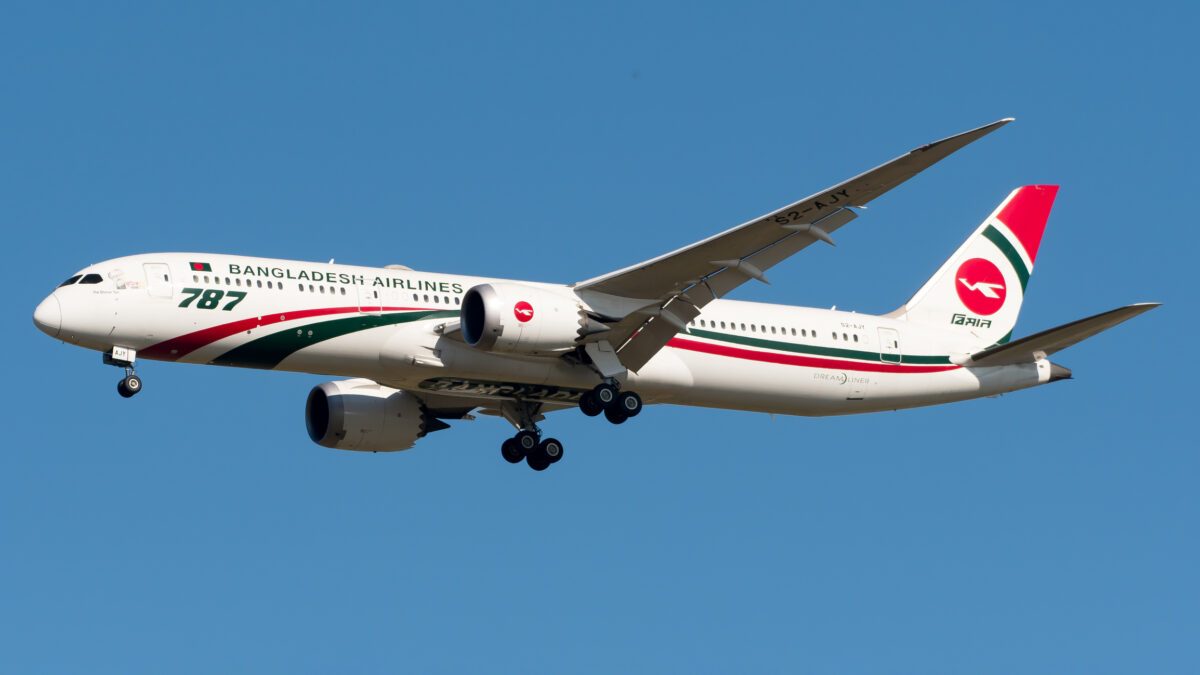
Biman Bangladesh Airlines has ordered another 11 Boeing aircraft, adding five 787-10 Dreamliners and six 737-8s only five months after placing the largest aircraft order in its history.
The follow-on purchase brings Biman’s 2026 commitments to 25 aircraft: 13 Boeing 787-10s, two 787-9s and 10 737-8s. Boeing and Biman announced the supplemental agreement on September 23 following a meeting involving airline executives and Bangladeshi and U.S. government officials on the sidelines of the United Nations General Assembly in New York.
The deal substantially increases both parts of Biman’s April order. Its commitment for the 787-10 rises from eight to 13 aircraft, while the planned 737-8 fleet grows from four to 10.
Read our stories in your inbox
Two aviation newsletters. Zero fluff.
“This order responds to specific requirements in our fleet plan,” Biman Chairman Rumee A. Hossain said. He described the agreement as one element of a broader plan to strengthen Bangladesh’s international connectivity.
A 25-Aircraft Commitment in Five Months
Biman’s first transaction of the year, announced on April 30, covered eight 787-10s, two 787-9s and four 737-8s. At the time, the airline assigned distinct roles to the three variants: the 787-10 for high-demand Middle East services, the 787-9 for longer routes to Europe and North America, and the 737-8 for regional flying to the Middle East, India and Southeast Asia.
The latest order preserves that fleet structure but increases the emphasis on the two capacity-oriented types. Biman is buying more 787-10s rather than additional 787-9s, and more than doubling its 737-8 commitment.
That mix points to a plan built around capacity growth on established markets as well as aircraft replacement. The 787-10 offers the largest cabin and greatest lower-deck volume in the Dreamliner family, while the 737-8 provides more range than the 737-800s it will eventually complement or replace.
The scale is notable relative to Biman’s current operation. Boeing said in April that the airline operated 14 Boeing jets. Biman’s published fleet also includes De Havilland Dash 8 Q400 turboprops, alongside four 787-8s, two 787-9s, four 777-300ERs and its 737-800 fleet. The 25-aircraft order book therefore represents a multiyear reshaping of the carrier rather than a limited replacement cycle.
The 787-10 Becomes the Core Growth Aircraft
The five additional 787-10s will make the largest Dreamliner variant the biggest single component of Biman’s new orders. Biman already operates the 787-8 and 787-9, so introducing the stretched model will allow it to add seats and cargo volume while retaining substantial commonality across flight operations, engineering and maintenance.
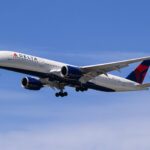
According to Boeing’s published specifications, the 787-10 typically seats 300 to 375 passengers in a two-class layout and has a range of up to 7,500 nautical miles. It is 224 feet, 1 inch long, approximately 18 feet longer than the 787-9, but shares the same 197-foot, 3-inch wingspan.
That combination makes the type particularly relevant to Biman’s dense services between Bangladesh and Gulf markets. Those routes do not require the 787-9’s maximum range, allowing the airline to prioritize seat capacity and unit costs. The aircraft can also be deployed selectively on longer services where traffic and cargo demand support a larger widebody.
The 787-10 will sit above Biman’s existing 271-seat 787-8s and its longer-range 787-9s. It also gives the airline a prospective successor for missions now flown by the 777-300ER, although the timing and extent of any 777 replacement will depend on delivery schedules and Biman’s growth plans.
Boeing says the 787 and 737 MAX families use 20% to 25% less fuel than the aircraft they are designed to replace. For Biman, however, the operational value also lies in fleet concentration. Once the new aircraft arrive, the airline will operate all three passenger variants of the 787, with common type-rating and maintenance benefits across a widebody fleet spanning different capacity and range requirements.
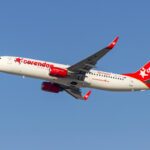
737-8 Order Expands to 10 Aircraft
The six additional 737-8s turn what began as a small narrowbody renewal order into a planned fleet of 10 aircraft. Biman currently operates the previous-generation 737-800, making the 737-8 a relatively straightforward step in terms of fleet architecture even though it requires its own operational approvals, training and technical introduction program.
The 737-8 is designed for 160 to 180 seats in a typical two-class configuration, with a maximum capacity of 210 and a published range of up to 3,500 nautical miles. By comparison, Boeing lists the 737-800 at 160 to 180 seats and up to 2,800 nautical miles.
The extra range broadens the number of destinations Biman can serve with a narrowbody from Bangladesh and gives the airline more flexibility on thinner Middle East and Southeast Asian sectors. It also reduces the need to use widebody capacity where demand does not justify it, while retaining enough capability for longer regional missions.
A 10-aircraft subfleet is large enough to support more consistent scheduling and better utilization than the original four-aircraft commitment. It provides scope to replace older 737-800s while still increasing the number of narrowbodies available for regional growth.
Delivery Execution Will Shape the Expansion
Biman has moved quickly from operating a relatively compact Boeing fleet to committing to an order book larger than its present jet fleet. The decision reinforces Boeing’s position at the airline and avoids introducing a second manufacturer at a time when Biman is planning substantial growth.
The aircraft also match the geographic structure of Biman’s network. The airline’s published destination portfolio is weighted toward South Asia, Southeast Asia and the Middle East, supplemented by a smaller group of long-haul services to Europe and North America. The 737-8 and three-member 787 family give Biman a broad capacity spread without dividing orders among unrelated aircraft families.
The expansion will nevertheless require more than aircraft deliveries. Adding 25 jets will demand corresponding growth in crews, engineering capacity, spare-parts holdings and ground infrastructure. The pace at which Biman can absorb the aircraft will be central to whether the order produces sustained network growth or primarily accelerates replacement of its 737-800 and 777-300ER fleets.
Bottom Line
Biman’s second Boeing agreement changes the character of its 2026 fleet plan. The April purchase could have been read primarily as a structured replacement order, with four 737-8s and a combination of 787 variants covering existing regional and long-haul requirements. Increasing the total to 25 aircraft, including 13 787-10s and 10 737-8s, signals a larger capacity program built around the airline’s strongest traffic flows.
The 787-10 is the key choice. Its economics depend on consistently filling a larger cabin, but Biman has access to substantial Bangladesh-origin labor, visiting-friends-and-relatives and religious travel markets across the Middle East. The 737-8s provide the other half of the strategy by allowing Biman to develop lower-volume routes without committing a widebody, while also giving it a path away from its current 737-800s.
Attention now shifts to delivery timing and fleet absorption. The order offers Biman a coherent Boeing-based platform for expansion, but its commercial impact will be determined by how quickly the airline can build the crews, maintenance support and network depth required for a jet fleet that could become considerably larger than the one it operates today.
Keep reading FlyMag
Get the Daily Brief in the morning or the Route Watch weekly recap on Fridays. Or both.