Arkia has postponed the launch of its planned nonstop service between Tel Aviv Ben Gurion (TLV) and Tokyo Narita (NRT), canceling the first four departures after failing to secure Japanese approval for the wet-leased aircraft assigned to the route.
The affected Tel Aviv departures were scheduled for October 25 and 28 and November 1 and 5, 2026. Arkia said passengers booked for later dates did not need to change their reservations immediately, although the airline stopped short of committing to a revised inaugural date.
The carrier has been working with Japanese authorities for several months. Its planned operating structure paired Arkia’s commercial control of the route with an aircraft and operating crew supplied by another airline under an ACMI agreement.
Read our stories in your inbox
Two aviation newsletters. Zero fluff.
Arkia said it continues to pursue the approvals needed to start the service, including a possible arrangement under which the flights could operate with aircraft covered directly by its own approvals.
Hi Fly A330 Assigned to Tokyo
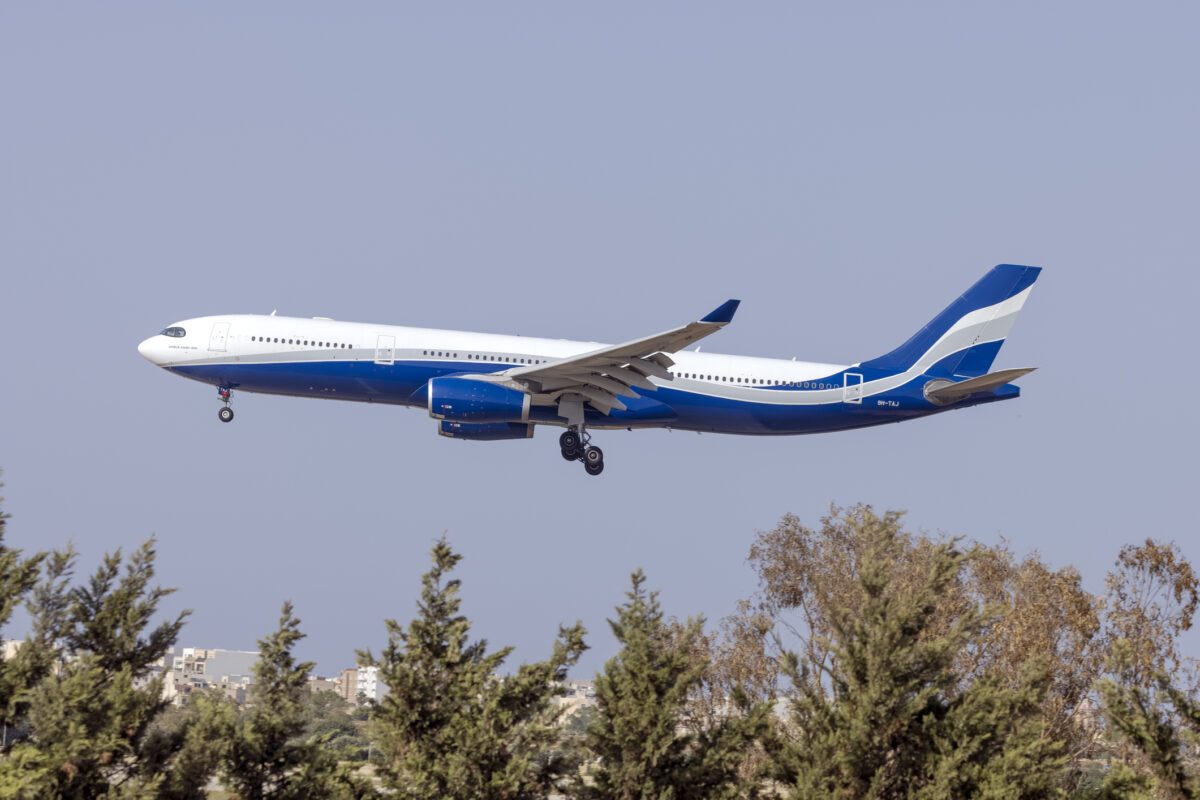
The original schedule called for two weekly rotations using a Hi Fly Airbus A330-200. Flight IZ881 was filed from Tel Aviv on Wednesdays and Sundays, with the return operating as IZ882 from Narita.
Hi Fly describes itself as a specialist wet-lease operator, supplying aircraft together with crews, maintenance and insurance. Its A330 fleet includes several cabin layouts, ranging from roughly 250 seats to close to 300 seats, so the precise onboard product depends on the airframe assigned.
The Airbus A330-200 is designed for long-range, lower-density markets, typically seating 210 to 250 passengers but accommodating more in individual airline configurations. Airbus gives the type a nominal range of about 7,250 nautical miles, comfortably sufficient for the Tel Aviv-Tokyo sector while retaining a twin-aisle cabin and meaningful belly capacity.
That combination makes the A330-200 a logical ACMI aircraft for Arkia. It provides long-haul capacity without requiring the Israeli carrier to purchase a widebody fleet, recruit a separate pilot group or establish the full maintenance organization needed to support the type.

The same structure, however, adds another party to the regulatory process. The airline selling the service, the operator holding the air operator certificate and the aircraft’s state of registration can all be different. Japanese authorities must assess the actual operator and operating plan rather than only the Arkia brand under which tickets are sold.
Japanese Approval Remains the Critical Path
Japan requires a foreign airline carrying passengers or cargo to and from the country to receive permission from the transport minister before beginning service. Its Civil Aviation Bureau also requires prior approval for material changes to an operator’s business plan and separately addresses operations using foreign-registered aircraft.
The underlying traffic rights are not the obstacle. Japan and Israel have had an air services agreement in force since 2000, and a later bilateral understanding established a framework allowing airlines from both countries to operate up to 14 weekly Narita services. The setback concerns approval of Arkia’s proposed operating arrangement rather than the existence of bilateral authority for the route.
Wet leasing is central to that distinction. Arkia would market the flights and carry the commercial risk, but Hi Fly would operate the aircraft with its own cockpit and cabin crews under its air operator certificate. Arkia already uses that model to obtain widebody capacity for parts of its long-haul network, but authorization in one country does not automatically extend to another.
Israel’s Civil Aviation Authority likewise treats planned wet leases as a defined part of an airline’s operating permit. Its current charter-flight procedure requires the lessor, aircraft model and registration to be identified, while also imposing passenger-disclosure requirements when another carrier performs the flight.
Passengers Offered Connections or Refunds
Arkia has offered affected customers replacement travel to Tokyo through Bangkok or Hanoi, with the airline coordinating the itinerary. Passengers can instead move their booking to another Arkia destination with a discount equal to 10% of the new fare, or cancel for a full refund.
Customers who purchased directly from the carrier can use Arkia’s official refund request channel. Agency bookings must be handled through the issuing travel seller.
The alternatives preserve access to Japan but materially change the journey. A nonstop flight would have given Arkia control over the passenger experience and schedule from Tel Aviv to Tokyo. An itinerary through Southeast Asia introduces a transfer, a second operating airline and greater exposure to missed connections or baggage disruption.
Arkia has not abandoned Tokyo. The carrier is continuing discussions intended to obtain an acceptable operating approval, but the first possible departure now depends on completing that process and restoring inventory with enough lead time to rebuild bookings.
Bottom Line
The delay illustrates the trade-off at the center of Arkia’s long-haul expansion. ACMI capacity lets a relatively small airline enter intercontinental markets quickly and limit its capital exposure, particularly on routes that may not initially support a dedicated aircraft. The same model leaves the schedule dependent on regulatory acceptance of an operator, aircraft and crew structure that is more complicated than a conventional own-fleet service.
Tokyo is a demanding test of that strategy. A twice-weekly route needs tour traffic and leisure demand to support the aircraft, but it also needs schedule credibility because passengers are planning expensive, long-duration trips. Canceling the opening rotations less than two weeks before launch risks weakening forward bookings even if Arkia subsequently receives approval.
The next signal will be whether Arkia can obtain clearance for the Hi Fly operation, substitute an aircraft under a different operating structure or move the launch far enough into 2027 to sell the route again with regulatory certainty. Until one of those paths is secured, Tokyo remains an announced expansion market rather than an operating part of Arkia’s network.
Keep reading FlyMag
Get the Daily Brief in the morning or the Route Watch weekly recap on Fridays. Or both.