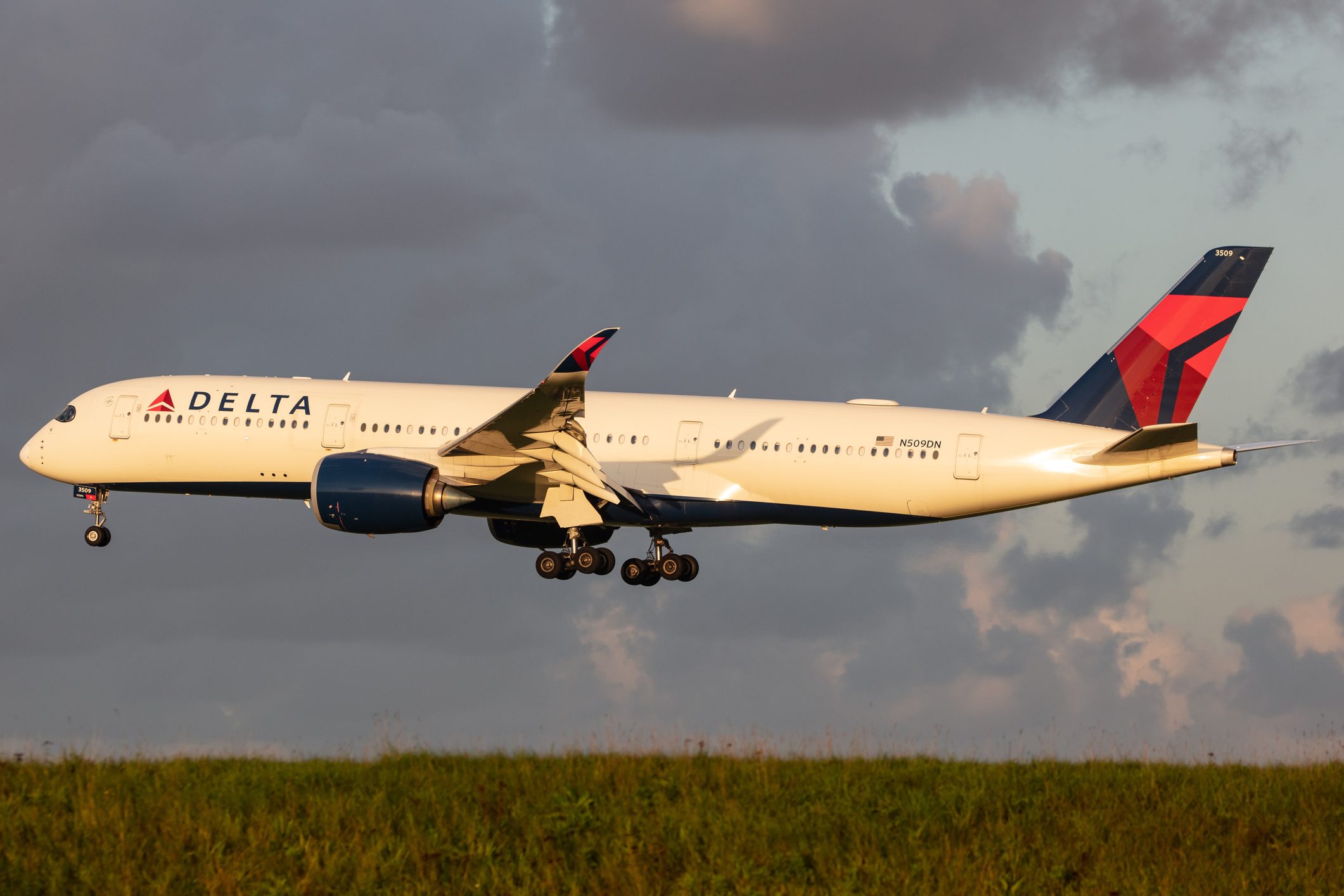
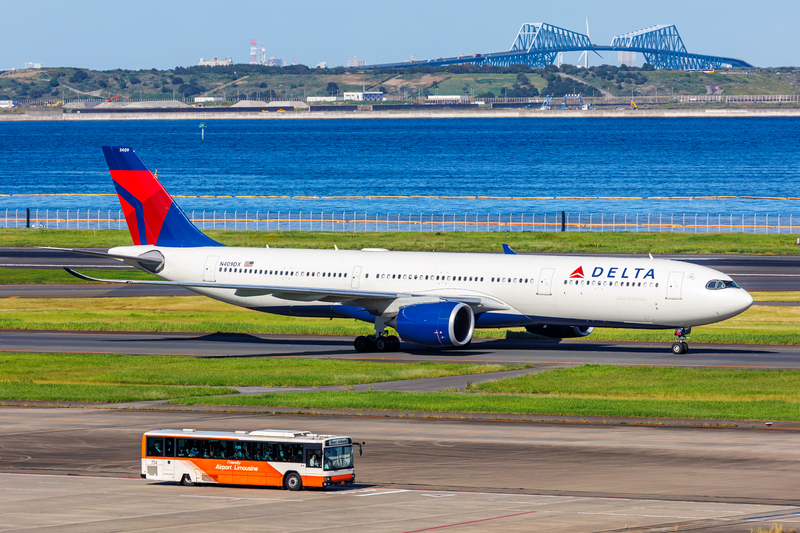
Delta Air Lines will return to Tokyo Narita (NRT) in March 2027, adding a daily flight from Seattle (SEA) alongside its existing service between Seattle and Tokyo Haneda (HND).

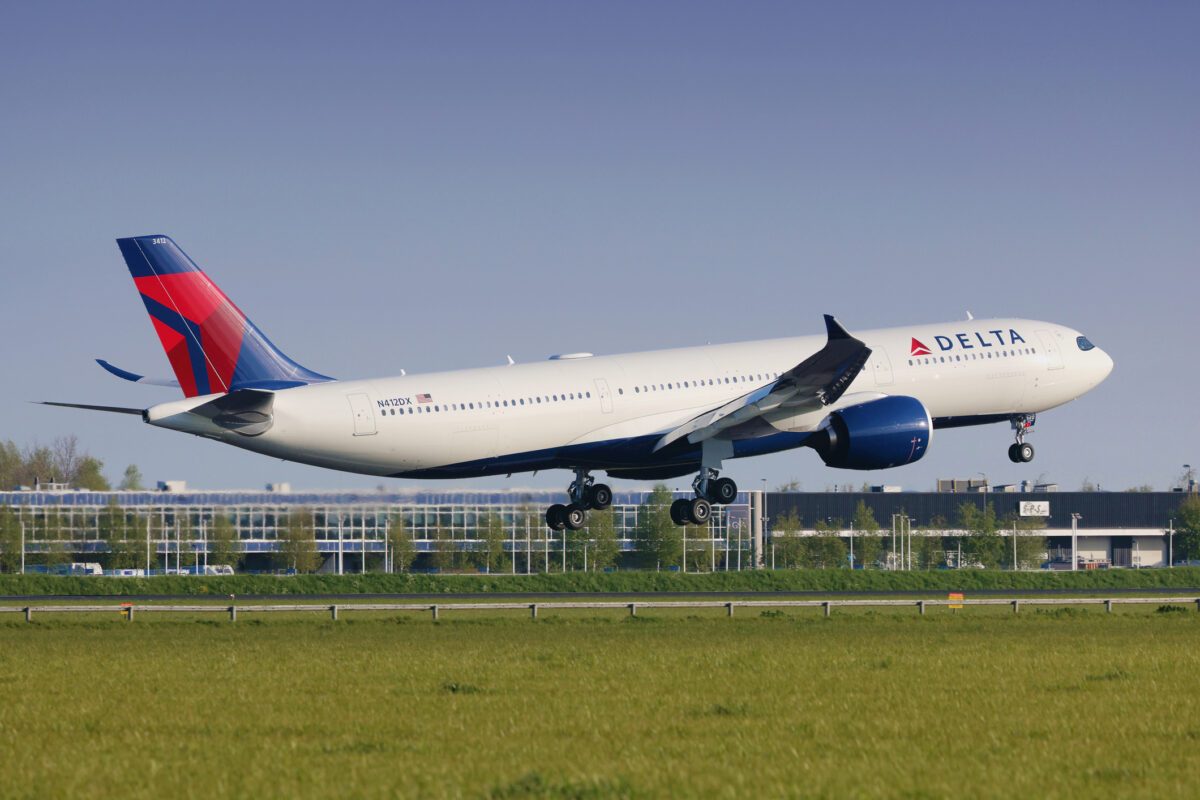
The airline will operate the route with a 281-seat Airbus A330-900neo. Flight DL115 will leave Seattle at 1:35 p.m. on March 27, arriving at Narita at 4:20 p.m. the following day. The eastbound DL114 will begin March 28, departing NRT at 6:30 p.m. and reaching Seattle at noon on the same calendar day.
Delta’s Japanese announcement describes the route as a resumption, while Narita International Airport Corporation says it will be the airline’s first Narita service in seven years. The flight will carry Korean Air’s code under the carriers’ transpacific joint venture.
Read our stories in your inbox
Two aviation newsletters. Zero fluff.
Narita Returns, but Not as Delta’s Asian Hub
Delta acquired a substantial Narita operation when it merged with Northwest Airlines in 2008. The inherited network combined flights from the United States with onward services inside Asia, allowing passengers to connect through Tokyo in a model built around Northwest’s historic traffic rights.

That structure gradually lost its strategic importance as Delta developed nonstop transpacific routes from U.S. gateways and strengthened partnerships with Asian airlines. Seattle became Delta’s primary West Coast gateway, while Seoul Incheon (ICN) assumed the broader Asian connecting role through the airline’s joint venture with Korean Air.
The decisive change in Tokyo followed the expansion of U.S. access to Haneda. In 2019, the U.S. Department of Transportation awarded Delta five additional daily Haneda authorities, covering Atlanta (ATL), Detroit (DTW), Honolulu (HNL), Seattle and Portland. Combined with its existing Los Angeles (LAX) and Minneapolis-St. Paul (MSP) flights, Delta planned seven daily U.S.-Haneda services for the 2020 summer season.
Haneda’s proximity to central Tokyo made it the stronger airport for much of Delta’s local business traffic. By concentrating its own Tokyo flying there and using Korean Air’s Incheon network for connections elsewhere in Asia, Delta no longer needed the costly bank of aircraft, crews and ground infrastructure associated with its old Narita hub.
The 2027 decision does not undo that strategy. Delta will retain Seattle-Haneda and continue serving HND from Atlanta, Detroit, Honolulu, Los Angeles and Minneapolis-St. Paul. Narita is being added as a second airport in the Tokyo market, not substituted for Haneda.
Why a Second Tokyo Flight Works Now
The new service gives Delta a way to add another daily Tokyo frequency without moving an existing Haneda route. Access for U.S. airlines at HND remains governed by a limited pool of route authorities, while NRT can support incremental capacity outside that bilateral allocation process.
Seattle is also a materially larger connecting platform than it was when Delta began dismantling the Narita hub. The airline says it now operates more than 160 peak-day departures from SEA to more than 62 destinations. That network can supply passengers from across the western United States and distribute Narita arrivals beyond the Pacific Northwest.
The schedule reflects that connecting role. The 1:35 p.m. Seattle departure can accept traffic arriving during the morning, while the noon return reaches SEA in time for a broad range of afternoon departures. Delta is therefore building the flight around its U.S. hub rather than attempting to recreate a connecting bank at Narita.
NRT also brings a cargo component that differs from the more passenger-focused case for Haneda. In its route announcement, Delta specifically cited Narita’s cargo infrastructure and the additional freight capacity the A330-900neo will provide between Japan, the U.S. West Coast and onward markets in the Americas.
That combination — Tokyo demand, Seattle feed and belly cargo — gives NRT a more focused role than it had under the Northwest-era model. Delta does not need Narita to function as its principal gateway to Bangkok, Manila, Singapore or other Asian cities. Those flows can continue through ICN, where Delta and Korean Air have built their primary Northeast Asian connecting operation.
The A330-900neo Returns to a Familiar Route
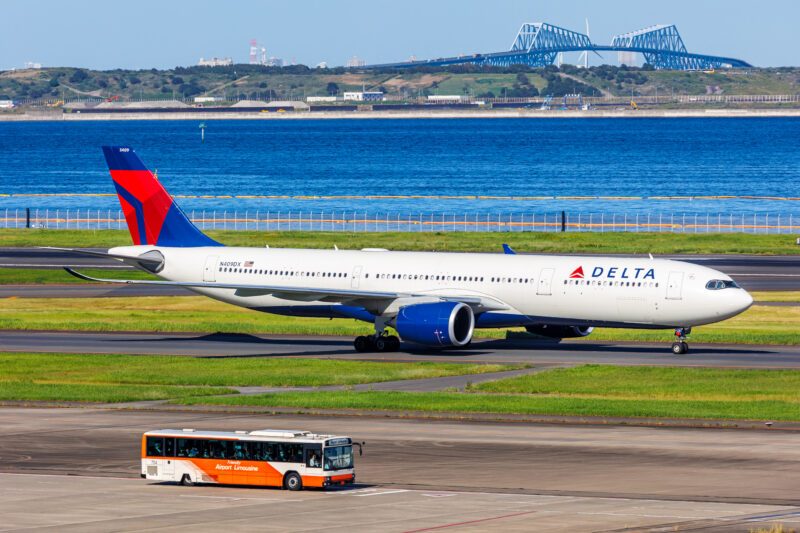
Delta’s A330-900neo has 29 Delta One suites, 28 Premium Select seats, 56 extra-legroom Delta Comfort seats and 168 seats in the main cabin. Delta One provides direct aisle access and a closing door at every seat, while Premium Select uses a 38-inch pitch in a separate cabin.
The aircraft’s published range of 6,995 miles gives it ample performance for Seattle-Tokyo while retaining space for a substantial passenger cabin and cargo payload. Its 281-seat layout is also smaller than Delta’s higher-capacity Airbus A350 configurations, limiting the amount of new capacity introduced as the airline establishes a second daily Seattle-Tokyo flight.
The assignment has historical symmetry. Delta introduced the A330-900neo on Seattle-Narita in 2019, shortly before consolidating its Tokyo network at Haneda. The type will now reopen the route with the same four-cabin, 281-seat configuration.
A Different Narita Strategy
Delta’s return should not be read as an attempt to restore the sprawling Narita operation inherited from Northwest. There is no corresponding announcement of Delta-operated intra-Asia flying, and the carrier continues to identify Incheon as its principal connecting hub in the region.
Instead, Delta is separating two functions that were once combined at NRT. Haneda remains the preferred airport for central Tokyo access, while Narita adds capacity, cargo capability and another schedule option. Seattle and Incheon, rather than Narita, provide the connecting scale on either side of the Pacific.
That makes the new service less a reversal than a refinement. Delta spent the first phase of its post-Northwest strategy removing Narita’s hub function. It can now return with a single route designed to stand on its own, supported by a larger Seattle network and an Asian joint venture that did not exist when the inherited Tokyo hub was at its peak.
Bottom Line
The immediate winners are travelers in the Pacific Northwest and western U.S. cities that can support two daily Delta departures to Tokyo. Haneda remains the stronger option for many central Tokyo itineraries, but Narita can be attractive for passengers traveling elsewhere in the metropolitan region, connecting within Japan or choosing between different departure times and fares.
For Delta, the route shows that abandoning a hub does not require abandoning an airport permanently. The Korean Air joint venture has removed the need for Delta to operate its own Narita feeder network, allowing the carrier to evaluate NRT as an individual long-haul market supported by Seattle connections, local demand and cargo rather than by a tightly timed intra-Asia bank.
The next measure will be whether the two Seattle-Tokyo flights can sustain year-round daily capacity without weakening each other. If Narita performs, Delta will have demonstrated a lower-risk model for growing in Tokyo: protect the scarce Haneda portfolio, add NRT selectively and leave regional connectivity to the stronger joint-venture hub at Incheon.
Keep reading FlyMag
Get the Daily Brief in the morning or the Route Watch weekly recap on Fridays. Or both.