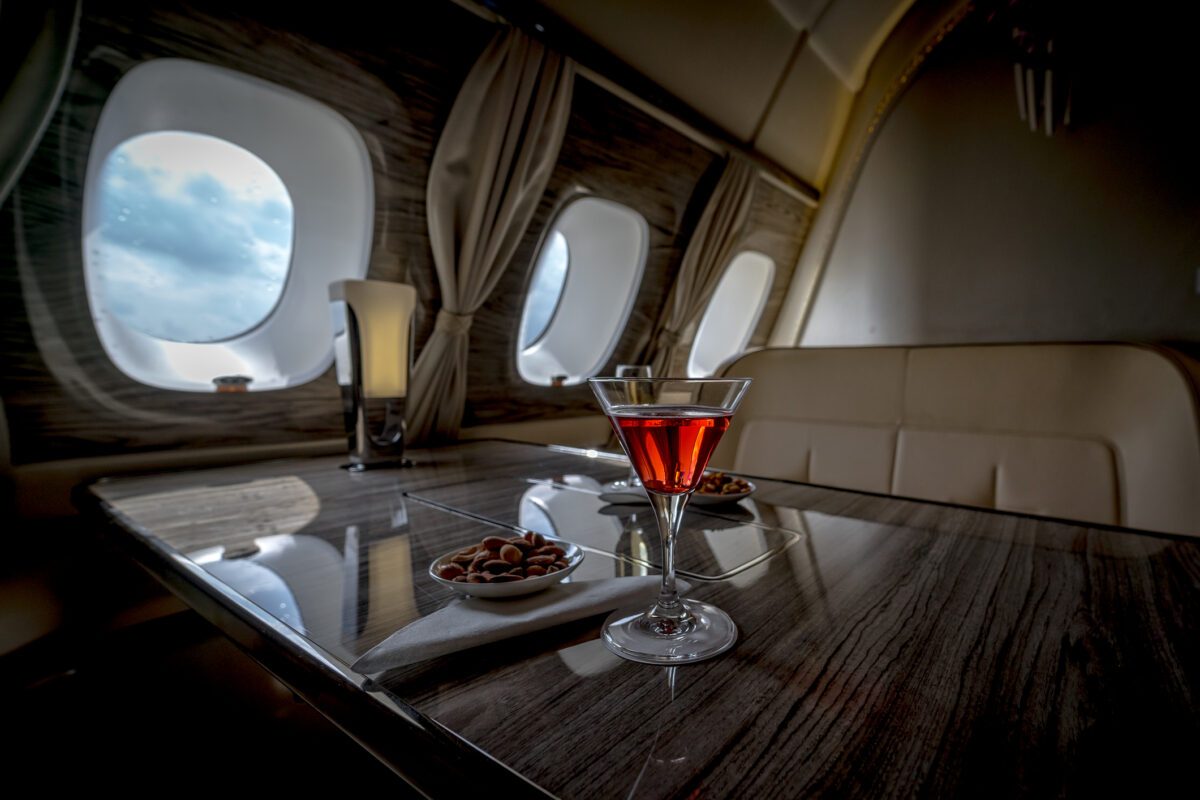
First Class passengers accustomed to finishing a predeparture cocktail during taxi may soon find that window considerably shorter.
Beginning September 1, Delta Air Lines flight attendants are expected to collect airline-provided beverages and other service items before the aircraft begins pushback, according to crew communications reported by View From The Wing. The change is being attributed to stricter Federal Aviation Administration (FAA) enforcement and is expected to affect other U.S. airlines as well.
There is an important distinction, however: the FAA has not created a new rule banning First Class drinks during taxi. The underlying regulation has been on the books for nearly 34 years. What appears to be changing is how strictly airlines are being required to comply with the point at which those service items must disappear from passenger seats.
Read our stories in your inbox
Two aviation newsletters. Zero fluff.
For airlines, that seemingly small clarification could have a noticeable effect on one of the most recognizable parts of the domestic premium-cabin experience.
The FAA Rule Actually Dates Back To 1992
The regulation at the center of the issue is 14 CFR § 121.577, which governs the stowage of food, beverages and passenger-service equipment during aircraft movement on the surface, takeoff and landing.
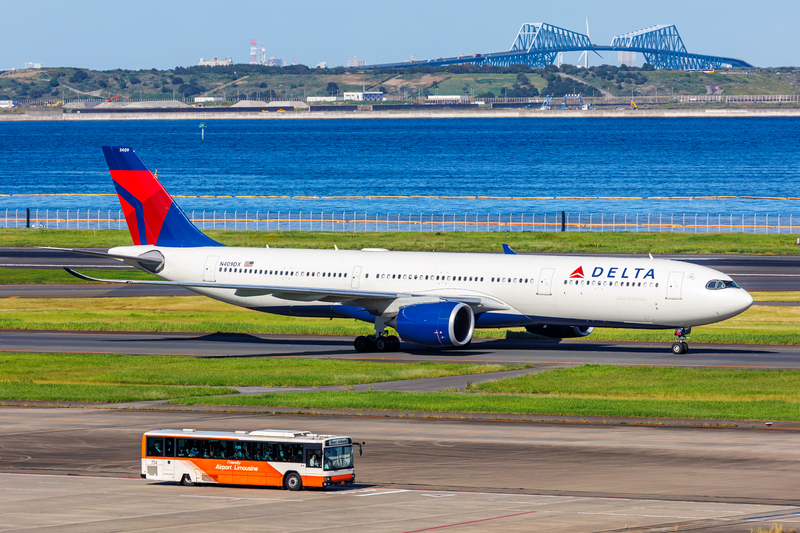
The language is remarkably direct. A Part 121 certificate holder may not move an airplane on the surface when food, beverages or tableware furnished by the carrier are located at a passenger seat. The regulation also requires food and beverage trays, tray tables and passenger serving carts to be properly secured.
That means the regulatory trigger is not takeoff or entering the runway. It is aircraft movement on the surface.
The final rule was published in September 1992 and became effective October 15, 1992. In fact, the FAA addressed the premium-cabin issue directly when the regulation was being developed. One industry commenter warned that limiting predeparture beverages could reduce the perceived value of First Class tickets. The FAA responded that safety took priority and noted that the period between pushback and takeoff was normally relatively short.
More than three decades later, that same argument is resurfacing.
Why A Paper Cup Matters To The FAA
At first glance, requiring a disposable plastic or paper cup to be removed before an airplane moves may seem excessive, particularly when passengers can have substantially larger personal belongings onboard.
The FAA’s concern is emergency evacuation.
In its guidance on stowage of galley service items, the agency explains that litter from food and beverage service can create poor footing during an evacuation. Cups, containers, trays and other loose items can fall into aisles or otherwise interfere with passengers attempting to exit the cabin quickly.
The original 1992 rulemaking made the same point. FAA inspectors had reported food containers, beverage trays, service carts and other items not being properly secured while aircraft were moving. The agency concluded that these objects could slow passenger movement or become hazards during an emergency evacuation.
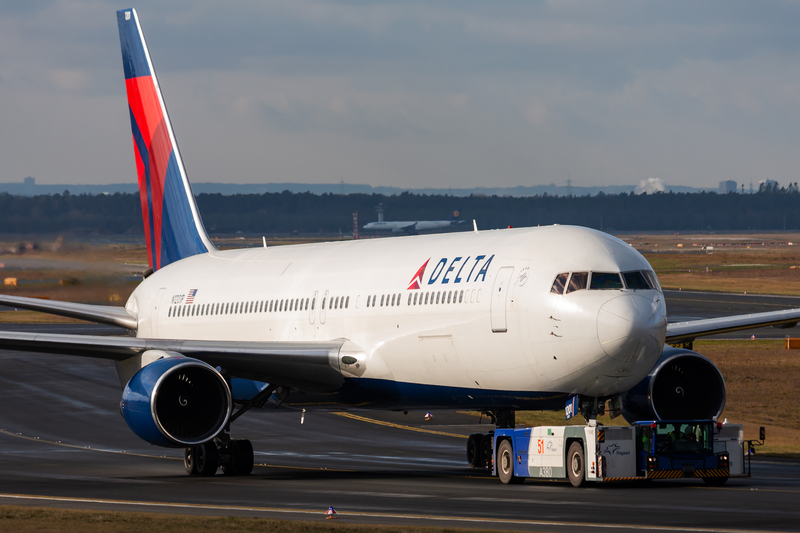
Importantly, the regulation does not distinguish between a glass Champagne flute and a lightweight disposable cup.
From the FAA’s perspective, if the airline furnished the beverage or service item, it cannot remain at the passenger seat once surface movement begins.
Predeparture Beverage Service Could Become More Difficult
The practical impact will be felt primarily in premium cabins because First Class and business-class passengers are the ones most likely to receive beverages during boarding.
Predeparture beverage service already has a relatively narrow operating window. Flight attendants may simultaneously be monitoring boarding, assisting passengers, closing bins, handling catering issues, completing cabin checks and preparing doors for departure.
If the aircraft is scheduled for an on-time pushback, serving drinks too late creates another task that must be completed immediately before departure.
Under stricter enforcement, crews can no longer simply collect the remaining paper cups during taxi.
That could encourage airlines to begin beverage service earlier in boarding, use simpler beverage selections or, particularly during short or disrupted boarding periods, skip predeparture service entirely.
Delta is one of the airlines most immediately associated with the change because internal crew communications have surfaced publicly. The carrier currently markets complimentary beer, wine and liquor to Delta First customers as part of its broader onboard food and beverage offering.
For frequent premium-cabin travelers, however, consistency may become the larger issue. A predeparture beverage is a small component of the overall First Class product, but it is also one of the first service interactions passengers experience after boarding.
The Rule Applies Regardless Of Aircraft Type
This is not an aircraft-specific restriction.
The regulation applies to Part 121 airline operations regardless of whether the flight is being operated by a narrowbody such as an Airbus A321neo, Airbus A320-family aircraft or Boeing 737, or a long-haul widebody such as an Airbus A330, Airbus A350, Boeing 767 or Boeing 787.
That matters because the operational environment can be very different.
On a domestic Boeing 737 or Airbus A321 flight, the First Class flight attendant may be handling a relatively rapid boarding process and a short turnaround. On an international widebody, the premium cabin may involve a longer boarding period and more elaborate predeparture service.
The regulatory requirement, however, is the same: carrier-provided service items cannot remain at passenger seats when the airplane begins moving.
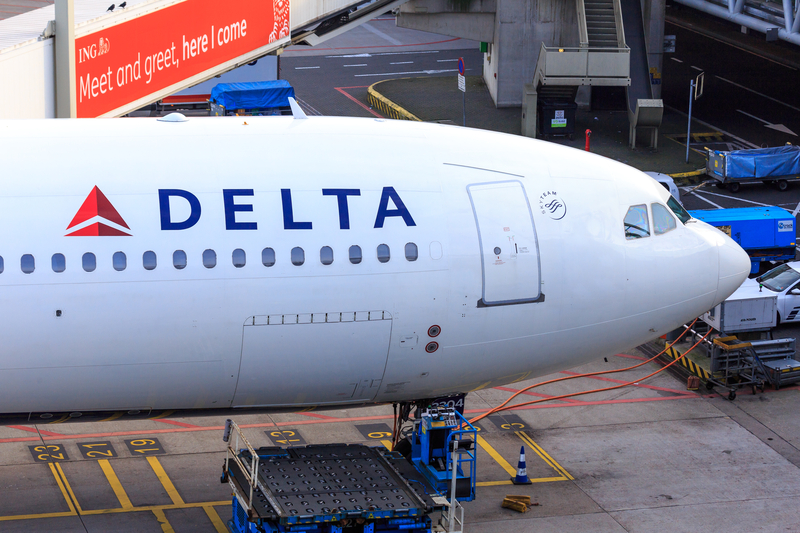
Your Own Coffee Is Not Really An Exemption
One of the stranger aspects of the rule is the apparent distinction between an airline-provided drink and a beverage the passenger brings onboard.
If the airline gives a First Class passenger a cup of coffee, the carrier is responsible for ensuring that the item is cleared before surface movement. A passenger who boarded with a cup purchased inside the terminal does not necessarily have to surrender that cup to the flight attendant.
That does not, however, mean passengers are legally entitled to sit holding their personal Starbucks cup during pushback and taxi.
The FAA’s own guidance says passenger-carried food and beverage containers are considered carry-on baggage and must be properly stowed during surface movement, takeoff and landing.
So the real distinction is one of responsibility. Airline-provided service items fall directly under §121.577, while personally carried items fall under the rules governing carry-on baggage and stowage.
There is another important distinction involving alcohol. Under 14 CFR § 121.575, passengers cannot simply consume alcohol they brought onboard themselves. Alcohol consumed aboard a Part 121 aircraft must be served by the operating certificate holder.
There Is Some Flexibility During Long Ground Delays
One lesser-known aspect of the FAA guidance could become important during lengthy taxi delays.
The FAA has previously said an airline may provide limited food or beverage service while an aircraft is stationary, including when it is stopped on a taxiway in a lengthy queue. The airline must have procedures in place and everything must again be secured before the airplane resumes movement.
That highlights exactly what the regulation is designed around.
It is not simply a “no drinks after the door closes” rule. Nor is it technically a “no drinks after pushback” rule.
It is a no unsecured airline-provided food or beverage service while the aircraft is moving on the surface rule.
Pushback is simply the point at which that movement normally begins.
Bottom Line
The FAA is not suddenly outlawing First Class predeparture beverages. Instead, airlines appear to be facing stricter enforcement of a regulation that has existed since 1992.
For passengers, the most visible change is straightforward: if an airline gives you a predeparture beverage, expect the flight attendant to collect it before pushback rather than sometime during taxi.
For airlines, the operational consequences are more significant. Crews will have to fit beverage service, collection and final cabin preparation into an already busy boarding window. On flights where boarding runs late or turnaround times are tight, that could make predeparture drinks less consistent.
The regulation applies across Part 121 operations and across aircraft types, from domestic Airbus A320-family and Boeing 737 flights to international widebody operations.
Ultimately, the FAA’s position has remained remarkably consistent for more than three decades: once an aircraft begins moving, loose food, beverages and service equipment should not be sitting around the passenger cabin where they could interfere with an evacuation.
For First Class passengers, that means one thing — when the flight attendant says the predeparture drink needs to go, pushback may be only moments away.