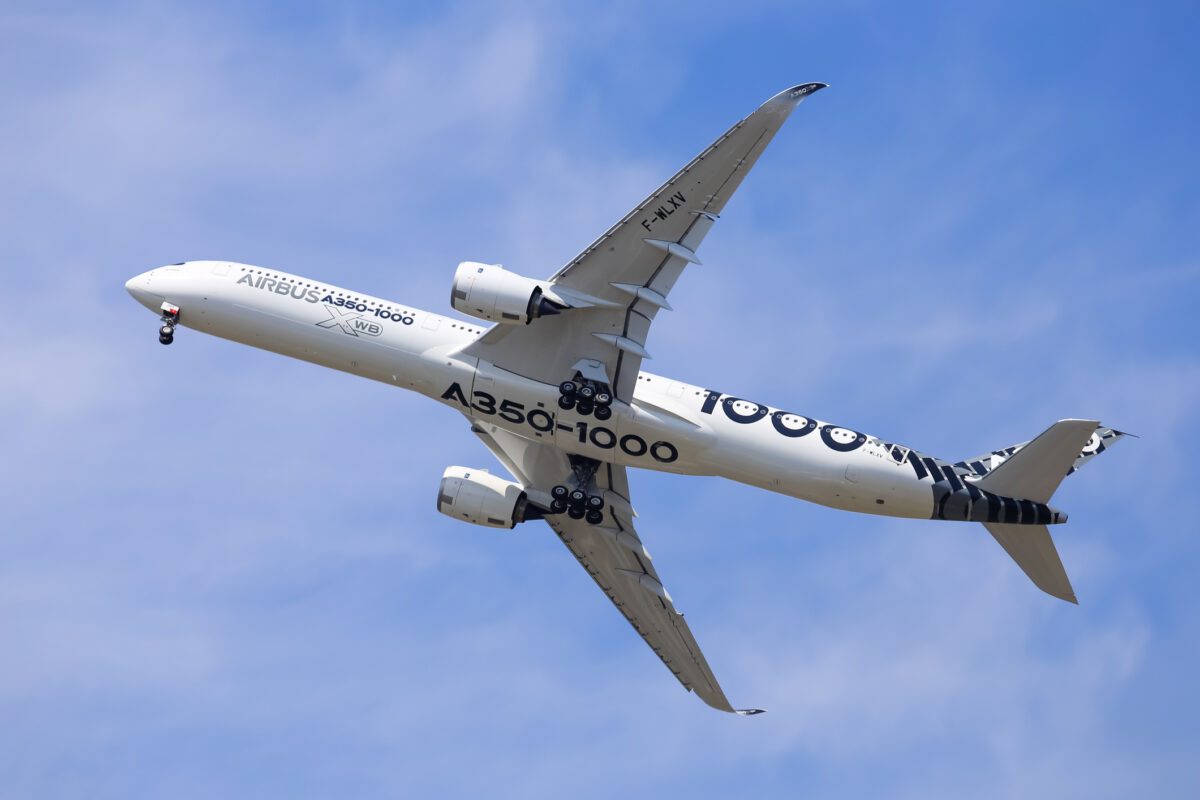
Airbus has secured a Guinness World Record after its A350-1000ULR test aircraft flew 12,503 nautical miles nonstop from Melbourne (MEL) to Toulouse (TLS), completing the longest flight by distance by a commercial airliner.

The manufacturer announced the verified record on November 9, more than three months after the development aircraft completed the flight. Aircraft data was independently validated by the Fédération Aéronautique Internationale and Flightradar24 before the record was confirmed.
Operating as AIB35LR, the aircraft left MEL at 5:27 p.m. local time on July 27 and arrived at TLS at 9:51 a.m. local time on July 28. It remained airborne for 24 hours and 24 minutes while covering 23,155 kilometers.
Read our stories in your inbox
Two aviation newsletters. Zero fluff.
The distinction applies to the distance flown by a commercial airliner rather than a scheduled commercial passenger service. The aircraft was operating a development mission with 13 Airbus, Qantas and FAI personnel aboard, not an airline flight carrying passengers.
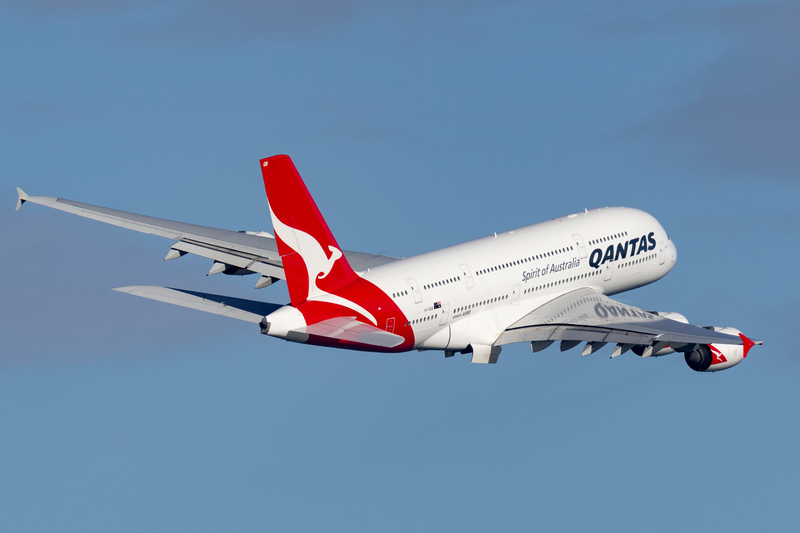
A 23-Hour Block-Time Test for Project Sunrise
The record was a byproduct of a more practical certification and development objective. Airbus was required to demonstrate a sector with at least 23 hours of block time, measured from pushback to arrival at the stand, to cover the most demanding operating conditions envisaged for Qantas’ Project Sunrise network.
Airbus had flown the test aircraft, MSN707, from Toulouse to Melbourne on July 23. The return mission followed a deliberately extended routing: east from Australia across the Pacific, over North America, across the Atlantic and then south over the United Kingdom toward Toulouse.
In a technical account published after the flight, Airbus said the mission was designed to support a planned Project Sunrise flight time of 21 hours and 40 minutes, with additional margins for taxiing, holding and diversion. The development flight also gathered data on cabin air conditioning and the modified fuel system.
The crew included three Airbus test pilots, five Airbus flight-test engineers, two Airbus design engineers and two Qantas pilots, Captains Andrew Coull and David Summergreene. An FAI representative was also aboard.
Airbus rotated the pilots through four-hour working periods, staggered at two-hour intervals to preserve continuity during handovers. Because test equipment occupied the aircraft’s two flight-crew rest compartments, the pilots used the eight-berth cabin-crew rest area at the rear of the aircraft.
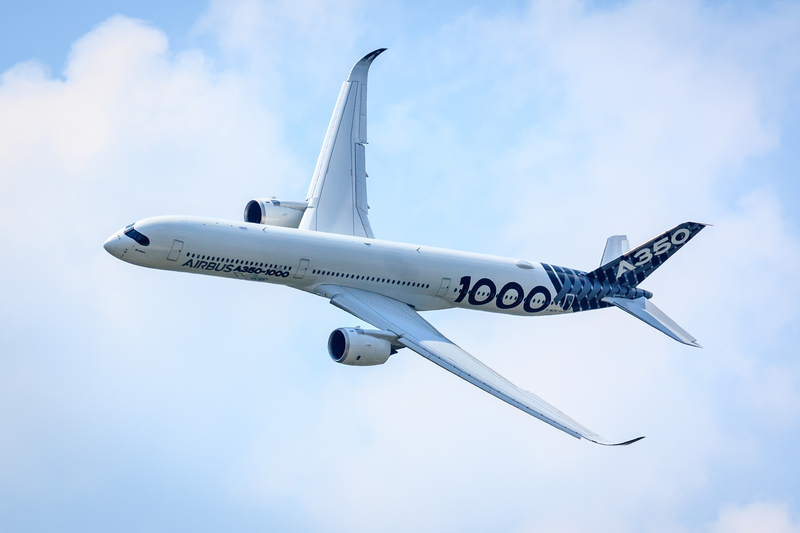
Rear Center Tank Extends the A350-1000’s Reach
The A350-1000ULR is a specialized derivative of the Trent XWB-97-powered A350-1000. Its defining modification is an additional rear center tank integrated into the airframe and fuel system.
Airbus lists the tank’s capacity at 20,900 liters and says it adds about 1,000 nautical miles of range. The test campaign has included validating fuel transfer, monitoring and management functions associated with that tank, alongside other changes required for the aircraft’s higher operating weights and exceptionally long missions.
MSN707 made the variant’s first flight on June 2. Airbus fitted the aircraft with about five metric tons of flight-test instrumentation to support certification work on the ULR configuration and its redesigned systems.
The Melbourne-to-Toulouse mission flew considerably farther than the routes the aircraft will operate in revenue service. Its value was in proving endurance and system behavior beyond the core commercial mission, including the reserves and operational flexibility needed near the end of a flight approaching 22 hours.
Qantas Prepares for Sydney-London Launch
Qantas has ordered 12 A350-1000ULRs for Project Sunrise. The first aircraft is scheduled for delivery in April 2027, with nonstop Sydney-London flights due to begin in October 2027.
The airline has confirmed that the historic QF1 and QF2 flight numbers will transfer to the nonstop service. Its existing one-stop operation through Singapore will continue as QF5 and QF6. Qantas expects to place tickets for the direct service on sale in February 2027.
The Sydney-London operation will cut up to four hours from the fastest current one-stop itinerary, but the strategic value extends beyond elapsed travel time. Qantas is creating a premium-heavy nonstop product that avoids an intermediate hub and gives the airline control of the full journey between two of its most important markets.
Each aircraft will carry 238 passengers, a low-density layout for an A350-1000. The configuration comprises six First suites, 52 Business suites, 40 Premium Economy seats and 140 Economy seats. Premium cabins account for 41% of capacity.
Qantas has also placed a Wellbeing Zone between Premium Economy and Economy, with space for movement, a hydration station and guided exercises. The airline’s Project Sunrise cabin program includes lighting, meal timing and rest patterns developed with the University of Sydney’s Charles Perkins Centre for flights crossing multiple time zones.
New York is planned as the next Project Sunrise destination after London, although Qantas has not yet announced its launch date. The airline also has 12 standard A350-1000s on firm order for broader long-haul fleet renewal.
Bottom Line
The record flight matters less as a standalone endurance exercise than as evidence that Airbus has moved the A350-1000ULR from a paper range proposition into a demonstrated operating envelope. A 24-hour development sector gives the manufacturer data from the fuel system, environmental controls and crew operation under conditions that cannot be reproduced on a conventional long-haul test flight.
For Qantas, the result reduces one layer of technical uncertainty ahead of a network plan built around aircraft utilization, premium demand and high completion reliability on sectors with few practical substitutes. The challenge now shifts toward certification, delivery and proving that the commercial model works consistently through seasonal winds, payload variation and diversion planning.
The next milestones will be the completion of the ULR test program, delivery of the first Qantas aircraft in April 2027 and the opening of Sydney-London reservations. Those steps will show how much usable payload and schedule resilience Qantas can extract from the extra fuel capacity once Project Sunrise moves from flight testing into daily airline operations.