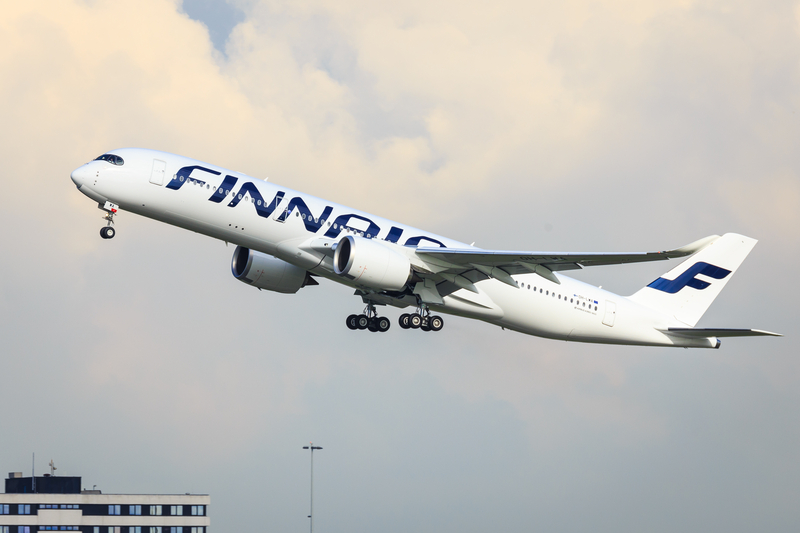
Finnair has opened its first scheduled route to Australia under its own airline code, launching daily Airbus A350-900 flights between Helsinki (HEL) and Melbourne (MEL) with an intermediate stop at Bangkok (BKK).


The inaugural AY145 arrived in Melbourne on October 26, 2026, after operating from Helsinki through Bangkok. Melbourne Airport confirmed the arrival as Finnair’s first Australian flight using its own aircraft and code.
The opening gives Finnair a passenger and cargo presence on a new continent while adding a European-operated fifth-freedom service between Thailand and Australia. Tickets are available for Bangkok-Melbourne travel as well as journeys connecting through Bangkok between Australia and Europe.
Read our stories in your inbox
Two aviation newsletters. Zero fluff.
A Daily Same-Aircraft Service Through Bangkok
Finnair’s winter schedule lists AY145 leaving HEL at 1:15 a.m. and arriving at BKK at 4:35 p.m. The aircraft departs Bangkok at 6:25 p.m. and reaches MEL at 7:20 a.m. the following day.
AY146 leaves Melbourne at 3:30 p.m., arriving in Bangkok at 8:40 p.m. After a 10:45 p.m. departure, it reaches Helsinki at 6 a.m. the following morning. All times are local and can vary by date.
The published Finnair Cargo schedule shows the service operating daily with the A350. Its early-morning arrival in Helsinki is timed to feed Finnair’s European network, while the afternoon departure from Melbourne accommodates the northbound overnight journey from Bangkok.
Finnair keeps the same aircraft on both sectors, but the stop is more involved than a conventional through-flight transit. According to the airline’s operating guide for the Melbourne route, through passengers leave the aircraft in Bangkok with their carry-on belongings, pass through security and return to the departure gate before reboarding.
The cabin crew changes in Bangkok. During the stop, the A350 is inspected, cleaned, refueled and recatered, while local cargo is exchanged. The cabin and hold also receive the insecticide treatment required for flights entering Australia.
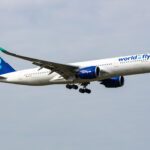
A350 Brings Three Cabins to Melbourne
Finnair is using the Airbus A350-900, the flagship of its long-haul fleet. The airline operates two A350 cabin layouts seating either 278 or 321 passengers, so capacity can vary with the aircraft assigned.
The smaller configuration has 43 Business Class seats, while the higher-capacity version has 30. Premium Economy accommodates 24 to 26 passengers, with the remainder of the cabin in Economy. Finnair’s fleet information lists 18 A350s in service and one more on order.
All of the airline’s A350s have received its current long-haul interior. Business Class uses the fixed-shell AirLounge seat rather than a conventional reclining mechanism. Passengers sit within a broad, contoured shell, with an infill panel and bedding creating the lie-flat sleeping surface. Premium Economy has a 38-inch minimum pitch, while Economy is arranged nine abreast.
The aircraft is well matched to a route combining two long sectors and a commercially important cargo stop. Airbus lists the A350-900’s maximum range at 8,600 nautical miles, with the type powered exclusively by Rolls-Royce Trent XWB engines. The Bangkok stop allows Finnair to serve the Australia-Europe market without committing to an ultra-long-haul nonstop operation while also selling the intermediate sector.
Australia Becomes Part of Finnair’s Own Network
Finnair aircraft and crews have worked in the Australian market before, but not in this form. The airline previously supplied Airbus A330s to Qantas under a long-term lease arrangement for flying between Sydney and Southeast Asia. Finnair said that agreement helped redeploy A330 capacity after the closure of Russian airspace made parts of its traditional Asia network more difficult to operate.
The Melbourne launch is different: Finnair controls the schedule, sells the flights under its own AY code and connects Australia directly into its Helsinki network. It also retains local traffic rights on Bangkok-Melbourne, giving the flight a second passenger market beyond travelers making the full journey to or from Europe.
Melbourne Airport said Finnair is now the only European Union airline serving an Australian city. The airport estimates that the daily international service will contribute about A$190 million annually to Victoria’s economy, including through inbound tourism and freight activity.
Cargo Is Central to the Route
Finnair is also positioning Melbourne as an extension of its cargo network. The northbound timetable places freight in Helsinki at 6 a.m., in time for daytime flight and truck connections across Europe. The airline offers Australian road-feeder links involving Sydney, Adelaide, Brisbane and Perth.
Finnair Cargo identified pharmaceuticals, temperature-controlled products, high-value technology and Australian fresh produce as target shipments. It has introduced additional monitoring at Bangkok to verify temperature control during the roughly two-hour ground stop, an important consideration when cargo remains in transit between two long sectors.
Bottom Line
Melbourne gives Finnair more than a new endpoint. The route combines three distinct flows — Europe-Australia connections, Bangkok-Melbourne local traffic and long-haul cargo — that can support one daily wide-body rotation. That structure reduces its dependence on passengers traveling the entire distance between Helsinki and Melbourne.
The service also shows how Finnair continues to reshape its long-haul network after losing the geographic advantage that Russian overflight access once provided. Rather than recreating its former Northeast Asia model, the airline is using fifth-freedom rights, partnerships and carefully timed intermediate stops to find productive work for its wide-body fleet.
The key measure will be whether Finnair can sustain year-round demand across all three markets, particularly outside the northern European and Australian peak travel periods. If Melbourne performs, it could provide a template for further growth that pairs Helsinki connections with commercially valuable sectors inside the Asia-Pacific region.