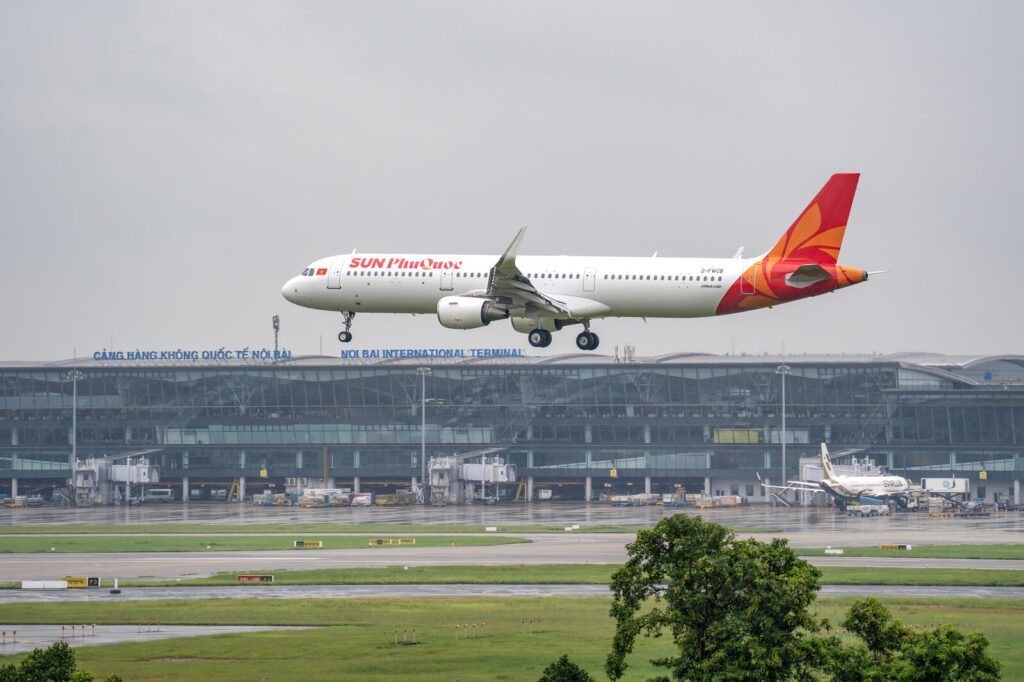
Sun PhuQuoc Airways has taken its first Airbus A321LR, adding a long-range narrowbody as the Vietnamese airline prepares to move beyond its initial Southeast and Northeast Asian network.
The aircraft, registered VN-A925, was introduced by the airline on September 4. Sun PhuQuoc Airways said the jet would support planned expansion to Japan, Kazakhstan and other Central Asian markets.
The carrier also described VN-A925 as the first A321LR intended to enter commercial service in Vietnam. Its induction gives Sun PhuQuoc Airways an aircraft positioned between the standard-range A320-family jets on which it launched and the Airbus A330 widebodies due to begin joining its operation during September.
Read our stories in your inbox
Two aviation newsletters. Zero fluff.
More Reach From the Existing Narrowbody Platform
The A321LR combines the A321neo airframe with additional fuel capacity and a higher maximum takeoff weight. Sun PhuQuoc Airways said VN-A925 is fitted with two additional fuel tanks and cited a range of up to 4,000 nautical miles, or approximately 7,400 kilometers.
The airline’s figure corresponds with the upper end of the A321LR’s advertised capability, although practical range varies with seating, payload, weather and reserves. Under the aircraft’s Airbus long-range certification, the A321neo platform can accommodate as many as three Additional Center Tanks, operate at a maximum takeoff weight of 97 metric tons and fly missions of up to 4,000 nautical miles with 206 passengers.
That capability is relevant to Sun PhuQuoc Airways because it extends the utility of a fleet already centered on Airbus single-aisle aircraft. The airline’s published fleet information lists the Airbus A321neo, A321ceo and A320neo, with its standard A321neo configured either with eight business-class and 200 economy seats or with 236 seats in an all-economy layout.
Keeping the LR within the A320-family platform limits the operational disruption associated with adding range. Flight crews, engineering teams and much of the airline’s support infrastructure can remain within the same aircraft family, while the additional fuel capacity opens missions that would be marginal or unavailable to a standard A321neo at commercially useful payloads.
The A321LR also gives the airline a smaller-gauge alternative to a widebody on developing medium-haul routes. That can be particularly useful when opening destinations where demand is expected to build gradually, allowing Sun PhuQuoc Airways to establish frequency without placing several hundred widebody seats into the market from the outset.
International Network Has Expanded Quickly
Sun PhuQuoc Airways began commercial service on November 1, 2025, when its first flights connected Phu Quoc with Hanoi, Ho Chi Minh City and Da Nang. The airline carried 220 passengers on its inaugural Hanoi-Phu Quoc service using an Airbus A321.
International growth followed in March 2026 with Taipei. Seoul, Hong Kong, Chengdu, Singapore and Bangkok were subsequently added, while Kuala Lumpur became the carrier’s seventh international destination on September 1.
By early August, Sun PhuQuoc Airways had expanded to 17 aircraft and was targeting 32 by the end of 2026, according to the airline’s Kuala Lumpur route announcement. The accelerated fleet plan reflects Sun Group’s effort to build Phu Quoc as the center of an airline network tied closely to its tourism, resort and entertainment businesses on the island.
The A321LR broadens that model beyond markets comfortably served by standard narrowbodies. Japan sits within the aircraft’s normal operating envelope from Vietnam, while Kazakhstan and other Central Asian points require more range and place greater emphasis on payload performance. The LR offers a way to approach those markets without immediately committing a widebody.
A321LR Arrives Alongside Widebody Expansion
Sun PhuQuoc Airways is not relying on the A321LR as its sole long-range platform. The carrier has arranged to introduce eight Airbus A330s, with four scheduled to arrive during 2026 and another four in the first four months of 2027.
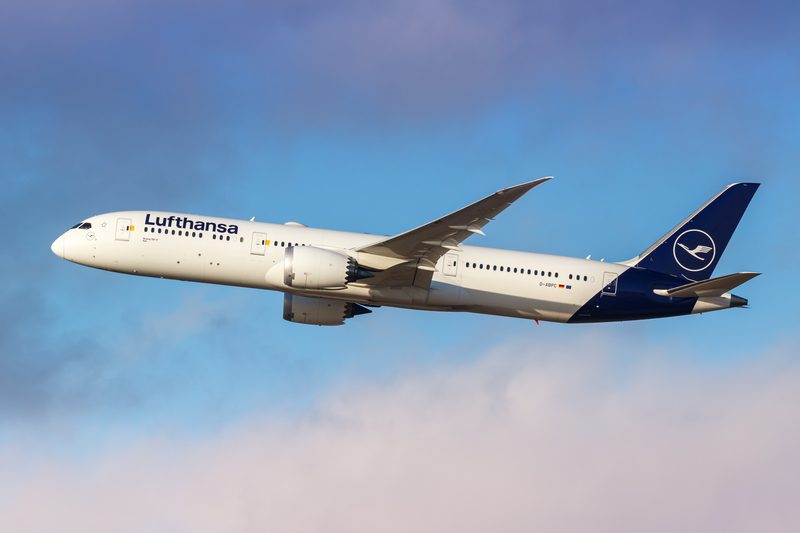
Under the A330 induction plan, the first two widebodies are expected in Vietnam during September. Sun PhuQuoc Airways intends to use the type to add capacity to South Korea and expand toward Russia and Kazakhstan. Later aircraft are intended to support Japan and Australia, with selected European markets also under study.
The A330s are being prepared with business class, premium economy and economy cabins. Business class will have lie-flat seats, while personal entertainment screens are planned throughout the aircraft. That product makes the widebody the carrier’s higher-capacity and more premium-oriented option for longer sectors.
Farther out, Sun PhuQuoc Airways has signed an agreement covering 40 Boeing 787-9 Dreamliners, with deliveries expected from 2031. The airline has identified Europe, the United States, the Middle East, Japan and Australia among the markets that could eventually be served by the 787 fleet.
Bottom Line
The A321LR gives Sun PhuQuoc Airways a useful intermediate tool at a critical point in its growth. Standard A320-family aircraft can continue handling domestic and shorter regional flying, while the LR can test thinner medium-haul markets before the airline commits an A330. That fleet segmentation should be particularly valuable on leisure routes where demand can be seasonal and heavily influenced by tour operators.
Its arrival also shows that Sun PhuQuoc Airways is assembling its network faster than a conventional start-up sequence would suggest. The carrier is adding long-range narrowbodies and widebodies less than a year after its first commercial flight, backed by a tourism group with a direct interest in increasing international traffic to Phu Quoc.
The next point to watch is how VN-A925 is configured and deployed in scheduled service. Japan would represent a relatively straightforward use of the aircraft, while Kazakhstan or deeper Central Asian flying would provide a clearer demonstration of the LR’s role. The balance between A321LR frequency and A330 capacity will indicate whether Sun PhuQuoc Airways is building a disciplined set of route-opening tools or simply accumulating fleet ahead of demand.
Keep reading FlyMag
Get the Daily Brief in the morning or the Route Watch weekly recap on Fridays. Or both.