Russia has approached Vietnam about placing aircraft from Vietnamese carriers with Russian airlines under wet-lease agreements, opening another attempt by Moscow to secure foreign-operated capacity for its constrained aviation market.


Russian Transport Minister Andrei Nikitin said the ministry had sent proposals to its Vietnamese counterparts, which were considering them. The initiative remains at the government-proposal stage rather than a completed lease transaction.
Nikitin disclosed the approach after Russian-Vietnamese talks in Moscow on September 9, during the state visit of Vietnamese President To Lam. The countries’ subsequent joint statement called for more regular and charter flights as part of broader efforts to increase tourism and transport links.
Read our stories in your inbox
Two aviation newsletters. Zero fluff.
An ACMI Solution Rather Than a Fleet Transfer
Under a full wet lease, commonly described as an ACMI arrangement, the Vietnamese operator would provide the aircraft, cockpit and cabin crews, maintenance and insurance. The Russian customer would purchase the capacity and normally remain responsible for commercial functions including ticket sales, fuel, airport charges and handling.
That distinction is central to the Russian proposal. A conventional dry lease would require a Russian airline to place the aircraft under its own operational control, provide qualified crews and arrange maintenance. A wet lease leaves the aircraft on the Vietnamese carrier’s air operator certificate and under the safety oversight attached to that operation.
The structure can add capacity faster than acquiring an aircraft and building the supporting organization around it. It can also be used seasonally, making it relevant to the Russia-Vietnam leisure market, where demand is concentrated around resort programs and Russian winter travel peaks.
Wet leasing does not, however, make the Vietnamese carrier a passive equipment supplier. It would operate the flights with its own crews and continuing responsibility for the aircraft. Any agreement would therefore require the lessor to accept the operational, regulatory and commercial exposure associated with flying on behalf of a Russian airline.
Russia Built a Legal Path for Foreign Wet Leases
Russia first permitted wet leasing between domestic airlines from September 2024. Aeroflot then pressed for the mechanism to be expanded internationally, arguing that Russian carriers should be able to source aircraft and crews outside the country. The Russian Transport Ministry publicly backed Aeroflot’s proposal.
Legislative changes followed in 2025, and the permit framework for using aircraft from airlines in countries Russia considers friendly took effect in March 2026. Nikitin previously described the mechanism in a Transport Ministry interview as a way for Russian airlines to use foreign carriers’ aircraft while protecting passenger mobility.

The policy gives Russia an alternative to waiting for domestic aircraft production to supply replacement capacity. It also avoids the crew-conversion and maintenance requirements that would accompany the introduction of another type directly into a Russian operator’s fleet.
Turning that legal framework into an operating lease depends on finding a foreign airline willing and able to supply aircraft. The Vietnam approach shows Moscow is now pursuing that capacity through bilateral government channels rather than relying solely on airline-to-airline negotiations.
Vietnam Traffic Is Already Supporting Widebody Capacity
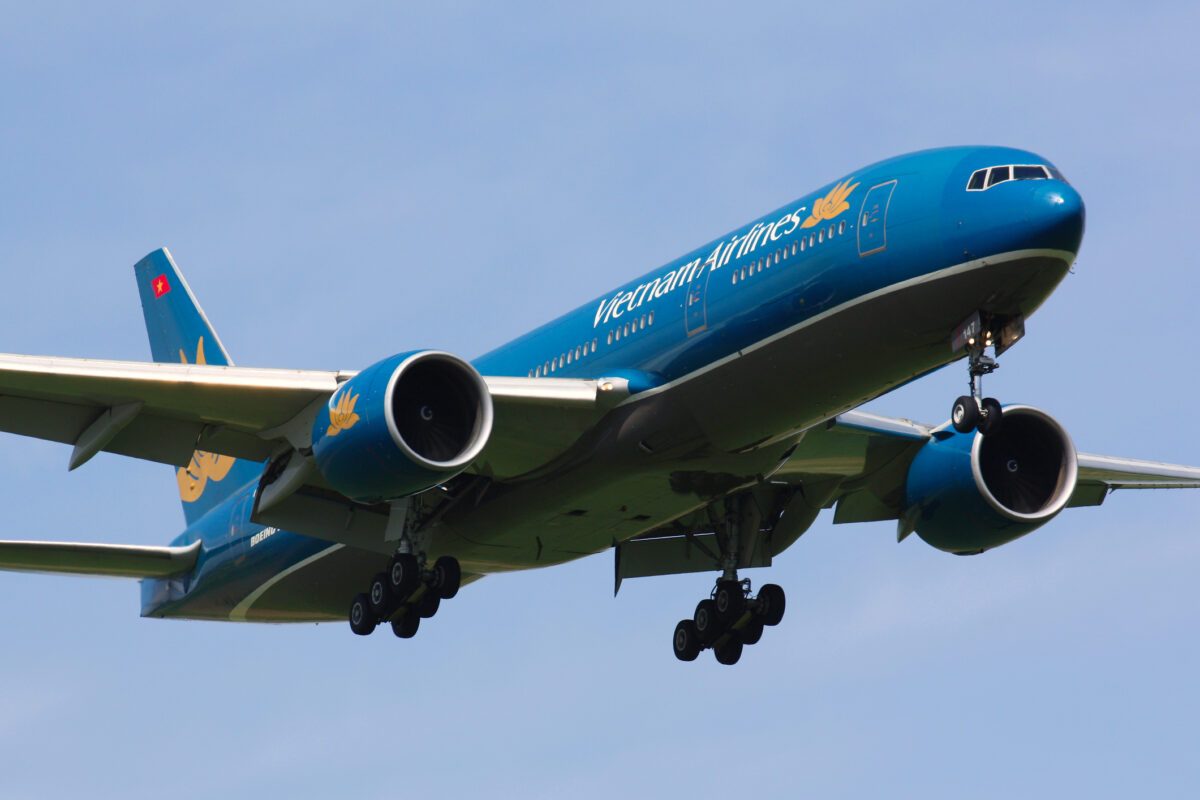
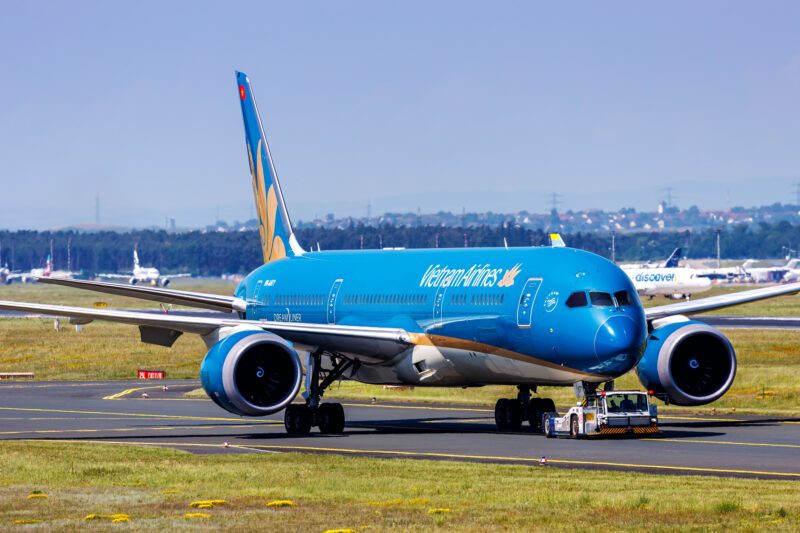
The request comes as passenger traffic between Russia and Vietnam expands across scheduled and charter segments. Vietnam Airlines sells nonstop service between Hanoi (HAN) and Moscow Sheremetyevo (SVO), with its schedule moving to four weekly flights from October 26, 2026.

Vietnam Airlines uses the Boeing 787 on the route. The twin-aisle aircraft combines the range required for the roughly 4,200-nautical-mile sector with belly-cargo capacity and a cabin suited to a scheduled market carrying a mix of tourism, business and connecting traffic. Four weekly frequencies also provide substantially more utility than an isolated charter program while stopping short of daily capacity.
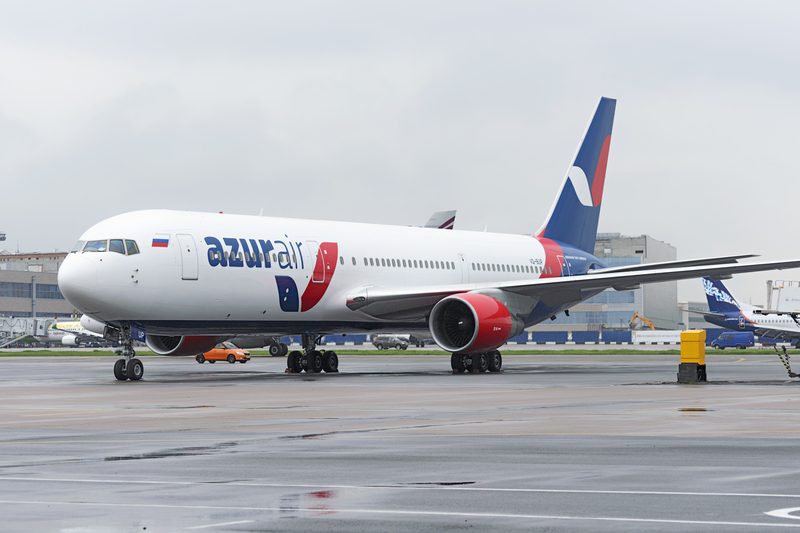
Russian leisure operators have built a broader network to Vietnamese resort points. Azur Air has been flying to Nha Trang (CXR) and Phu Quoc (PQC), using Boeing 757 and Boeing 767 aircraft. Its Boeing 757s carry 238 passengers, while its Boeing 767s have 336 all-economy seats.
Azur Air said it carried more than 150,000 passengers on its Vietnam routes in the first quarter of 2026. Its summer Nha Trang program used the 336-seat Boeing 767, an aircraft well matched to dense leisure demand but increasingly difficult to replace as the global passenger 767 fleet contracts.
Those operations demonstrate the scale of the market Russia wants to serve. A Vietnamese wet lease could support existing bilateral services, add departures during peak periods or release Russian widebodies for use elsewhere. It could also give a Russian airline access to a younger aircraft with an established foreign crew and maintenance program.
Approval Will Be More Complex Than Finding an Aircraft
The commercial question extends beyond whether a Vietnamese airline has spare capacity. A lessor would need to preserve its own schedule, crew coverage and maintenance reserves while obtaining the necessary approvals for an operation sold by a Russian carrier.
Aircraft ownership adds another layer. Vietnamese airline fleets include jets financed or leased through international counterparties, and an operator considering Russian ACMI work would need to satisfy its aircraft owner, insurer, maintenance providers and parts supply chain. Those relationships are particularly important for Western-built aircraft such as the Boeing 787, Boeing 757 and Boeing 767.
Operational control would also need to remain clearly allocated. The Vietnamese carrier would dispatch and crew the aircraft under its own procedures, while the Russian airline would control the commercial product. Bilateral traffic rights, schedule approvals, ground arrangements and responsibility during disruptions would have to align with that division.
For Moscow, the attraction is straightforward: wet leasing can provide lift without waiting for new aircraft deliveries or transferring a foreign jet into the Russian operating system. For a Vietnamese carrier, the calculation is whether the contract revenue would justify dedicating aircraft and crews to an operation with unusually complicated regulatory and financial dependencies.
Bottom Line
Russia’s approach to Vietnam is a test of whether its foreign wet-lease framework can move from legislation to an actual cross-border operation. The model addresses a real capacity problem, but its success depends less on Russian demand than on the willingness of a foreign airline and its commercial partners to support the flying.
Vietnam is a logical market in which to try. Scheduled Hanoi-Moscow service is growing, while Russian charter airlines are filling high-density widebodies to Vietnamese resorts. Additional aircraft could be absorbed during peak periods without creating an entirely new traffic flow, and a Vietnamese operator would already have local crews, maintenance capability and regulatory relationships.
The development to watch is whether the government-level proposal produces a named airline and a defined operating program. A signed Vietnamese ACMI agreement would give Russian airlines a new source of capacity and establish a template Moscow could pursue with other Asian carriers. If talks remain at the policy level, Russia’s expanded wet-lease rules will continue to offer legal flexibility without materially enlarging the fleet available to its airlines.
Keep reading FlyMag
Get the Daily Brief in the morning or the Route Watch weekly recap on Fridays. Or both.