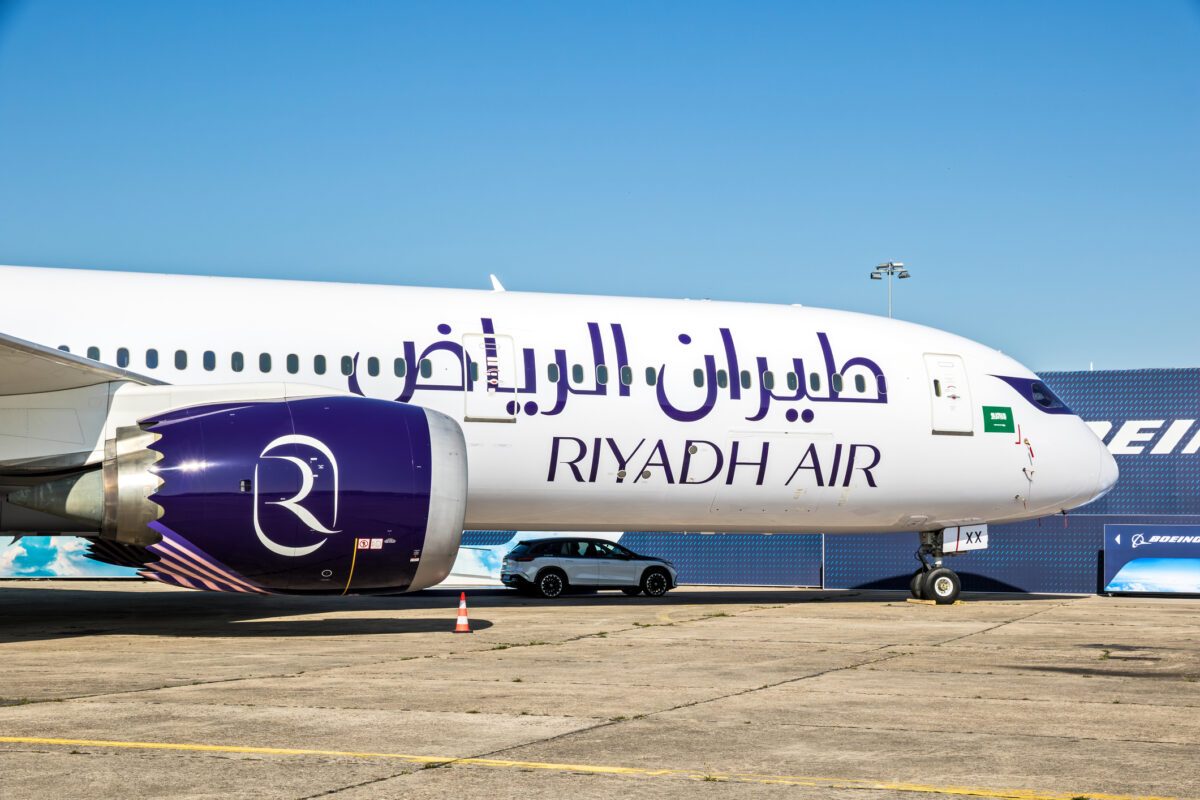
Riyadh Air moved three Boeing 787-9 Dreamliners out of Riyadh King Khalid (RUH) on October 13, dispersing the aircraft to Al Ula (ULH) and Medina (MED) while its home airport remained closed following repeated attacks.
Flight-tracking records show the three widebodies left within 23 minutes of one another. HZ-RXAG departed at 12:16 UTC as RX8004 and flew to Al Ula, followed by HZ-RXAC at 12:32 UTC as RX8001 to Medina. HZ-RXAA left at 12:39 UTC as RX8002, also bound for Al Ula.
The flights were not part of Riyadh Air’s published passenger schedule. Their RX8000-series flight numbers, close departure times and destinations indicate a coordinated positioning operation. Riyadh Air has not publicly described the movements as an evacuation or disclosed how long the aircraft will remain away from RUH.
Read our stories in your inbox
Two aviation newsletters. Zero fluff.
Dreamliners Dispersed Across Two Saudi Airports
Tracking data for HZ-RXAG shows the aircraft completed the Riyadh-Al Ula flight in one hour and 17 minutes. The jet had returned to RUH from Cairo on October 10 before its subsequent commercial sectors were canceled.
HZ-RXAC flew from Riyadh to Medina in one hour and six minutes. Its earlier schedule included services from Riyadh to Jeddah (JED), Cairo and Madrid, illustrating the mixture of short regional and longer international flying assigned to the airline’s 787 fleet.
HZ-RXAA’s flight history records its arrival at Al Ula after a one-hour, 17-minute sector. Before the disruption, the aircraft had operated long-haul services including London Heathrow (LHR), Dhaka and Manila.
Al Ula and Medina give Riyadh Air alternative locations inside Saudi Arabia at which to park and support the aircraft while reducing the concentration of valuable airframes at its temporarily unavailable base. Neither airport is a Riyadh Air operating base, so an extended stay would require arrangements for engineering support, security, crews and routine maintenance inspections.
Other Riyadh Air aircraft were already outside the capital when the three positioning flights operated, including Dreamliners at Jeddah following earlier flights and diversions. The October 13 movements therefore formed part of a wider redistribution created by the loss of access to the airline’s main hub.

Riyadh Air Publishes Cancellations Through October 17
Riyadh Air’s official travel advisory says flights have been canceled following the closure of King Khalid and provides flight-status information for October 14 through October 17.
The affected schedule spans domestic, regional and long-haul sectors. Riyadh Air has offered disrupted passengers free rebooking within 21 days or a refund and has instructed customers not to travel to the airport unless advised to do so.
The shutdown is especially disruptive for Riyadh Air because its network is structured around connections over RUH. Moving aircraft protects the fleet and preserves options for the eventual restart, but it does not by itself provide a practical substitute hub. Passenger operations require ground handling, catering, maintenance coverage, crew positioning and sufficient local passenger processing capacity, as well as an adjusted schedule that can be sold and operated reliably.
A short closure can be managed largely as an irregular-operations event. A longer interruption becomes a network-planning problem, particularly for an airline in its first months of scheduled service. Aircraft and crews must be brought back into sequence, passengers reaccommodated and disrupted rotations rebuilt without creating additional maintenance or duty-time constraints.
Repeated Attacks Hit the Airport
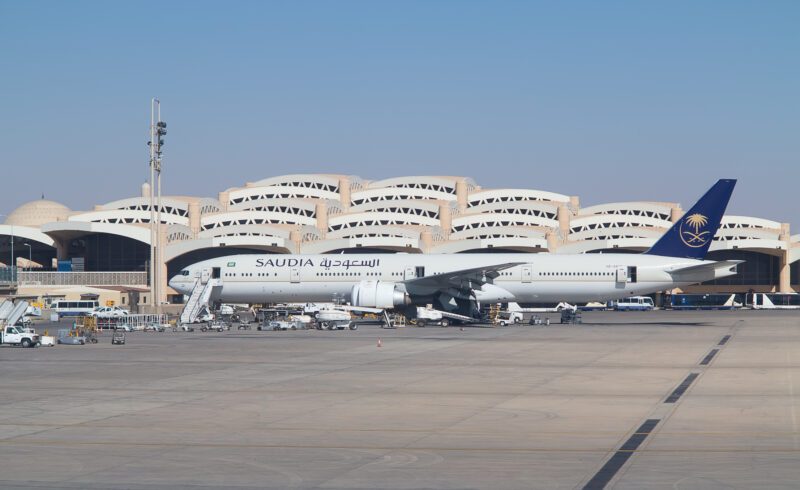
The aircraft movements followed several attacks on Riyadh’s airport. Saudi Arabia’s General Authority of Civil Aviation said two attacks on October 8 targeted airport facilities and a parked Saudia aircraft. Three Saudi citizens were killed, several people were injured and material damage was reported. The Saudia aircraft was on the ground when it was hit.
A further attack on October 10 killed 12 people and injured more than 300, according to official statements carried by the Saudi Press Agency. On October 11, GACA confirmed that another attack had struck King Khalid, causing injuries and prompting additional damage assessments and safety inspections.
The attacks have been attributed by Saudi authorities to Yemen’s Houthi movement. They have shifted the immediate operational concern beyond airspace routing and into the protection of aircraft, passengers and employees on the ground. Parked aircraft are immobile, concentrated assets, making fleet dispersal a logical risk-control measure when an airport faces repeated strikes.
A New Fleet at the Center of Riyadh Air’s Network
The disruption comes shortly after Riyadh Air began full commercial operations with its custom-built Boeing 787-9 fleet. The airline opened public sales in June after receiving its first aircraft and introduced a four-class cabin comprising Business Elite, Business, Premium Economy and Economy.
The 787-9 is central to Riyadh Air’s strategy because it can cover short, high-demand regional sectors as well as intercontinental routes without introducing another widebody type. That flexibility allows the airline to use the same fleet across domestic flying, markets elsewhere in the Middle East and long-haul services such as London.
Riyadh Air’s first two passenger aircraft arrived in June. By July 20, Boeing said the carrier had taken delivery of six 787-9s and was serving six cities. The manufacturer and airline also announced that Riyadh Air would exercise options for 28 additional Dreamliners, with 20 positions converted to the larger 787-10.
Once the remaining commitments are finalized, Riyadh Air expects to hold firm orders for 67 Dreamliners. The 787-9s being repositioned are therefore not just replacement-value assets; they are the operating foundation on which the airline is building its schedule, crew establishment and maintenance program.
Bottom Line
Moving the Dreamliners away from Riyadh reduces the airline’s immediate exposure, but the more consequential issue is how quickly RUH can support stable, repeatable operations again. A new carrier has less schedule depth and fewer spare aircraft than an established network airline, so even a small number of unavailable rotations can remove a significant share of its daily capacity.
Riyadh Air does have one advantage: the common 787-9 fleet makes aircraft substitution straightforward once the hub reopens. The harder task will be rebuilding the operation around displaced crews, aircraft parked at several airports and passengers whose itineraries no longer connect as planned. A phased restart, rather than an immediate return to the full schedule, would give the airline room to restore those sequences.
The episode also tests the resilience of Saudi Arabia’s hub strategy at an unusually early point in Riyadh Air’s development. The next signals to watch are the duration of the airport restrictions, whether aircraft begin returning from Al Ula and Medina, and whether Riyadh Air can resume long-haul flying without further fleet dispersal.
Keep reading FlyMag
Get the Daily Brief in the morning or the Route Watch weekly recap on Fridays. Or both.