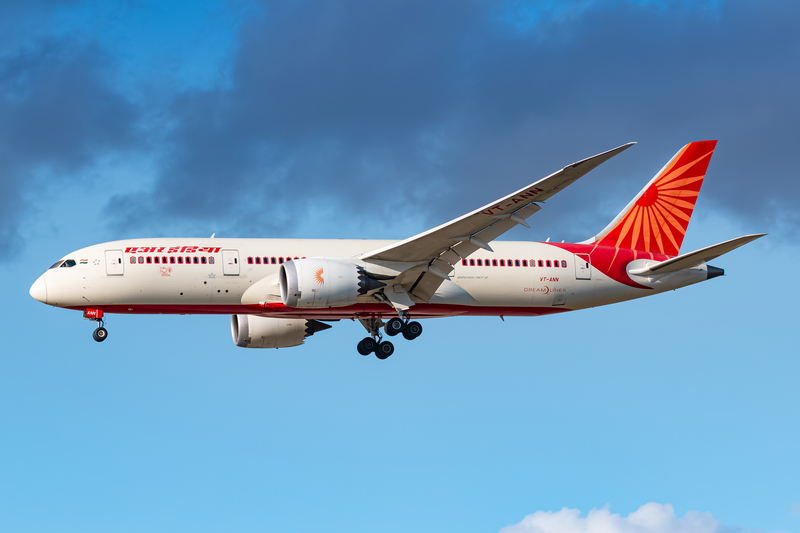
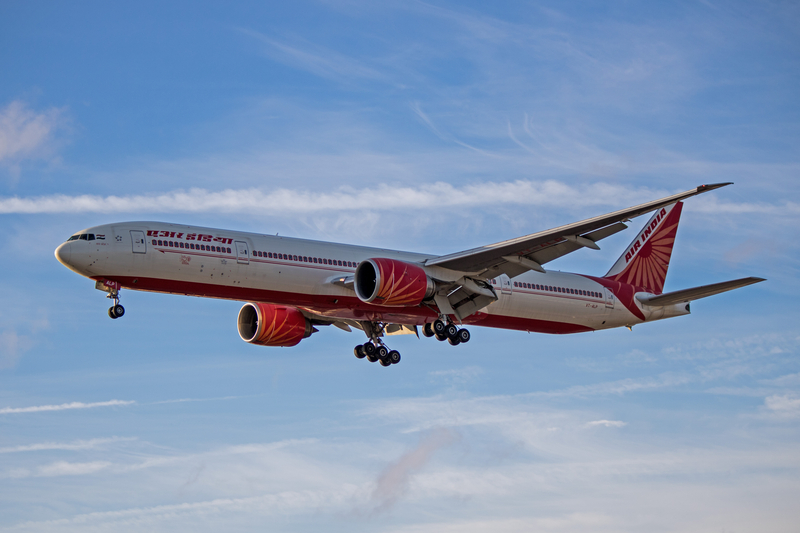
Air India has taken delivery of its first factory-built, “line-fit” Boeing 787-9 Dreamliner—an aircraft that arrives with its bespoke cabin installed on Boeing’s production line rather than being fitted out later. The jet, registered VT-AWA, completed a 16-hour 58-minute nonstop ferry flight from Boeing’s Everett site—typically associated with Paine Field (PAE)—to Indira Gandhi International Airport (DEL) in New Delhi, a long-haul positioning run that underscores what the 787 family was designed to do: move a full cabin product across continents efficiently, even on ultra-long sectors.

For Air India, this isn’t just a delivery. It’s a visible marker that the airline’s widebody modernization is shifting from “work in progress” to “arrivals on the ramp,” with brand-new aircraft complementing a large retrofit program already underway.
Why “Line-Fit” Matters More Than It Sounds
“Line-fit” is industry shorthand, but the implications are very real for airline reliability and product consistency.
Read our stories in your inbox
Two aviation newsletters. Zero fluff.
When cabins are installed at the factory, the airline gets:
-
Tighter standardization across aircraft delivered in the same configuration, which simplifies training, catering flows, spares provisioning, and cabin maintenance routines.
-
Cleaner certification and documentation paths compared with complex post-delivery modifications.
-
A more predictable entry-into-service timeline, because the airplane arrives closer to final revenue spec.
That matters especially for an airline in the middle of a fleet transformation, where passenger experience can vary widely depending on which tail number shows up at the gate. A line-fit delivery is a statement: this is the baseline going forward, not a one-off refresh.
Inside VT-AWA: A 296-Seat, Three-Class 787-9
Air India’s first line-fit 787-9 is configured with 296 seats across Business, Premium Economy, and Economy—a layout that aligns with where long-haul demand has been strongest post-pandemic: premium cabins that can hold yield, plus a meaningful premium-economy section to capture travelers trading up from standard economy without the full business-class spend.

While Air India says full cabin details will be published in the coming weeks, the strategic intent is already clear. Premium economy is no longer a “nice to have” on global networks—it’s become a core revenue tool, particularly on long stage-length routes where comfort matters and corporate travel policies often permit PE as a middle ground.
On the technical side, the Boeing 787-9 sits in the long-range sweet spot: longer legs than many legacy widebodies it replaces, with composite structure and modern systems aimed at lower fuel burn per seat. It’s also an aircraft optimized for long-haul cabin comfort—higher humidity, lower cabin altitude relative to older designs, and quieter acoustics—attributes that matter when you’re asking passengers to spend 12–16 hours onboard.
A Near-17-Hour Delivery Flight That Fits the Aircraft’s Mission
A nonstop ferry from the Everett area (PAE) to New Delhi (DEL) is an attention-grabber, but it’s also an operational preview of the airplane’s role in Air India’s network.
Flights approaching 17 hours don’t happen by accident. They highlight:
-
Range and dispatch capability for long sectors where alternates and diversion planning are critical.
-
Crew duty planning and augmented staffing requirements (ferry flights often run with additional crew for fatigue management).
-
The airline’s confidence in the aircraft’s readiness out of the factory—especially important for a line-fit aircraft arriving with a full interior package already installed.
Air India has indicated the 787-9 will enter long-haul international service in February 2026, with routes to be announced. That timing suggests the airline will use the next few weeks for induction work: local regulatory processes, cabin service familiarization, spares positioning at DEL, and operational proving tasks before putting the jet into scheduled rotation.
2026: New Deliveries Plus a Heavy Retrofit Push
VT-AWA is the front edge of what Air India expects to be a busy widebody year. The airline has signaled six widebody deliveries in 2026, spanning Boeing 787-9s and Airbus A350-1000s—a pairing that effectively creates a two-tier modern long-haul fleet: the 787-9 for long, efficient missions with strong economics, and the larger A350-1000 positioned as a flagship-capacity option where demand supports it.
At the same time, Air India is deep into a nose-to-tail retrofit program for its legacy Boeing 787-8 fleet. The objective is to pull older Dreamliners closer to the new product standard—new seats, updated inflight entertainment, refreshed soft-touch surfaces, and a consistent three-cabin concept that includes premium economy. The airline’s goal is that by the end of 2026, a majority of its widebody fleet will feature modernized cabins, narrowing the gap between “new deliveries” and “refreshed legacy” aircraft.
This dual-track approach is important. New aircraft alone don’t transform an airline quickly if the legacy fleet still dominates daily utilization. Retrofitting the 787-8s while inducting line-fit 787-9s is how Air India can accelerate consistency across the long-haul operation without waiting years for deliveries to fully replace older tails.
Bottom Line
Air India’s first line-fit Boeing 787-9—VT-AWA, delivered to New Delhi (DEL) after a nearly 17-hour ferry from the Everett area (PAE)—is a meaningful milestone because it represents a true “factory standard” aircraft entering the fleet, not a transitional cabin update. With the jet set for long-haul service in February 2026, six widebodies expected this year, and a large-scale 787-8 retrofit program running in parallel, Air India’s transformation is moving from strategy decks to gate assignments—exactly where passengers (and airline professionals) will start to judge it.
Keep reading FlyMag
Get the Daily Brief in the morning or the Route Watch weekly recap on Fridays. Or both.