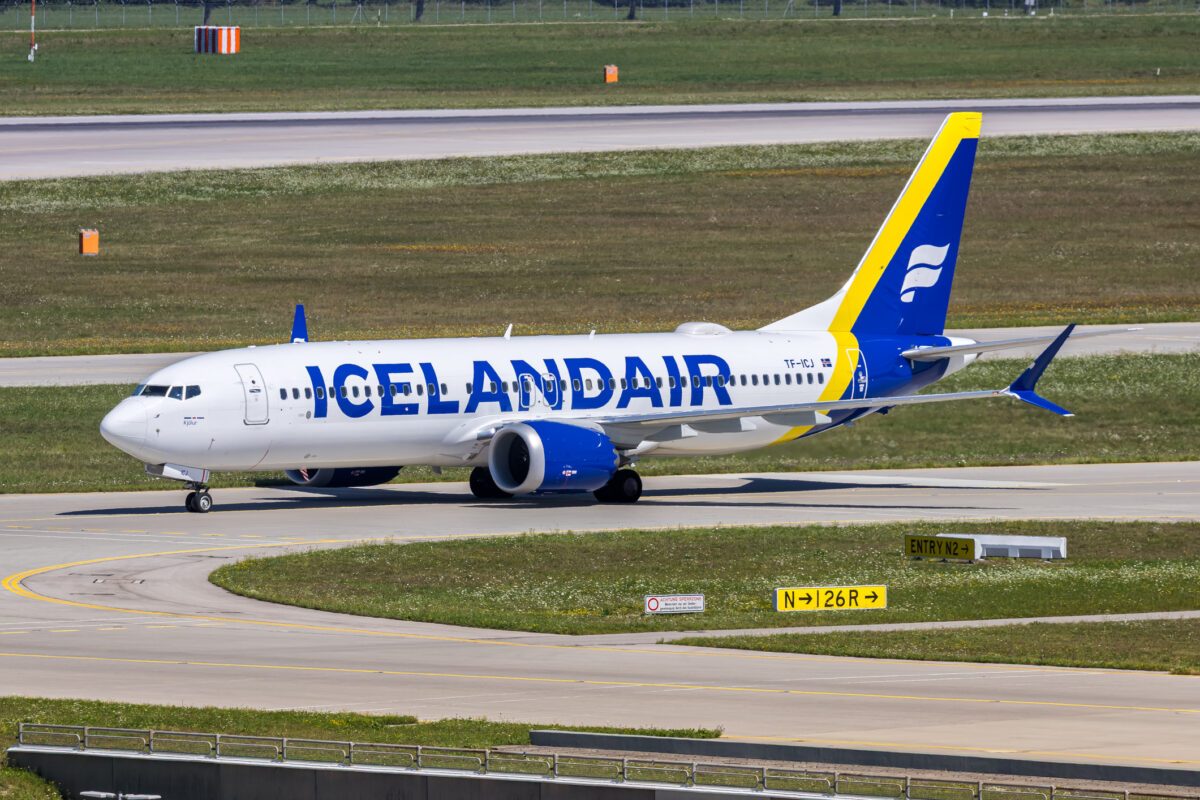
Icelandair will end its seasonal service between Reykjavík Keflavík (KEF) and Halifax (YHZ) after the 2026 summer season, removing Nova Scotia from its network for 2027.

The airline’s updated 2026-27 destination calendar lists Halifax flights only from June 4 through October 18, 2026, at two frequencies per week. Unlike other seasonal North American destinations in the same table, Halifax has no 2027 restart date.
Pittsburgh, for example, is shown returning on May 14, 2027, while Minneapolis-St. Paul and Nashville also have specified 2027 resumptions. The absence of a new Halifax season therefore represents a route withdrawal rather than a schedule that has simply not yet been extended.
Read our stories in your inbox
Two aviation newsletters. Zero fluff.
The final scheduled day of operation is October 18, 2026. Icelandair’s current Halifax program runs on Thursdays and Sundays, giving the route about 20 weeks of flying during its last season.

A Three-Summer Return to Halifax
Icelandair restored Halifax to its network in 2024 after an absence dating to 2018. At the time, the route was presented as both a nonstop link to Iceland and a connecting service to the airline’s European network through KEF.
The original relaunch announcement scheduled three weekly flights from May 31 through October 14, 2024. FI606 left Halifax at 9:30 p.m. and reached Iceland the following morning, while FI607 operated westbound from KEF in the evening.
The eastbound sector was scheduled at approximately four hours. The longer westbound journey remained comfortably within the capabilities of the narrowbody aircraft assigned to the service.
Icelandair reduced Halifax to twice weekly for 2026. That smaller schedule already placed the route at the thin end of the carrier’s North American operation, with limited flexibility for passengers beginning or ending their journey in Nova Scotia. Twice-weekly flying can still support leisure demand, but it is less attractive for business trips and short stays, while offering fewer connections through KEF than a three- or four-frequency pattern.
The Boeing 737 MAX Was Well Matched to the Route
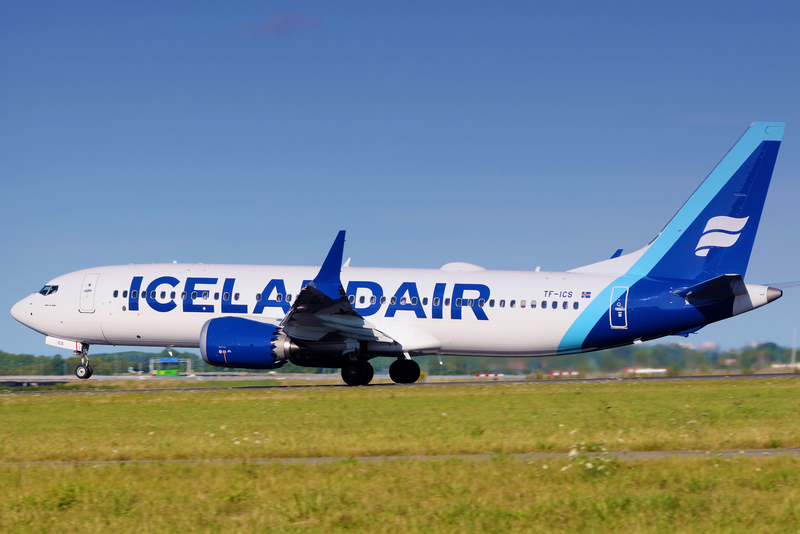
Icelandair launched the restored service with a 160-seat Boeing 737 MAX, the capacity associated with its Boeing 737 MAX 8 configuration. The aircraft allowed the airline to reopen a relatively small transatlantic market without committing a widebody or the higher seat count of its longer Boeing 737 MAX 9.
According to Icelandair’s fleet specifications, the Boeing 737 MAX 8 carries 160 passengers and has a published maximum range of 4,045 miles. Economy seating has a pitch of 31 to 32 inches, while Saga Premium uses a 40-inch pitch.
The aircraft’s range gives ample margin for KEF-YHZ, while its capacity is suited to combining local Iceland traffic with passengers connecting between Atlantic Canada and Europe. That traffic mix is central to Icelandair’s model: the airline uses KEF’s location and its connecting banks to make relatively small transatlantic city pairs viable with narrowbody aircraft.
Icelandair describes that approach in its network strategy, noting that combining passengers traveling to Iceland, from Iceland and through Iceland supports routes that would not work as purely point-to-point services. Halifax was a clear example of that model, but operating only twice a week limited how fully the spoke could feed the wider network.
Halifax Retains a Broad European Network
The Icelandair withdrawal removes Halifax’s only nonstop service to Iceland, but it comes from an airport that has added substantial international capacity in recent years.
Halifax handled 4.14 million passengers in 2025, including 526,352 international passengers. International traffic increased 19.3% from the previous year, according to the airport authority’s annual traffic release.
For summer 2026, the airport expected a record 15 nonstop European services. Those included Air Canada’s year-round London Heathrow flight and seasonal service to Brussels; WestJet routes to Amsterdam, Barcelona, Copenhagen, Dublin, Edinburgh, Lisbon, London Gatwick, Madrid and Paris; Frankfurt service by Discover Airlines; and Edelweiss flights to Zurich.
Icelandair therefore occupied a distinct rather than dominant position at YHZ. Its value was the combination of direct access to Iceland and connections across Scandinavia, the United Kingdom and continental Europe. Other airlines can absorb some Europe-bound demand, but they do not replace the nonstop Iceland market or Icelandair’s stopover proposition.
A Selective Adjustment to the North American Map
The removal of Halifax illustrates how Icelandair can adjust individual spokes even as it continues investing in its wider network. Its current schedule includes year-round operations to larger gateways such as Boston, New York, Toronto, Seattle and Washington Dulles, while seasonal Pittsburgh is already confirmed to return in 2027.
Halifax was geographically efficient and required relatively little aircraft time compared with Icelandair’s deeper North American destinations. Geography alone, however, does not guarantee sufficient revenue. A small local market must also produce enough connecting traffic at workable fares to justify the aircraft, crew and station costs.
The route’s progression from three weekly flights at its 2024 relaunch to two in 2026, followed by removal in 2027, indicates that Icelandair was unable to build Halifax to a more robust frequency. Its exit will conclude the carrier’s second period of service to Nova Scotia, with the last flight currently set for October 18.
Bottom Line
WestJet and Air Canada are the clearest beneficiaries among carriers already established at Halifax. Some passengers who used Icelandair for one-stop journeys to Europe can move to WestJet’s nonstop network or Air Canada’s London service, while travelers bound specifically for Iceland will have to connect through another Canadian, U.S. or European gateway after October 2026.
For Icelandair, the decision demonstrates the discipline required by its connecting model. The Boeing 737 MAX 8 makes thin transatlantic routes technically and economically possible, but aircraft efficiency cannot compensate indefinitely for a spoke that remains at two weekly flights. The next signal to watch is whether Icelandair reallocates that summer capacity to higher-frequency North American gateways, where an additional flight can strengthen several connecting markets at once rather than sustain a standalone seasonal station.