Southwest Airlines will open a seasonal nonstop link between Fort Lauderdale (FLL) and San Diego (SAN) on November 21, adding one of the longest mainland routes in its network during the year-end holiday period.

The airline included the route in a schedule extension covering November and December 2026. Flights are now available through Southwest’s Fort Lauderdale-San Diego booking page.
The 2,269-mile route is scheduled to begin 64 days from Friday, September 18. It gives Southwest a coast-to-coast nonstop from a major South Florida station to its largest California operation, but the initial schedule is tightly concentrated around peak holiday dates rather than built as a conventional daily route.
Read our stories in your inbox
Two aviation newsletters. Zero fluff.
First Flights Are Scheduled for November 21
Southwest’s opening westbound flight, WN2843, is scheduled to leave FLL at 10:50 a.m. and reach SAN at 1:25 p.m. local time. The published block time is five hours and 35 minutes.

Eastbound flight WN3056 is scheduled to depart San Diego at 9:25 a.m. and arrive in Fort Lauderdale at 5:10 p.m., a block time of four hours and 45 minutes. Prevailing winds account for much of the substantial difference between the two directions.
The timing also means the first day’s two flights cannot be flown as an out-and-back rotation by the same aircraft. The SAN departure leaves before the westbound flight reaches California, requiring Southwest to supply an aircraft from each end of the route or incorporate the sectors into longer aircraft routings.
The initial November 21 operation falls on the Saturday before Thanksgiving. Southwest has developed seven different network schedules for November and December, varying service by date to place more capacity on the strongest holiday travel days. The airline expects to operate more than 4,600 departures across its system on Sunday, November 29, one of the busiest return days of the Thanksgiving period.
That approach is visible on FLL-SAN. Southwest is not committing an aircraft to a uniform daily pattern throughout the season. Instead, the nonstop appears on selected peak dates, while the airline continues to sell connecting itineraries between the two airports on days without a through flight.
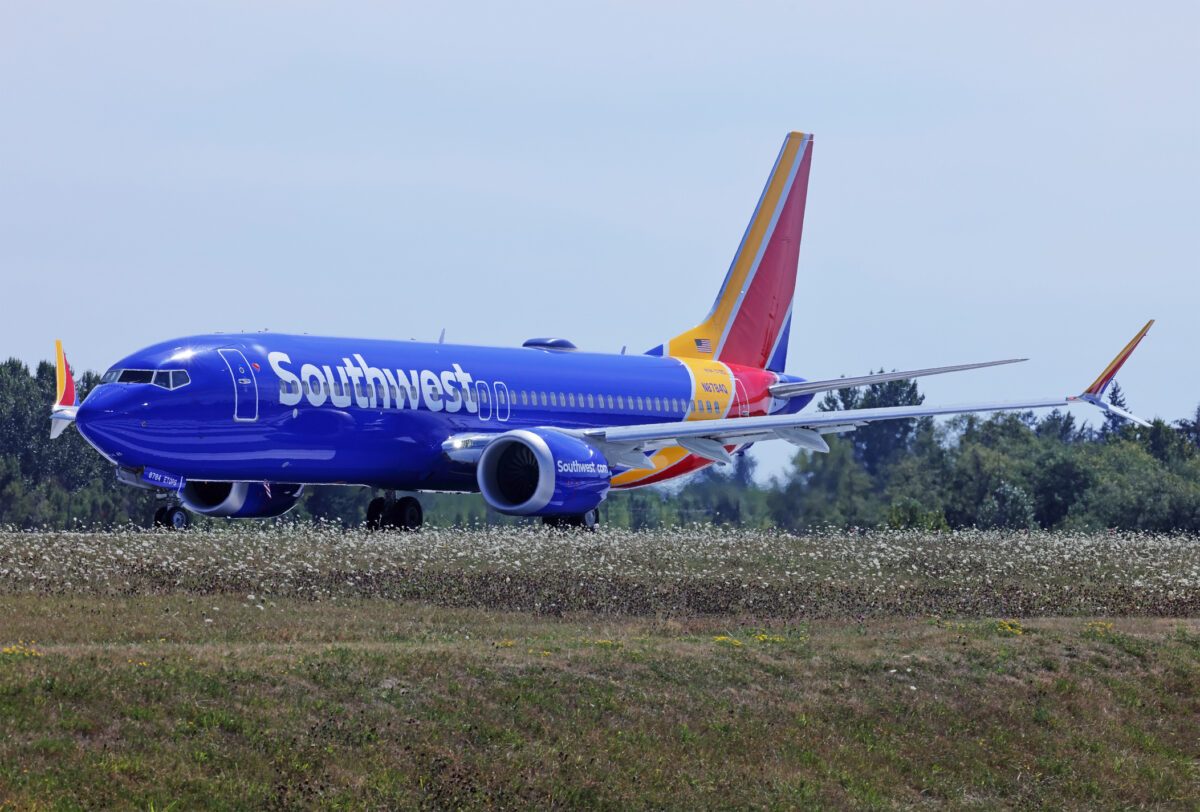
Boeing 737 MAX 8 Assigned to the Route
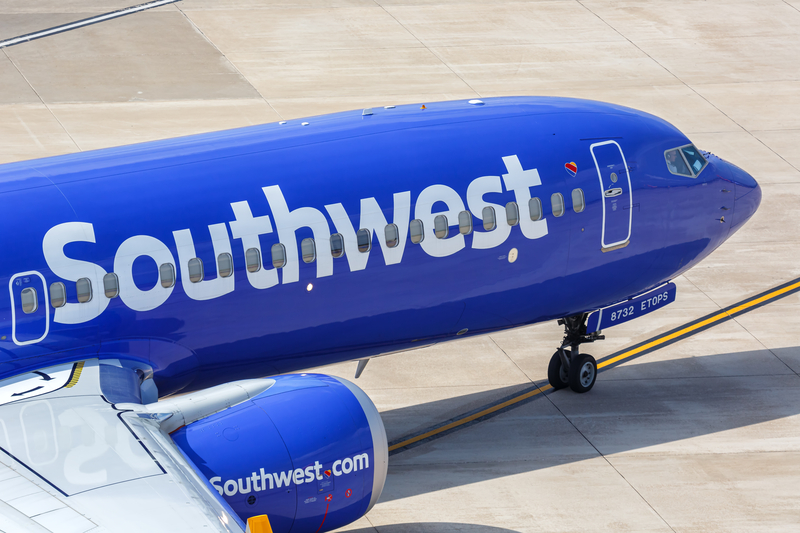
Published schedules list the Boeing 737 MAX 8 for the new service. Southwest configures both its 737 MAX 8 and 737-800 fleets with 175 seats, according to the airline’s aircraft and seat specifications.
The single-cabin layout includes extra-legroom, preferred and standard seating following Southwest’s move to assigned seats in January 2026. Extra-legroom rows on the 175-seat aircraft provide 34 inches of pitch, while preferred and standard seats offer 31 to 32 inches. Seat width reaches 17.8 inches, although the narrowest seat positions measure 15.5 inches.
The MAX 8 is an appropriate aircraft for a route of this length. Boeing lists a range of up to 3,500 nautical miles for the type, comfortably beyond the transcontinental sector while retaining the capacity Southwest uses on higher-volume domestic routes. The manufacturer also credits the aircraft’s CFM International LEAP-1B engines and aerodynamic changes with a smaller noise footprint than the 737-800 it supplements in Southwest’s fleet. Full specifications are available on Boeing’s 737 MAX product page.
A westbound block approaching six hours makes the cabin product more consequential than it would be on Southwest’s traditional short-haul flying. Assigned seating removes uncertainty over seat location, while the extra-legroom section gives the airline a differentiated product to sell on a sector long enough to command a meaningful premium.
Fort Lauderdale’s International Slide: 9+ Airlines Gone Since 2019 as BermudAir Exits
Southwest has also been retrofitting aircraft with new Recaro seats, larger overhead bins and in-seat power. Its second-quarter 2026 regulatory filing said 107 aircraft with the refreshed seats had entered service by July 22, while the first Starlink-equipped aircraft began carrying passengers on June 22.

Three Airlines Will Compete on FLL-SAN
Southwest will not have the market to itself. JetBlue and Alaska Airlines also have nonstop service scheduled between Fort Lauderdale and San Diego during the winter season.
JetBlue will begin daily flights on November 19, two days before Southwest’s first operation. The carrier’s published timetable lists flight B6529 leaving FLL at 7 a.m. and arriving at SAN at 9:39 a.m. The return flight, B6532, departs at 11 a.m. and reaches Fort Lauderdale at 6:55 p.m.
JetBlue’s daily frequency and Mint cabin give it a clear schedule and product distinction. Lie-flat seats target premium transcontinental demand, while Southwest will compete with a 175-seat all-economy aircraft and a more selective calendar.
Alaska Airlines is the other operator. The airline has previously flown the route seasonally, with its own flight records showing nonstop FLL-SAN service. Its winter schedule overlaps both JetBlue and Southwest, putting three carriers into a market that had not supported year-round nonstop competition from all three.
The contrast between their schedules matters. JetBlue is making the broadest commitment with daily service, Alaska is returning with its established seasonal pattern, and Southwest is targeting specific high-demand dates. The combined capacity will test whether the market can support more than holiday and winter traffic.
Southwest Connects Two Very Different Stations
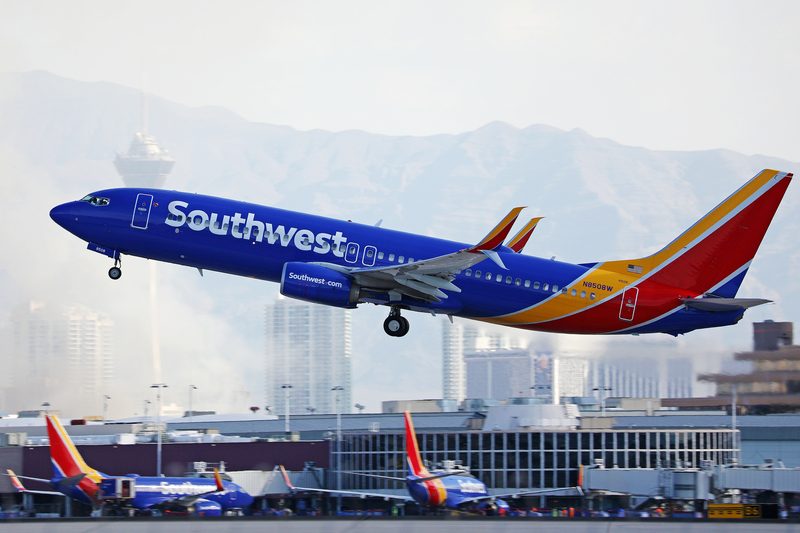
San Diego is a core Southwest airport. The San Diego County Regional Airport Authority reported that Southwest accounted for 33.6% of enplanements in the fiscal year ended June 30, 2025, making it SAN’s largest airline. The airport’s annual financial report recorded nearly 3.94 million Southwest enplanements for the year.
Fort Lauderdale plays a smaller role in Southwest’s system. Broward County’s traffic statistics through April 2026 show the carrier handled about 1.07 million passengers, an 8.6% share of FLL traffic and a 2.2% decline from the same period of 2025.
Southwest also reduced staffing at FLL in June as part of a broader network optimization program. Adding San Diego does not reverse that retrenchment: a handful of seasonal transcontinental flights represents targeted deployment rather than a broad capacity build. It does, however, create a nonstop between two airports where Southwest already has the local infrastructure and customer base to support peak-period flying.
Bottom Line
Southwest’s FLL-SAN schedule is a measured way to enter a competitive transcontinental market. Selected holiday departures limit the carrier’s exposure while allowing it to capture passengers who would otherwise connect or book JetBlue and Alaska Airlines. The structure also fits Southwest’s increasingly date-specific approach to allocating capacity around demand peaks rather than maintaining the same timetable every day.
JetBlue gains the strongest schedule position with daily service and the only lie-flat product, while Alaska brings an established seasonal presence. Southwest’s advantage is its scale at SAN and the loyalty base attached to that operation. The route should also generate useful evidence about how its assigned seating and extra-legroom product performs on a nearly six-hour domestic sector.
The next signal will be whether Southwest extends FLL-SAN beyond selected winter dates or increases it toward a regular seasonal frequency. A broader schedule would indicate confidence in year-round local demand. If the route remains concentrated around Thanksgiving and Christmas, it will stand as another example of Southwest using long nonstop sectors selectively, when fares and holiday traffic justify tying up a 175-seat aircraft for much of the day.
Keep reading FlyMag
Get the Daily Brief in the morning or the Route Watch weekly recap on Fridays. Or both.