Pittsburgh International Airport (PIT) will lose two of its shortest scheduled routes in early 2027 as new federal Essential Air Service contracts move Bradford and DuBois away from Pittsburgh and onto larger regional jets serving major connecting hubs.

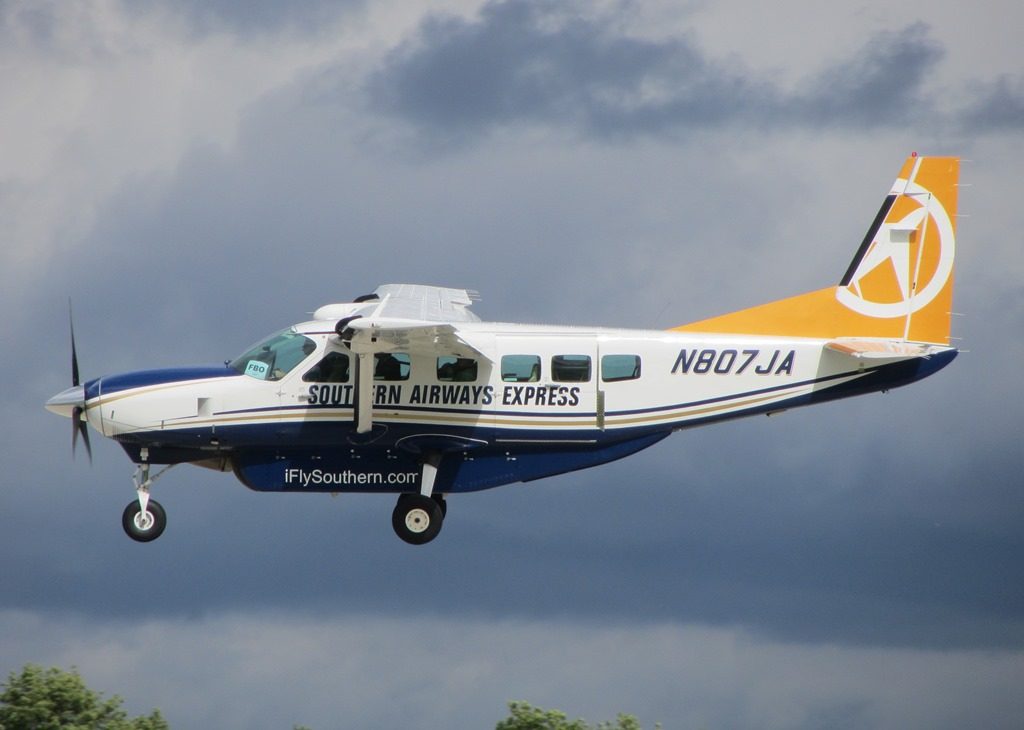
Southern Airways Express currently links Pittsburgh (PIT) with both Bradford Regional Airport (BFD) and DuBois Regional Airport (DUJ) using nine-seat Cessna 208 Grand Caravan turboprops.
That will change on February 1, 2027.
Read our stories in your inbox
Two aviation newsletters. Zero fluff.
Bradford will shift to SkyWest Airlines, which will operate 12 weekly round trips to Washington Dulles International Airport (IAD) using 50-seat Bombardier CRJ200s. DuBois will move to Contour Airlines, receiving service to Hartsfield-Jackson Atlanta International Airport (ATL) and Chicago O’Hare International Airport (ORD) with 30-seat Embraer ERJ-135 regional jets.
The changes are being made through the U.S. Department of Transportation’s Essential Air Service program, which subsidizes scheduled airline service to smaller communities that might otherwise struggle to maintain commercial flights.
Bradford Trades Pittsburgh For Larger Jets To Dulles
Bradford Regional Airport (BFD) currently has Southern Airways Express service to both Pittsburgh (PIT) and Washington Dulles (IAD).
Southern uses the Cessna 208 Grand Caravan, a single-engine turboprop configured with just nine passenger seats. Its extremely low operating costs allow Southern to provide relatively frequent service in markets that could never support a conventional regional jet without federal assistance.
Beginning February 1, SkyWest will replace Southern at Bradford with 12 weekly round trips to Washington Dulles International Airport (IAD).
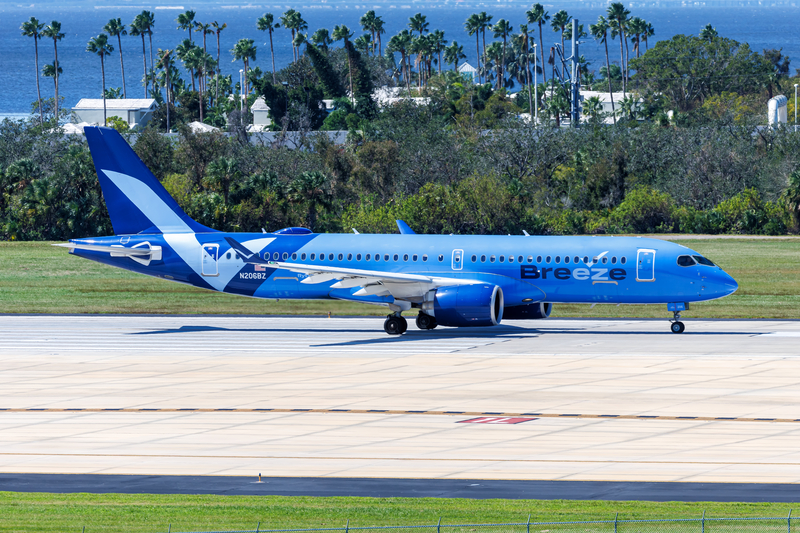
The major difference will be the aircraft.
SkyWest will use the Bombardier CRJ200, a twin-engine regional jet carrying 50 passengers in a 2-2 configuration. Although the CRJ200 is one of the oldest regional-jet designs still widely used in U.S. service, it provides a substantially more conventional airline experience than the Caravan, including a flight attendant, enclosed lavatory and a pressurized cabin designed for high-altitude jet operations.
Bradford will gain significantly more seats per departure, but Pittsburgh will disappear from its route map.
Washington Dulles also provides considerably greater connecting opportunities through United Airlines’ large IAD hub, particularly for passengers traveling beyond Western Pennsylvania.
DuBois Makes An Even Bigger Change
The transition at DuBois Regional Airport (DUJ) is more substantial.
Southern currently provides service from DuBois to both Pittsburgh International Airport (PIT) and Washington Dulles International Airport (IAD). Under the new arrangement, both destinations will be replaced.
Contour Airlines will operate:
- Seven weekly round trips between DuBois (DUJ) and Atlanta (ATL)
- Five weekly round trips between DuBois (DUJ) and Chicago O’Hare (ORD)
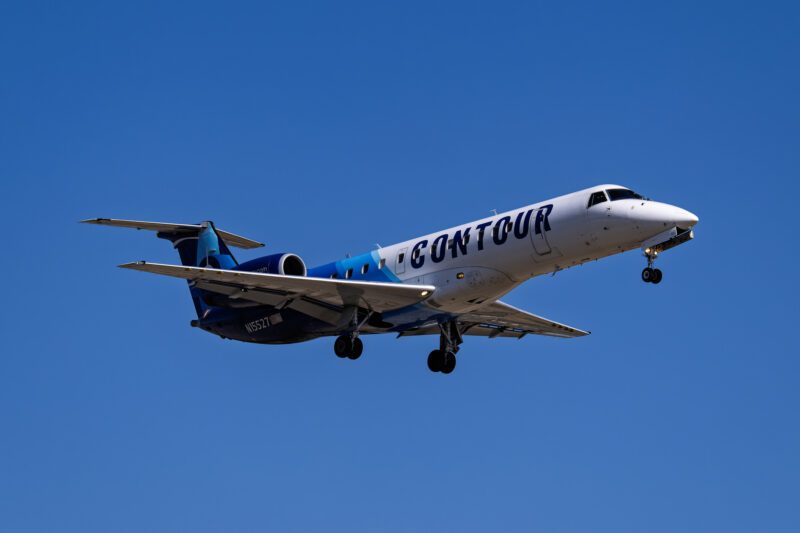
Flights will use 30-seat Embraer ERJ-135s.
The ERJ-135 is the smallest member of Embraer’s original ERJ regional-jet family. Its narrow fuselage uses a 1-2 seating arrangement, which has the welcome side effect of eliminating middle seats entirely.
Contour deliberately configures its aircraft with 30 seats, fewer than the ERJ-135 was originally designed to carry. The airline’s regional jets also feature a lavatory and flight attendant, making them a significant step up from the nine-passenger Caravan from a traditional passenger-experience standpoint.
Atlanta And Chicago Offer Far More Connections
For DuBois, the new destinations fundamentally change the purpose of its scheduled airline service.
Pittsburgh (PIT) is nearby and convenient for passengers whose destination is Western Pennsylvania, but it is no longer a major connecting hub in the way it was during the US Airways era.
Atlanta (ATL) and Chicago O’Hare (ORD) are very different.
Atlanta is Delta Air Lines’ largest hub, while Chicago O’Hare is a major hub for both United Airlines and American Airlines. A passenger leaving DuBois will therefore have access to hundreds of potential onward destinations through those airports.
That makes the new service potentially more useful for travelers heading to Florida, the West Coast, Texas or international destinations.
The tradeoff is frequency.
Larger regional jets are more comfortable and provide significantly more seats, but they also cost considerably more to operate than a nine-seat Caravan. DuBois will therefore have fewer departures than it does under Southern’s current operation.
Pittsburgh Is Losing Two Unusual Short-Haul Flights
For Pittsburgh International Airport (PIT), the changes eliminate two unusual pieces of its regional network.
Pittsburgh to DuBois is only about 84 miles, while Bradford is approximately 123 miles from PIT.
Those distances make both routes extremely short by modern U.S. airline standards.
They survive largely because the federal EAS program was created to ensure smaller communities retain access to the national airline network. The Department of Transportation can subsidize carriers when local passenger demand is not sufficient to support service commercially.
Southern’s nine-seat Caravan model has been particularly useful for these markets because it allows relatively high frequencies without putting dozens of seats into a small community on every departure.
The new contracts take the opposite approach: fewer flights, much larger airplanes and connections through major airline hubs.
Regional Jets Continue Replacing Southern’s Caravans
The Bradford and DuBois decisions also fit a broader trend across small airports in Pennsylvania and surrounding states.
Communities have increasingly selected proposals involving 30- or 50-seat regional jets when those options are available through the EAS bidding process.
The appeal is understandable.
Passengers receive a more conventional airline experience, while airports gain access to larger hubs and potentially more attractive connecting opportunities.
The downside is that local links such as Bradford-Pittsburgh and DuBois-Pittsburgh can disappear in the process.
For someone traveling from DuBois specifically to Pittsburgh, connecting through Atlanta or Chicago obviously makes little sense. Those passengers will now have to make the roughly two-hour drive instead.
For passengers traveling beyond Pittsburgh, however, the new hub options may prove much more valuable.
Bottom Line
Pittsburgh International Airport (PIT) will lose nonstop service to Bradford Regional Airport (BFD) and DuBois Regional Airport (DUJ) after January 31, 2027, as new Essential Air Service contracts take effect.
Bradford will receive 12 weekly SkyWest flights to Washington Dulles (IAD) using 50-seat Bombardier CRJ200 regional jets.
DuBois will shift to Contour Airlines, with seven weekly round trips to Atlanta (ATL) and five to Chicago O’Hare (ORD) using 30-seat Embraer ERJ-135s.
For passengers at Bradford and DuBois, the new contracts bring larger jets and much stronger connecting hubs.
For Pittsburgh, however, they mark the end of two exceptionally short intrastate airline routes — and another step away from the small-community feeder network that once played a much larger role at PIT.
Keep reading FlyMag
Get the Daily Brief in the morning or the Route Watch weekly recap on Fridays. Or both.