Spirit Airlines’ shutdown has already begun to redraw the route map in two of its most exposed markets: Fort Lauderdale-Hollywood International Airport (FLL) and Atlantic City International Airport (ACY).


JetBlue is moving aggressively in South Florida, while Breeze Airways is using the collapse to build a much larger position in Atlantic City. Taken together, the early responses show how quickly rival airlines are trying to capture traffic, gates, and pricing power in markets where Spirit had been deeply embedded.
This is not just normal post-exit backfilling. It is the first real test of who can turn Spirit’s disappearance into durable strategic gain.
Read our stories in your inbox
Two aviation newsletters. Zero fluff.
Fort Lauderdale Is The Big Prize, And JetBlue Knows It
If one airport was always going to matter most after Spirit’s collapse, it was Fort Lauderdale.
Spirit had been the largest airline at Fort Lauderdale-Hollywood International Airport (FLL), with roughly 30% market share. JetBlue was already the second-largest carrier there, with around 20%, making it the most obvious airline to move quickly once Spirit’s flying disappeared.
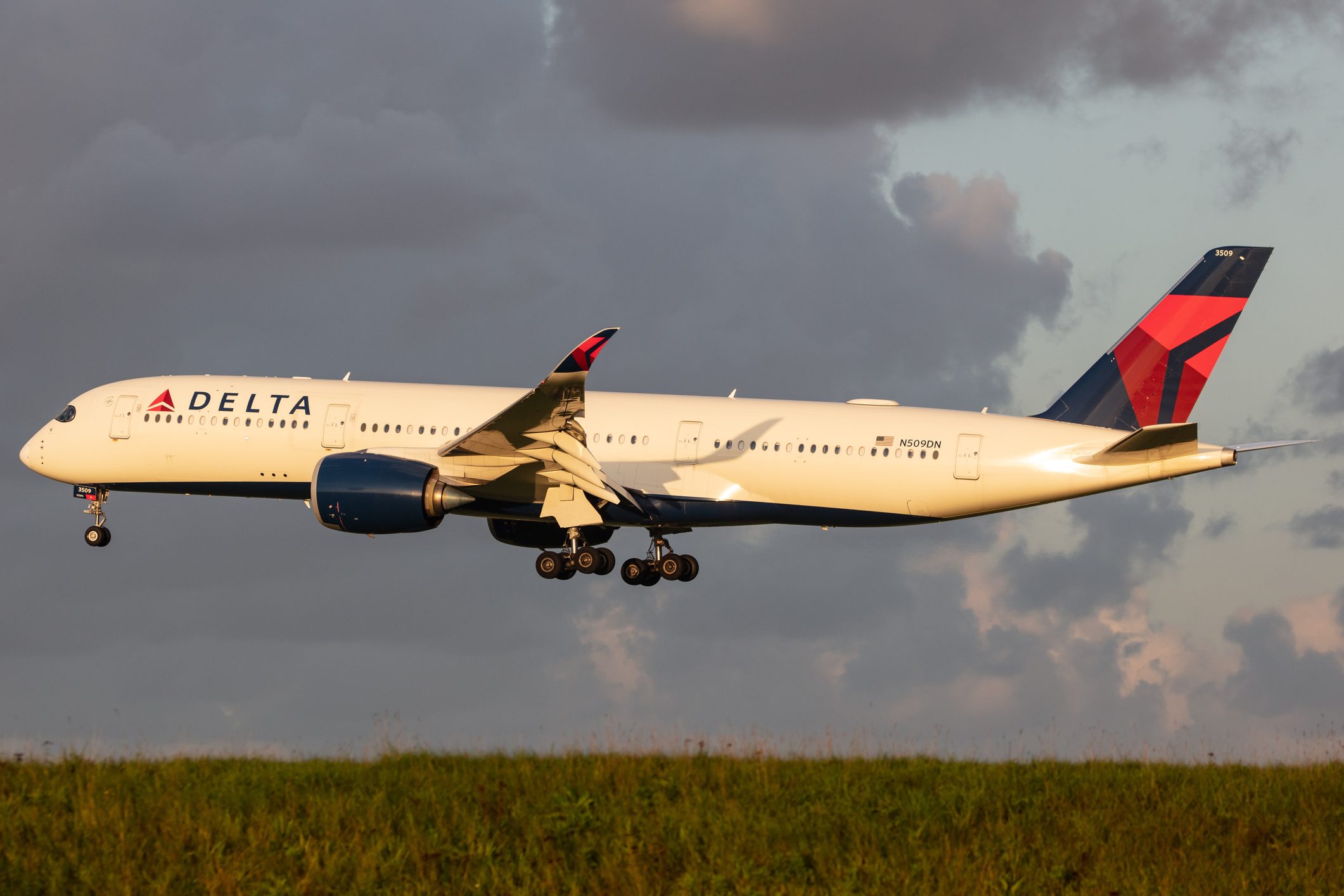
JetBlue has now announced 11 additional destinations from FLL. The routes are:
- Barranquilla, Colombia
- Baltimore, Maryland
- Cali, Colombia
- Charlotte, North Carolina
- Chicago O’Hare, Illinois
- Columbus, Ohio
- Detroit, Michigan
- Houston Intercontinental, Texas
- Indianapolis, Indiana
- Nashville, Tennessee
- Ponce, Puerto Rico
That is a substantial response, and it reveals two things at once. First, JetBlue sees Fort Lauderdale as a market worth defending and expanding immediately. Second, it believes Spirit’s disappearance changes the economics enough to justify a broader buildout than may have made sense before.

JetBlue Is Not Just Replacing Spirit — It Is Reframing Fort Lauderdale
The route list is telling.
Most of these are markets Spirit had already been serving this year, which means JetBlue is moving directly into proven traffic flows rather than inventing new demand from scratch. But several are also strategically useful to JetBlue in a broader sense.
Barranquilla, Cali, and Indianapolis are entirely new destinations for the airline. Others, such as Baltimore, Charlotte, Chicago O’Hare, Detroit, Nashville, and Ponce, are places JetBlue has served before and is now returning to from a much more favorable competitive position.
That makes this more than a simple one-for-one replacement exercise. JetBlue is using Spirit’s collapse to make Fort Lauderdale look more like a fully developed focus city, with stronger domestic breadth and deeper Latin American and Caribbean relevance.
The Real Opportunity Is Pricing Power
The most important reason airlines care about Spirit’s disappearance is not just slots, gates, or route maps. It is pricing.
Spirit was one of the strongest fare suppressors in the U.S. market. Its presence in Fort Lauderdale did not just affect its own tickets. It put pressure on everyone else. With Spirit gone, JetBlue has a chance to expand in a market where the local customer base is already familiar with low fares, but where the competitive environment may now be materially less brutal.
That does not mean Fort Lauderdale suddenly becomes easy. It does mean the margin outlook is probably better than it was while Spirit was still flooding the market.
Atlantic City Has Become Breeze’s Opening
If Fort Lauderdale is JetBlue’s opportunity, Atlantic City is Breeze’s.
Spirit was not just another airline at Atlantic City International Airport (ACY). It had effectively been the airport’s identity for years. According to Department of Transportation data cited in current route analysis, Spirit accounted for nearly all of ACY’s scheduled traffic in 2025.
That makes its collapse especially consequential there. When a carrier so dominant disappears, the replacement challenge is not just about adding a few flights. It is about rebuilding an airport’s scheduled relevance almost from scratch.
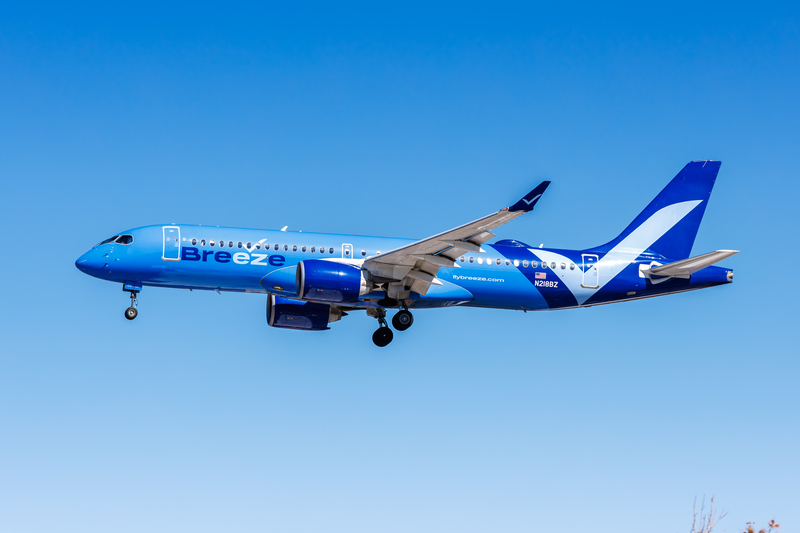
Breeze appears ready to take that role.
Breeze Adds Four Atlantic City Routes Immediately
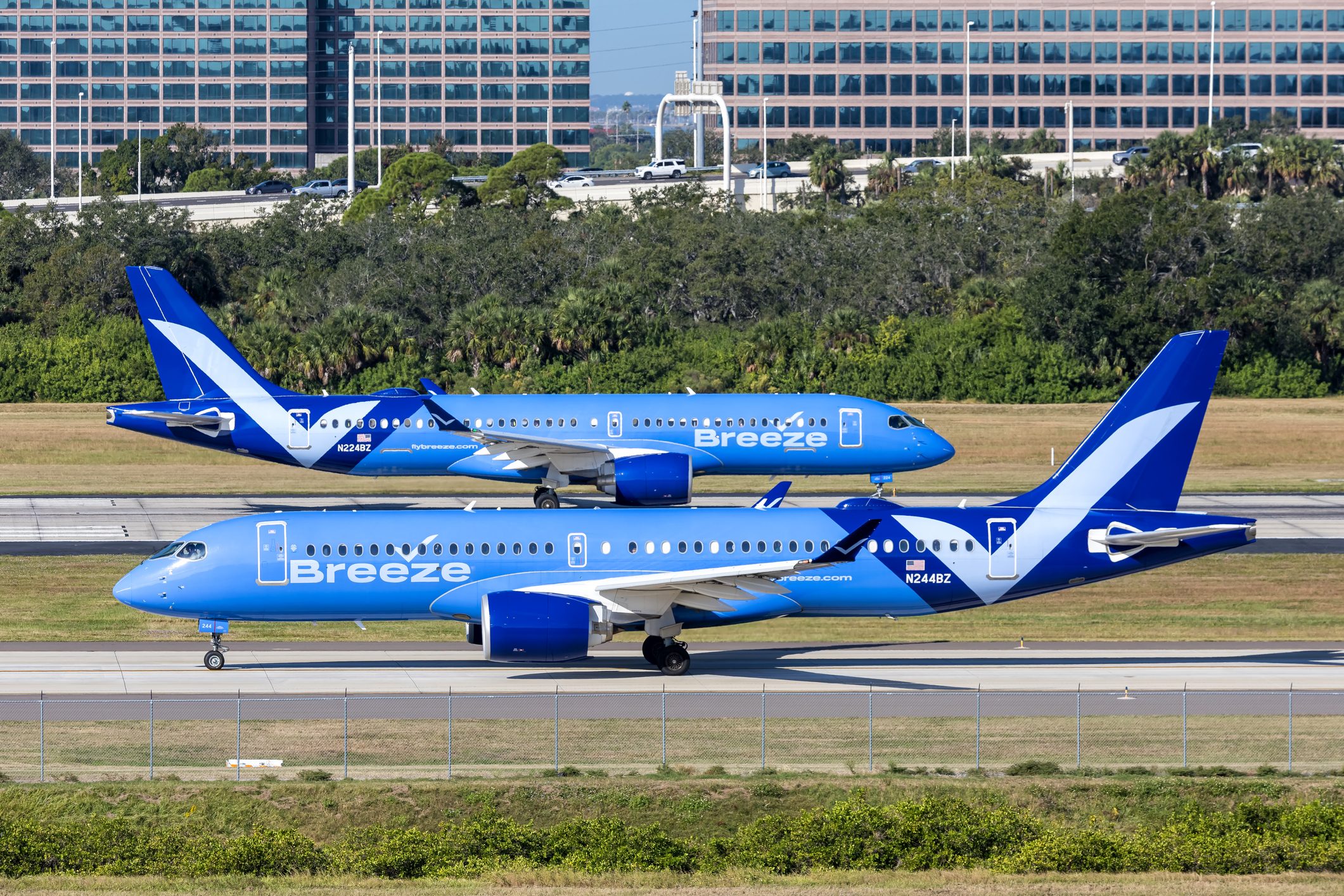
Breeze has already announced four additional routes from Atlantic City:
- Fort Myers, Florida
- Orlando, Florida
- Myrtle Beach, South Carolina
- West Palm Beach, Florida
All four had previously been served by Spirit, which means Breeze is again not trying to create an entirely new market. It is stepping into flows that already existed, even if some of them had not been performing strongly enough for Spirit.
This matters because Breeze had not even fully established itself in Atlantic City before Spirit collapsed. Yet with these additions, it is now positioned to become the airport’s largest scheduled airline in 2026.
That is a remarkable shift in a very short time.
Atlantic City Will Still Be Harder To Rebuild Than Fort Lauderdale
There is one important difference between the two airports.
Fort Lauderdale is a large, high-volume, high-demand market where one carrier’s exit leaves a big gap but not a vacuum. Atlantic City is different. It is a smaller and far more carrier-dependent airport, where Spirit’s role was so dominant that replacing its flying is much harder.
That means Breeze’s expansion is meaningful, but it does not automatically solve Atlantic City’s problem. It gives the airport a future. It does not yet guarantee the same scale or resilience Spirit once provided, especially when Spirit’s own load factors there had already weakened before the shutdown.
So while Breeze is clearly the early winner in Atlantic City, the long-term viability of the rebuilt network will still need to be proven.
Fort Lauderdale And Atlantic City Show Two Different Post-Spirit Strategies
The contrast between JetBlue and Breeze is instructive.
JetBlue is using Spirit’s collapse to strengthen a market where it already had major scale and a strong local base. Breeze is using the same collapse to build itself into an airport where Spirit had been almost everything.
Those are very different strategic plays.
JetBlue’s move is about expanding from strength. Breeze’s move is about stepping into a vacuum. Both may work, but they will be judged by very different standards over the next year.
More Airlines Will Almost Certainly Move Next
These are only the first moves, not the last.
Spirit’s disappearance leaves opportunities not just for JetBlue and Breeze, but also for airlines such as Frontier, Southwest, American, Delta, and United in selected markets. Some will add routes. Others may simply increase frequency where Spirit’s exit improves yields or frees up gate access.
That is why the current wave matters. It is setting the opening positions in what will likely become a broader scramble for market share.
Bottom Line
Spirit’s collapse is already transforming two of its most exposed airports in very different ways.
JetBlue is moving fast to turn Fort Lauderdale-Hollywood International Airport (FLL) into an even bigger focus city, with 11 new destinations that deepen both its domestic and Latin American footprint. Breeze, meanwhile, is using the opportunity to become the dominant scheduled carrier at Atlantic City International Airport (ACY), immediately stepping into four former Spirit markets.
Fort Lauderdale is about growth from strength. Atlantic City is about rebuilding from loss. Both will be among the most important airport stories to watch in the months ahead.
Keep reading FlyMag
Get the Daily Brief in the morning or the Route Watch weekly recap on Fridays. Or both.