Air New Zealand is cutting about 5% of its schedule, removing roughly 1,100 flights through early May as surging jet fuel prices force the airline to protect margins in the parts of the network most exposed to cost shocks.

That is a meaningful move for a carrier whose domestic and short-haul operation is the backbone of air travel across New Zealand. The cuts affect around 44,000 passengers, which means this is not a minor timetable clean-up. It is a clear sign that fuel inflation has moved from a financial concern into a network-planning issue.
The airline has made one point especially clear: the bulk of the reductions are falling on domestic and nearby short-haul flying rather than on long-haul routes. In practical terms, that means the pressure is landing hardest on the part of the operation built around high-frequency domestic sectors, regional links, and short international flying across the Tasman and nearby Pacific markets.
Read our stories in your inbox
Two aviation newsletters. Zero fluff.
Regional New Zealand Is Where the Impact Feels Sharpest
That pattern makes sense from an airline-economics perspective, even if it is politically uncomfortable.
Regional routes are often the first place airlines look when fuel prices spike because those flights usually combine shorter stage lengths, lower average fares, and smaller passenger volumes. They remain strategically important, but they are often the least forgiving when costs jump quickly.
That is why the strongest local reaction has come from smaller markets. Communities tied to Marlborough Airport (BHE), New Plymouth Airport (NPL), Gisborne Airport (GIS), and Tauranga Airport (TRG) were among those flagging reduced service as the changes began to filter through. In Marlborough’s case, local officials said the temporary reductions affected links to Auckland Airport (AKL) and Wellington Airport (WLG), which underlines how even modest frequency cuts can ripple through business travel, government access, and onward connectivity.
For an airline like Air New Zealand, those are difficult markets to adjust because many of them are less about discretionary demand and more about essential connectivity. But that is also exactly why they are vulnerable when operating economics deteriorate. A thin regional route can be strategically valuable and still be the first place an airline trims frequency.
The Aircraft Mix Explains a Lot
The fleet structure helps explain why the cuts are concentrated where they are.
Air New Zealand’s domestic and regional system depends heavily on aircraft such as the ATR 72, which seats 68 passengers, the de Havilland Q300, and domestic Airbus narrowbodies including the Airbus A321neo, which seats 217 passengers in the airline’s New Zealand domestic layout. These aircraft are ideal for high-frequency short sectors, but they also sit closest to the part of the business where demand is most price sensitive and schedule duplication is hardest to justify when fuel becomes volatile.
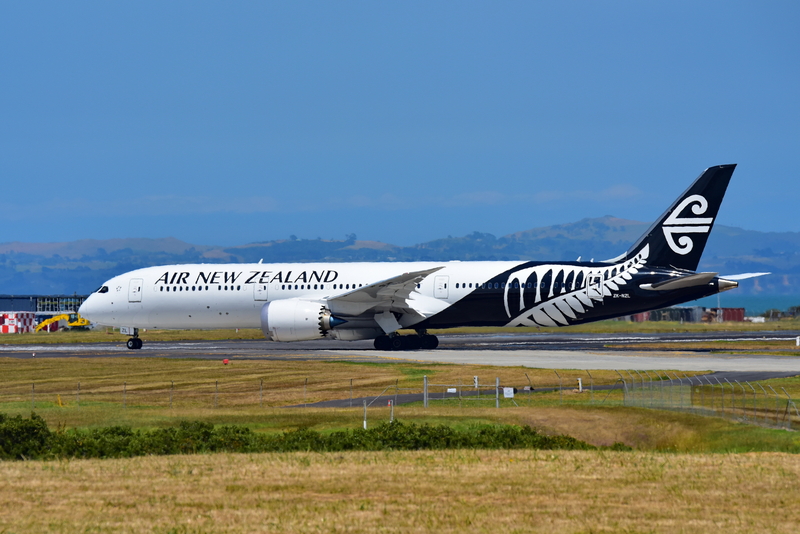
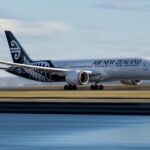
By contrast, the airline’s long-haul network is built around the Boeing 787-9 Dreamliner and Boeing 777-300ER. The 787-9, in one of Air New Zealand’s listed configurations, seats 302 passengers and is the kind of aircraft carriers generally try to keep in the air when demand remains strong, because its unit economics are far better over longer sectors than regional flying can offer.
That is one reason Air New Zealand has left its long-haul structure largely intact for now. The long-haul fleet is not immune to fuel inflation, but it is better able to absorb it when cabins are fuller and yields are stronger.
Why Long-Haul Has Been Spared, for Now
There is also a demand story behind that decision.
Air New Zealand has said that long-haul services are broadly being protected because international demand remains more resilient, especially on sectors linked to the United States. That reflects a wider market dynamic in which some Europe-bound travelers are shifting routings to avoid disrupted or politically sensitive airspace closer to the Middle East.
For Air New Zealand, that makes its North American network more strategically valuable in the current environment. Flights routed through major U.S. gateways are doing more than carrying local demand between New Zealand and the United States. They are also helping serve broader long-haul itineraries that have become more attractive as other routings grow more complex.
In simple terms, the airline appears to be protecting the flying that is hardest to replace and most commercially defensible, while trimming the flying that is more frequent, more local, and more exposed to sudden cost spikes.
This Is Not Just About Cancellations
The bigger picture is that Air New Zealand is not relying on one lever alone.
Before these schedule cuts, the airline had already raised one-way economy fares by NZ$10 on domestic routes, NZ$20 on short-haul international services, and NZ$90 on long-haul flights. It also suspended its fiscal 2026 earnings outlook because of the extreme volatility in fuel prices.
That sequence matters. It shows the airline tried price first, then moved to capacity. That is usually how carriers respond when fuel surges sharply: pass through what they can, preserve higher-value flying, and then reduce weaker or more duplicative frequencies where the numbers no longer work.
For airline professionals, that is an important distinction. Air New Zealand is not signaling a collapse in demand or a broad strategic retreat. It is applying a fairly classic crisis-era network response to a cost shock.
A Wider Industry Pattern Is Emerging
Air New Zealand is also not acting in isolation.
Across the industry, carriers have been hiking fares, adding fuel surcharges, or adjusting schedules as jet fuel costs rise. Some have protected long-haul growth while warning that capacity cuts remain possible if the fuel shock lasts. Others have already begun trimming weaker flying or narrowing growth plans.
What makes the Air New Zealand case especially revealing is that it shows how quickly a global energy disruption can be felt in a geographically isolated market. New Zealand is far from the Middle East, but aviation fuel is global, and airlines do not get to opt out of global price shocks simply because their route maps sit far away.
That is why this story resonates beyond New Zealand. It shows how a fuel crisis moves through an airline: first into fares, then into forecasts, and finally into the timetable.
Bottom Line
Air New Zealand’s 5% schedule reduction is a targeted response to a fuel shock, not a wholesale retrenchment. The airline is protecting long-haul flying where demand remains stronger and the economics are more defensible, while trimming domestic and short-haul sectors where the cost pressure bites fastest.
That inevitably puts regional New Zealand under the greatest strain. Routes touching airports such as Marlborough (BHE), New Plymouth (NPL), Gisborne (GIS), and Tauranga (TRG) are the kinds of links that matter enormously to local communities, but they are also the most exposed when fuel prices surge.
For now, the key takeaway is that Air New Zealand is trying to preserve the parts of its network that generate the greatest strategic value while temporarily thinning the parts that are easiest to consolidate. Whether that remains a short-term adjustment or becomes a longer structural reset will depend on how long fuel stays elevated.
Keep reading FlyMag
Get the Daily Brief in the morning or the Route Watch weekly recap on Fridays. Or both.