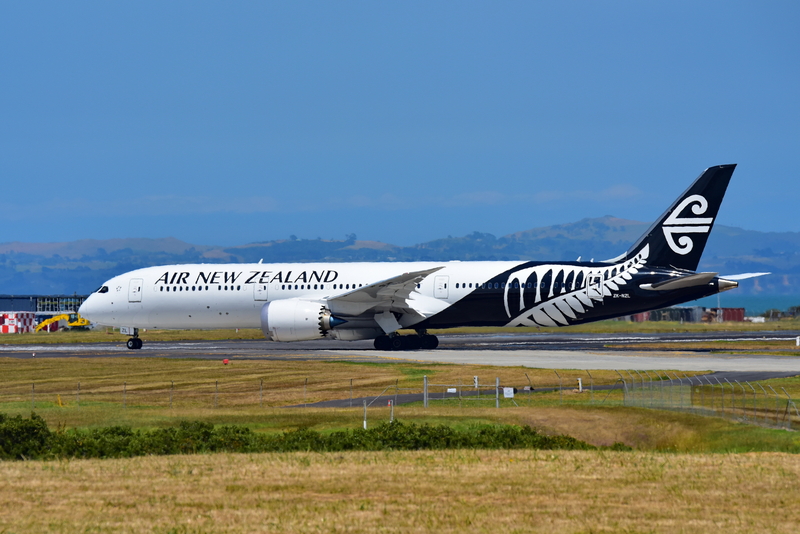
Air New Zealand has now shown where its new premium-heavy Boeing 787-9 Dreamliner will make its first appearances, and the route list says almost as much about the airline’s commercial priorities as the cabin itself.

From late June, the new 219-seat aircraft will begin appearing across 10 routes from Auckland Airport (AKL), ranging from short Pacific sectors to selective long-haul missions. The list includes Brisbane Airport (BNE), Nadi International Airport (NAN), Daniel K. Inouye International Airport in Honolulu (HNL), Perth Airport (PER), Faa’a International Airport in Papeete (PPT), Rarotonga International Airport (RAR), Melbourne Airport (MEL), Sydney Airport (SYD), San Francisco International Airport (SFO), and John F. Kennedy International Airport in New York (JFK). By October 25, however, the schedule tightens sharply: the new aircraft is then listed only on Auckland (AKL)–New York (JFK).
That is the real headline. The first 10 routes are a proving program. JFK is the target.
Read our stories in your inbox
Two aviation newsletters. Zero fluff.
Two Dreamliner stories are now running at once
Air New Zealand is effectively operating two separate Boeing 787-9 programs in parallel.
The first is the retrofit of its current in-service Dreamliner fleet into a standardized 272-seat layout. That project is not a light refresh. It is a full cabin rebuild, with Business Premier Luxe, a redesigned Business Premier product, a new Premium Economy seat, refreshed Economy seating, upgraded inflight entertainment, and a more contemporary onboard layout. The standardized retrofit aircraft carries 4 Business Premier Luxe seats, 22 Business Premier seats, 33 Premium Economy seats, and 213 Economy seats.
The second program is the more intriguing one. This new 219-seat Boeing 787-9 is not a simplified fleet-standard aircraft. It is a lower-density, higher-yield machine. In this configuration, Air New Zealand is sharply increasing the premium mix to 8 Business Premier Luxe seats, 34 Business Premier seats, and 52 Premium Economy seats, while reducing Economy to 125 seats.
That is a substantial change in how the aircraft is being asked to earn its keep. Instead of maximizing seat count, the airline is leaning much harder into comfort, premium pricing, and the kind of long-haul passenger who values sleep and space enough to pay for it.
This is a premium-heavy 787-9 in the truest sense
The raw numbers tell the story clearly.
On the retrofit standard, Air New Zealand has 59 premium seats across Business Premier Luxe, Business Premier, and Premium Economy. On the new 219-seat aircraft, that rises to 94. That is not a marginal adjustment. It is a strategic reweighting of the cabin.
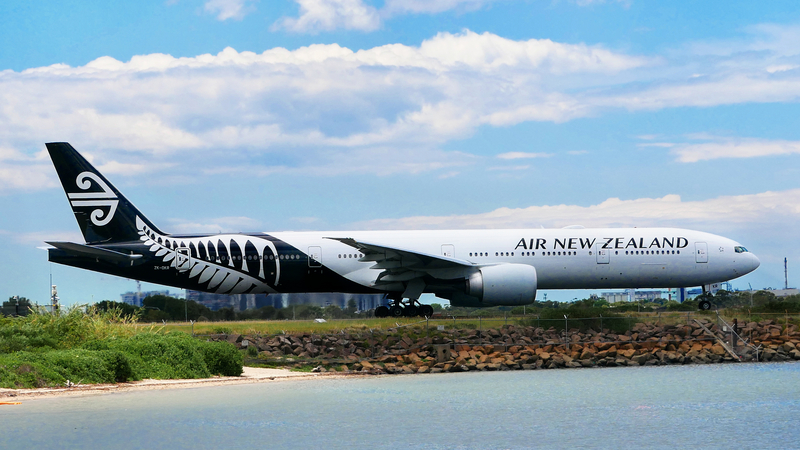
For a carrier based at one of the world’s most geographically isolated hubs, that logic is easy to understand. Air New Zealand does not have the luxury of filling long-haul aircraft with weak-yield connecting traffic and hoping network breadth makes up the difference. On routes such as Auckland (AKL)–New York (JFK) and Auckland (AKL)–San Francisco (SFO), the economics are better when the cabin works harder at the front, not just at the back.
That is why the new aircraft matters. This is not simply a nicer Dreamliner. It is a more selective one.
The early route list is a bedding-in plan, not the end state
The initial route list looks wide, but it is best read as an operational warm-up.
The new 219-seat Boeing 787-9 enters service from June 27, first appearing on Brisbane (BNE) and New York (JFK). It then spreads across Honolulu (HNL) and Nadi (NAN) from July 1, Perth (PER) from July 4, Papeete (PPT) from July 6, San Francisco (SFO) from July 7, and Rarotonga (RAR) for a limited July run and again in late September. Melbourne (MEL) appears as a one-off on July 30, while Sydney (SYD) joins from September 20.
That route mix is revealing. It includes shorter sectors, medium-haul Pacific flying, and a handful of longer missions that allow Air New Zealand to test how the aircraft performs in real commercial service across different operating environments. This is exactly what a sensible bedding-in pattern looks like for a brand-new interior and a very different cabin mix.
But it is the final step that matters most. From October 25, Auckland (AKL)–New York (JFK) becomes the only listed route for the aircraft. That tells you where Air New Zealand sees the biggest strategic need.
JFK is where the aircraft has to prove the business case
Auckland (AKL)–New York (JFK) has always been the route that most clearly exposes both Air New Zealand’s ambition and its structural challenge.
It is a true ultra-long-haul market from a remote home base, with all the demand complexity that comes with that. It also requires a product that can persuade travelers to spend a very long time onboard without the carrier enjoying the same kind of local feed strength at JFK that some rivals can access through stronger hub partners.
That helps explain why the new 219-seat Dreamliner is being funneled toward JFK. Air New Zealand is not just changing the aircraft on the route. It is changing the commercial logic of the route. Fewer total seats, more premium capacity, and a cabin designed much more explicitly around rest, privacy, and high-yield demand is a deliberate attempt to make a difficult route work better.
In that sense, the route plan is unusually honest. Air New Zealand is not pretending this aircraft is a generic fleet addition. It is deploying it where it believes premium density can do the most work.
Skynest turns the strategy up another notch
The picture becomes even clearer from November, when the airline’s Economy Skynest enters service on the new Boeing 787-9 on Auckland (AKL)–New York (JFK).
That matters because it shows Air New Zealand is not only improving the front of the aircraft. It is also trying to create a new kind of sellable rest product further back in the cabin. For a route like JFK, where total journey time and sleep quality are central to the passenger decision, that is commercially significant.
The broader message is straightforward. Air New Zealand is no longer treating comfort as a soft brand asset. It is treating it as route economics.
Bottom Line
Air New Zealand’s new 219-seat Boeing 787-9 is not just a lower-density Dreamliner. It is a targeted long-haul tool.
The initial 10-route rollout from Auckland Airport (AKL) is useful, but it is not the real story. The real story is that by late October the aircraft is scheduled only for New York John F. Kennedy International Airport (JFK), and from November it will carry the airline’s Skynest product there as well.
For aviation professionals, that makes the strategy clear. Air New Zealand is standardizing one part of its 787-9 fleet while building a much more premium-heavy subfleet for missions where yield, sleep, and differentiation matter most. The airline is not just refreshing cabins. It is trying to change the economics of its hardest long-haul flying.
Keep reading FlyMag
Get the Daily Brief in the morning or the Route Watch weekly recap on Fridays. Or both.