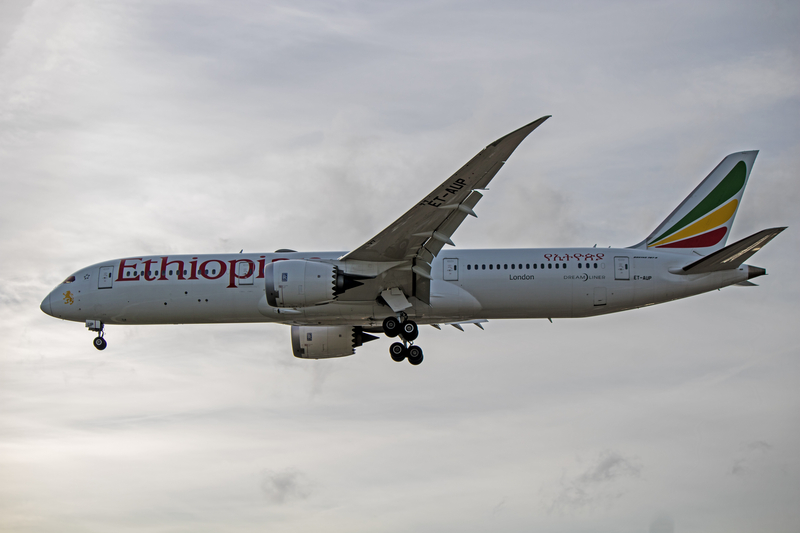
Ethiopian Airlines has converted options for six additional Boeing 787-9 Dreamliners into firm orders, reinforcing the carrier’s long-haul expansion plan and adding more depth to one of the most important widebody fleets in African aviation.

For Ethiopian, this is not simply an incremental fleet top-up. It is a strategic move that supports continued intercontinental growth from Addis Ababa Bole International Airport (ADD), while also giving the airline more of the flexibility and efficiency that have made the Dreamliner central to its long-haul operation.
The order also says something important about where Ethiopian sees the next phase of its growth. The airline is not chasing expansion with older or opportunistic lift. It is doubling down on a modern twin-aisle type that already plays a core role across its network linking Africa with Europe, Asia, the Middle East, and North America.
Read our stories in your inbox
Two aviation newsletters. Zero fluff.
The Order Converts Options Into Firm Commitments
The six aircraft are not a brand-new surprise addition in isolation. They come from options tied to Ethiopian’s 2023 agreement with Boeing, which the airline has now exercised in full.
That matters because option conversions are often a clearer sign of confidence than headline-grabbing memoranda or letters of intent. A firm order means the airline has moved beyond strategic flexibility and into committed fleet planning. It has decided these aircraft are not merely desirable. They are needed.
For Boeing, the order is another endorsement of the 787 platform at a time when widebody demand remains strongest among airlines that want range, efficiency, and manageable trip costs rather than sheer size.
For Ethiopian, it means its long-haul fleet plan is becoming more concrete.
Why The 787-9 Fits Ethiopian’s Network So Well
The selected variant is the Boeing 787-9, the larger member of the baseline Dreamliner family and an aircraft that suits Ethiopian’s network profile particularly well.
The 787-9 offers more seats and cargo volume than the 787-8 while preserving the fuel-efficiency advantages and long-range flexibility that define the type. For a carrier built around Addis Ababa Bole International Airport (ADD), that is highly valuable. Ethiopian’s network includes a mix of mature intercontinental trunk routes and thinner long-haul sectors where a very large widebody would be inefficient.
The 787-9 sits in the sweet spot for that kind of operation. It can support high-demand long-haul flying while still giving the airline the flexibility to open or grow markets that do not justify a larger Boeing 777 or Airbus A350 on every rotation.
That balance is one of the reasons the Dreamliner has become such an important aircraft family for Ethiopian.
Addis Ababa Remains The Center Of The Strategy
Everything about this order points back to Addis Ababa Bole International Airport (ADD).
Ethiopian’s long-haul model depends on using ADD as a connecting hub that links Africa to multiple continents in a way few carriers on the continent can match. That requires aircraft with enough range to reach distant markets, enough efficiency to keep unit costs competitive, and enough cargo capability to support routes where freight is a meaningful part of the economics.
The 787-9 checks all three boxes.
It is especially useful for a hub carrier because it can serve both established city pairs and developing long-haul routes without forcing the airline into oversized capacity. That matters when an airline is trying to grow beyond traditional strongholds and explore underserved long-haul markets.
Ethiopian Already Has One Of The Strongest 787 Fleets In Africa
This new order builds on a Dreamliner fleet that is already central to Ethiopian’s identity.
The airline is currently Africa’s largest Boeing 787 operator, with both the 787-8 and 787-9 already in service. Ethiopian’s own fleet information shows 20 Boeing 787-8s and 10 Boeing 787-9s in operation, giving the carrier a substantial installed base of Dreamliner capacity before these six additional aircraft even arrive.
That existing scale matters because it lowers the complexity of adding more of the same type. Pilots, maintenance teams, cabin crews, spare-parts planning, and network deployment are all easier to scale when the incoming aircraft fit an established fleet family.
In practical terms, Ethiopian is not introducing a new type. It is deepening an aircraft platform it already knows how to use very effectively.
The Cargo Angle Is More Important Than It May First Appear
One of the more overlooked aspects of the 787-9 is how useful it can be beyond passenger capacity alone.
Ethiopian has long been one of Africa’s strongest airline cargo players, and that matters when evaluating a long-haul fleet order. Belly-hold freight can materially improve route economics, especially on intercontinental sectors where trade flows remain strong and premium cargo demand adds resilience to the business case.
That makes the 787-9 a logical aircraft for Ethiopian in a way that goes beyond passenger growth. It supports the airline’s broader hub model by helping carry both people and freight across long distances with lower fuel burn than older-generation widebodies.
For routes out of Addis Ababa Bole International Airport (ADD), that combination is strategically powerful.
This Is A Growth Move, But Also A Fleet-Quality Move
It would be easy to frame the order simply as expansion, but there is another layer to it.
Modern widebody fleet growth is not only about adding seats. It is also about improving the quality of the fleet itself. Newer aircraft offer better fuel efficiency, stronger dispatch economics, and often better passenger appeal than the older jets they supplement or eventually replace.
That is particularly relevant for an airline like Ethiopian, which has built a reputation as one of Africa’s most ambitious and globally connected carriers. To sustain that position, it needs aircraft that can compete not only on range and cost, but also on onboard experience.
The 787 family remains one of the best aircraft for that role. It supports long-haul economics while also giving airlines a product that is easier to market on premium international routes.
The Order Suggests Confidence In Long-Haul Demand
Large widebody decisions are ultimately bets on future traffic.
By confirming six more 787-9s, Ethiopian is signaling confidence that long-haul demand from and through Addis Ababa Bole International Airport (ADD) will continue to justify more efficient widebody capacity. That includes both established routes and markets that are still developing.
It also reflects confidence in the airline’s broader role as a connector between Africa and the rest of the world. Ethiopian is one of the few carriers on the continent with the scale, fleet mix, and hub structure to think in truly global terms. Adding more Dreamliners reinforces that ambition.
This is not a defensive order. It is the move of an airline that still sees room to grow.
Boeing Also Needed This Win
From Boeing’s perspective, the Ethiopian order is meaningful as well.
The 787 remains one of the manufacturer’s most important long-haul products, and repeat business from an experienced operator carries more weight than a first-time symbolic deal. Ethiopian knows the type, operates it at scale, and has built a network around it. When an airline in that position chooses more 787-9s, it says something stronger than a generic endorsement.
It says the aircraft continues to make sense in real-world airline economics.
That is especially important in a market where widebody decisions are increasingly driven by flexibility and efficiency rather than raw size.
Bottom Line
Ethiopian Airlines’ decision to firm up six more Boeing 787-9 Dreamliners is a clear vote of confidence in both its long-haul growth strategy and the continued value of the Dreamliner family. The aircraft will support intercontinental expansion from Addis Ababa Bole International Airport (ADD), strengthen cargo-carrying capability, and deepen a fleet platform the airline already uses extensively.
For Ethiopian, the order is not just about adding more airplanes. It is about adding the right airplanes for a hub-and-spoke network that spans multiple continents. And for Boeing, it is another reminder that the 787-9 remains one of the most compelling widebody tools available for airlines that want reach, efficiency, and flexibility in the same airframe.