American Airlines (AA) is doubling down on its most important international gateway with a major infrastructure commitment at Miami International Airport (MIA): a $1 billion investment that will underpin a full-scale rethink of Concourse D’s Gate D60 complex.

The project, unveiled alongside Miami-Dade County and the Miami-Dade Aviation Department, is the centerpiece of MIA’s broader $9 billion airport-wide modernization program—and it targets one of the most visible friction points in American’s Miami operation: how passengers board (and how quickly aircraft can turn) at the busiest end of Concourse D.
If the timeline holds, construction will break ground in 2027 and the new facility is expected to be completed by 2030.
Read our stories in your inbox
Two aviation newsletters. Zero fluff.
Why D60 matters at MIA
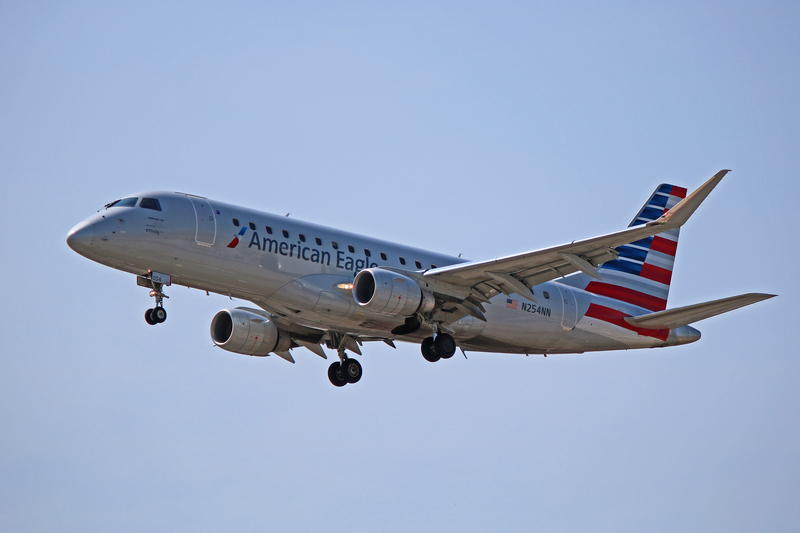
In American’s Miami (MIA) ecosystem, Gate D60 isn’t just another gate cluster. It’s the workhorse zone that has traditionally supported a high volume of American Eagle flying—think short-haul spokes feeding the bank structure, plus quick-turn missions operated by aircraft like the Embraer E175 and other regional types.
Today’s D60 setup is built around a single shared boarding area that funnels passengers to 17 ground-level gates designed for smaller regional jets. That arrangement can work, but it has clear constraints at a hub that runs on tight bank timing:
-
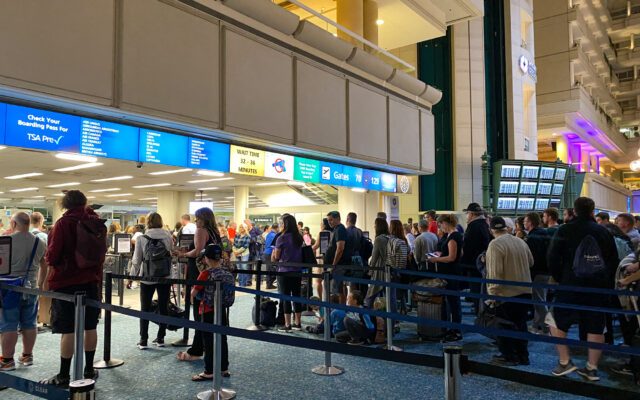
Shared holdroom space means crowding spikes during bank overlaps.
-
Ground-level operations and outside boarding expose customers (and turn performance) to South Florida weather.
-
Remote-style flows increase dependence on ramp staffing, door positioning, and tight choreography—every single turn.
The D60 rebuild is essentially American and MIA saying: this part of the hub has outgrown its original design.
What the new D60 extension delivers
The new D60 development is planned as a three-level extension that will convert the current configuration into 17 traditional contact gates—the kind of gates most travelers associate with a “mainline” airport experience: jet bridges, dedicated holdrooms, and cleaner passenger circulation.
Key features of the plan include:
-
17 contact gates designed to handle larger regional aircraft and narrowbodies (think E175-sized lift up through aircraft like the Airbus A320-family and Boeing 737-family, including 737-800 and 737 MAX 8-class operations).
-
Individual, spacious holdrooms for each gate, replacing the single shared boarding space model.
-
Elimination of outside boarding, a major quality-of-life upgrade at MIA (and a meaningful reliability improvement during thunderstorm season).
-
A new baggage handling system, which is quietly one of the most operationally important pieces—bag flow is where missed connections turn into customer pain fast at an international hub.
-
Direct third-level connectivity to U.S. Customs and Border Protection (CBP) facilities for international arrivals, giving the new gate areas the ability to support future international-capable operations without forcing awkward terminal workarounds.
The design language matters too. American and airport officials have highlighted brighter, more open spaces, additional dining and retail, and a more modern “Miami” feel—down to indoor palm-tree visuals in concept renderings. The optics are passenger-facing, but the real value is procedural: more space, fewer bottlenecks, and fewer nonstandard boarding flows.
What this changes for American’s hub machine at MIA
American already accounts for the majority of activity at Miami (MIA), and the airline is planning its largest summer schedule ever from the hub—peaking at more than 380 daily flights to 155 destinations across 45 countries.
In that context, D60 isn’t just a facilities project. It’s capacity insurance.
At a banked hub, the enemy isn’t just cancellations—it’s cascading delay. A few late turns in one concourse can bleed into missed connections, gate conflicts, and aircraft swaps that compound across the schedule. Turning D60 into a bank-ready contact-gate complex helps American in three highly practical ways:
-
Better turn consistency for short-haul feed
Miami (MIA) relies on domestic and near-international feed to sustain its long-haul and Latin America/Caribbean network. The more predictable the feeder turns, the more stable the hub. -
Higher-quality gate utilization
Contact gates can be scheduled tighter than ground-level boarding operations because fewer steps depend on ramp “extras” (and the customer flow is more controlled). -
Operational resilience during weather and peak banks
Miami storms don’t care about block times. Eliminating outside boarding and spreading passengers into dedicated holdrooms reduces pressure on gate agents and ramp teams when the operation is stressed.
And this isn’t happening in isolation. The D60 project is just one piece of a larger MIA buildout that includes major terminal redevelopment work, a future Concourse K expansion, and a long list of passenger-facing upgrades across the airport footprint.
Premium lounges: Miami’s next battleground
Concourse D improvements are only part of American’s Miami play. The airline has also committed to expanding its premium footprint at MIA with plans for a new Flagship Lounge and a larger Admirals Club presence.
That matters because Miami (MIA) isn’t just a leisure gateway—it’s where premium demand can show up in concentrated bursts: international connections, high-yield Latin America business flows, and long-haul departures where lounge access is part of the buying decision. If American wants to protect its home-field advantage against competitors who are increasingly aggressive in South Florida, lounge product and gate experience have to move together.
Don’t forget cargo: the other reason MIA is strategically priceless
Passenger terminals get the headlines, but Miami (MIA) is also an air logistics powerhouse. The airport handled nearly 3.5 million tons of cargo in 2025, setting another record and reinforcing MIA’s role as the United States’ leading international freight gateway.
American’s cargo story at MIA is closely tied to its passenger network. The airline moves a high volume of freight in the belly holds of passenger aircraft—widebodies like the Boeing 787 Dreamliner and narrowbodies like the 737-family that run the region at high frequency. For Latin America and the Caribbean, belly cargo isn’t an afterthought; it’s a margin contributor that supports route economics year-round—especially for perishables and time-sensitive shipments.
Bottom Line
American’s $1 billion investment in Miami (MIA) is not a cosmetic refresh—it’s a structural upgrade to how the airline runs its hub. The D60 rebuild will replace a shared, ground-level regional setup with 17 contact gates, dedicated holdrooms, improved baggage handling, and easier CBP access—while finally eliminating outside boarding in one of the airport’s busiest operational zones.
For American, it’s about protecting the schedule and scaling the hub. For MIA, it’s a high-impact piece of a $9 billion modernization program aimed at keeping Miami competitive as a global gateway. And for travelers—especially those connecting through Concourse D—the biggest change will be the simplest: fewer bottlenecks, less ramp exposure, and a Miami experience that finally matches the scale of the network it supports.
Keep reading FlyMag
Get the Daily Brief in the morning or the Route Watch weekly recap on Fridays. Or both.