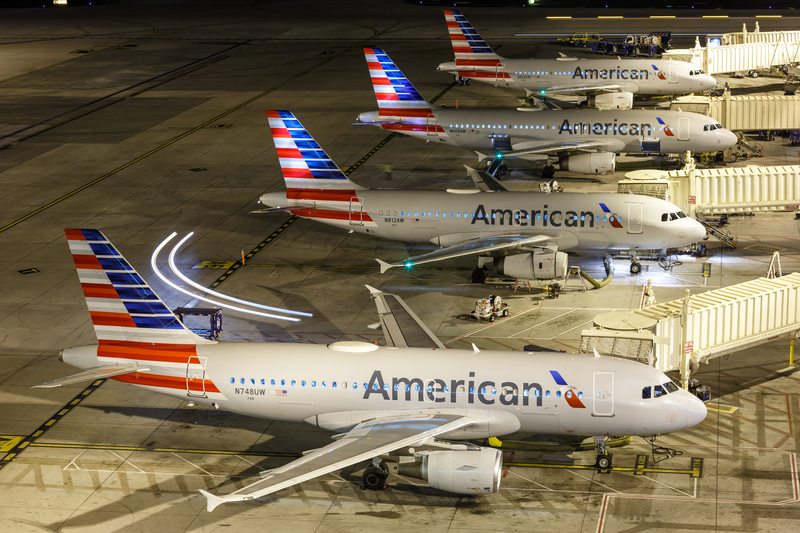
An American Airlines Airbus A319 bound for Bermuda rejected its takeoff at Miami International Airport after the crew saw another aircraft on the runway ahead, preventing what could have become a serious runway-conflict event.

Flight AA308 was operating from Miami International Airport (MIA) to L.F. Wade International Airport (BDA) when the crew discontinued the takeoff roll. The aircraft involved was reported as N716UW, an Airbus A319-100 operating a scheduled American Airlines service to Bermuda.
The other aircraft has been reported as a NetJets business jet that entered or crossed the active runway while the American jet was beginning its departure. The Federal Aviation Administration has opened an investigation into the incident.
Read our stories in your inbox
Two aviation newsletters. Zero fluff.
No injuries were reported, and AA308 later departed Miami (MIA) safely for Bermuda (BDA). But the event is still important. It is another reminder that runway safety depends on multiple independent layers: air traffic control, airport surface procedures, cockpit vigilance, and a flight crew’s willingness to reject a takeoff immediately when the runway environment no longer looks safe.
AA308 Was Cleared For Departure From Miami
AA308 was scheduled to operate the roughly 1,040-mile sector from Miami (MIA) to Bermuda (BDA), a route that fits neatly into American’s broader Miami hub operation to the Caribbean, Latin America, and Atlantic leisure markets.
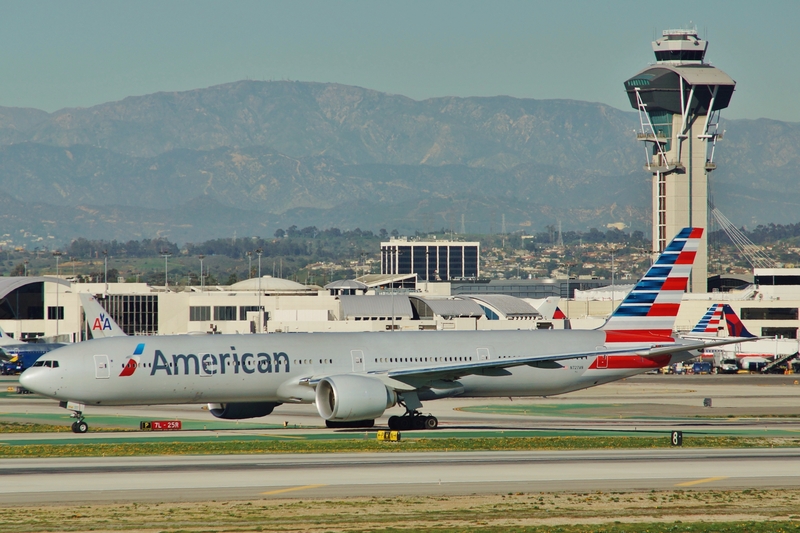
Incident reporting says the Airbus A319 had been cleared for takeoff from runway 08R at Miami (MIA) and had begun accelerating when the crew saw a business jet crossing the runway ahead. The pilots rejected the takeoff at low speed and were able to stop the aircraft safely.
That low-speed detail matters. A rejected takeoff early in the roll is very different from a high-speed reject near V1, the calculated decision speed after which the safest course is normally to continue the takeoff unless the aircraft cannot fly. At lower speeds, crews have more runway remaining, less brake-energy buildup, and more stopping margin.
According to incident reporting, the American A319 vacated the runway at the first right exit, and the flight departed around 20 minutes later. That suggests the aircraft did not suffer obvious damage or a major technical issue as a result of the rejected takeoff, although any rejected takeoff still requires crew assessment and, depending on speed and braking, possible maintenance review.
Why This Was A Runway Incursion
The FAA defines a runway incursion as the incorrect presence of an aircraft, vehicle, or person on the protected area of a surface designated for takeoff and landing.

That definition fits the concern at Miami (MIA): one aircraft had been cleared for takeoff, while another aircraft was on or crossing the runway environment. The FAA has not yet released a final sequence of events or assigned responsibility, so the cause should not be assumed. Investigators will need to determine whether the conflict resulted from a misunderstood clearance, a readback/hearback issue, a ground-control or tower coordination problem, a pilot deviation, or some combination of factors.
Audio and incident reporting indicate that the crew of the business jet believed they had been cleared to cross, while air traffic control disputed that understanding. That kind of mismatch is exactly what runway-incursion investigations are designed to reconstruct.
The key question will be straightforward: what clearance was issued, who received it, what was read back, and how did the aircraft end up on the runway while AA308 was cleared for takeoff?
The Aircraft: American’s Airbus A319
The American Airlines aircraft involved was an Airbus A319-100, a shortened member of the Airbus A320 family.
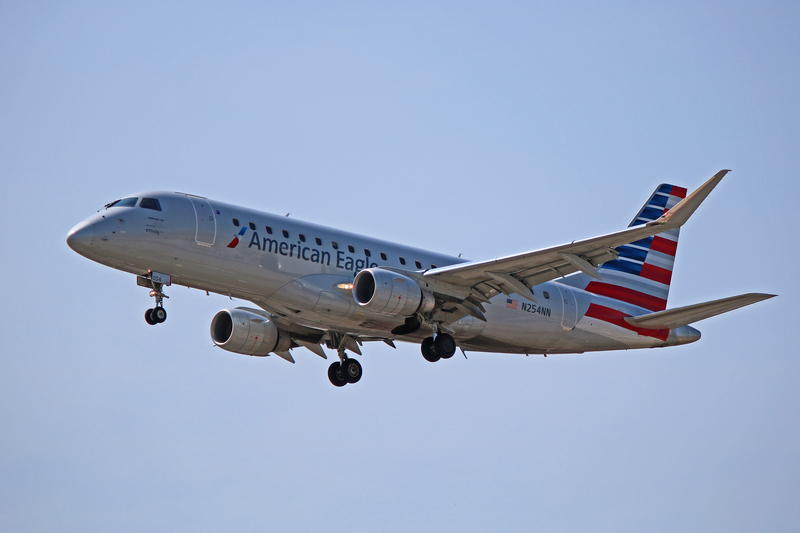
American uses the A319 on thinner domestic, Caribbean, and short- to medium-haul international routes where a full-size A320 or Boeing 737 may provide more capacity than needed. The type is particularly useful from hubs such as Miami (MIA), Charlotte (CLT), Philadelphia (PHL), Dallas/Fort Worth (DFW), and Phoenix (PHX), where it can connect smaller or medium-density markets into the larger American network.
American’s A319 fleet includes multiple cabin configurations, but the common 128-seat version has 8 First Class seats, 24 Main Cabin Extra seats, and 96 Main Cabin seats. For a route such as Miami (MIA)–Bermuda (BDA), the aircraft makes commercial sense. It offers a premium cabin, enough economy capacity for leisure and connecting demand, and operating economics that are more appropriate than a larger narrowbody when demand does not require more seats.
The A319 is also more than capable of operating the MIA–BDA sector. The route is relatively short by A319 standards, and Miami’s long runways give the aircraft ample performance margin under normal conditions. In this incident, aircraft performance was not the issue. The runway environment was.
Why A Rejected Takeoff Is The Correct Response
Rejected takeoffs are among the most thoroughly trained events in airline operations.
During the takeoff roll, both pilots are monitoring aircraft performance, speed callouts, engine indications, runway alignment, and the runway ahead. If a hazard appears before the aircraft reaches the point where continuing is safer than stopping, the correct response is to reject the takeoff.
That is what happened here. Once the American crew saw another aircraft on the runway ahead, continuing the takeoff would have created unnecessary risk. Stopping the aircraft immediately restored the safety margin.
Passengers may experience a rejected takeoff as abrupt braking, engine-power reduction, and a sudden end to what felt like a normal departure. In the cockpit, however, it is a disciplined maneuver. The crew must make a rapid decision, close the thrust levers, deploy stopping systems as appropriate, maintain directional control, communicate with air traffic control, and evaluate the aircraft before deciding whether another departure attempt is safe.
The fact that AA308 later departed suggests the rejected takeoff was handled cleanly and at a speed low enough to avoid a more serious follow-on issue such as overheated brakes, tire damage, or a required aircraft swap.
Miami’s Runway Environment Is Busy And Complex
Miami International Airport (MIA) is one of the busiest international gateways in the United States and American Airlines’ primary hub for Latin America, the Caribbean, and parts of the Atlantic.
The airport handles a demanding mix of traffic: American mainline narrowbodies and widebodies, regional aircraft, international carriers, cargo operators, business jets, general aviation, and government or special-mission aircraft. That mix makes surface coordination especially important.
At a large hub like MIA, aircraft may be departing one runway, landing on another, crossing active runways, exiting at high-speed taxiways, or repositioning between terminals and fixed-base operators. The surface environment can become particularly sensitive when aircraft are moving between airline gates, cargo areas, and business-aviation facilities.
That does not make runway incursions inevitable. It does explain why clear instructions, accurate readbacks, situational awareness, runway status awareness, and cockpit scanning remain essential even at airports with professional ATC services and experienced crews.
The Business Jet Factor
The other aircraft has been reported as a NetJets business jet. NetJets and other fractional or charter operators routinely operate at major commercial airports, including Miami (MIA), where business aviation demand is substantial.
Business jets and airline aircraft share the same controlled airport surfaces, but their operating patterns can differ. A business jet may be taxiing from a fixed-base operator rather than an airline terminal. It may be crossing from one side of the airport to another, positioning for departure, or clearing after arrival. That can place it in parts of the airport surface environment that airline passengers rarely think about.
None of that implies fault. The FAA investigation will need to establish exactly what happened. But the presence of mixed traffic at MIA is relevant because runway safety depends on every aircraft, regardless of size, being in the correct place at the correct time under the correct clearance.
A private jet crossing in front of a departing airliner is not less serious because the aircraft is smaller. If anything, the size and speed difference between an accelerating Airbus A319 and a taxiing business jet makes the timing especially important.
How Close Was It?
Some reports described the two aircraft as coming within roughly one-third of a mile. AeroInside’s incident summary describes the business jet crossing about 2,880 feet down the runway, while the American A319 exited about 1,200 feet down the runway after rejecting the takeoff.
Those numbers help explain why the event deserves attention without overstating it as a near-collision catastrophe. At taxi speed and low takeoff-roll speed, the situation was still recoverable. But once an airliner accelerates, distance disappears quickly. A rejected takeoff that is straightforward at low speed can become much more demanding if the crew sees the hazard later.
That is why the crew’s early visual detection was so important. The pilots did not wait for the situation to become more ambiguous. They rejected the takeoff while they still had runway and energy margins.
In safety terms, that is exactly how the system is supposed to work. One layer may have failed or become unclear, but another layer — the flight crew’s direct observation — caught the problem in time.
What Investigators Will Review
The FAA investigation will likely focus on several core items.
Investigators will review air traffic control audio, surface radar or airport movement data, aircraft positions, clearance timing, cockpit and ATC communications, readbacks, taxi instructions, and runway assignment history. They will also examine whether the business jet was instructed to hold short, cross, line up, or continue taxiing, and whether any similar call signs or frequency congestion contributed to confusion.
At a busy airport, a single phrase can matter. “Line up and wait,” “cross runway,” “hold short,” and “cleared for takeoff” are all highly specific instructions. A wrong readback, missed correction, blocked transmission, or expectation bias can become a safety issue quickly.
The final report may classify the event by severity and cause. Until then, the safest wording is that AA308 rejected takeoff after another aircraft was observed on the runway and that the FAA is investigating how the conflict occurred.
A Broader Runway Safety Context
Runway incursions have drawn renewed attention in the United States after several high-profile close calls at major airports.
The aviation system remains extremely safe, and millions of takeoffs and landings occur each year without incident. Still, runway conflicts are taken seriously because the consequences of a high-speed collision on a runway can be catastrophic.
The FAA has been expanding surface-safety initiatives, airport-risk reviews, and runway-incursion mitigation programs. But technology and procedures do not replace pilot and controller discipline. They support it.
AA308 is a good example of why aviation safety relies on redundancy. The departure clearance alone was not enough to guarantee a clear runway. The pilots’ visual scan of the runway environment provided the final safeguard.
Bottom Line
American Airlines Flight AA308’s rejected takeoff at Miami (MIA) was a serious runway-safety event that ended safely because the crew acted quickly.
The Airbus A319-100, reported as N716UW, was departing Miami (MIA) for Bermuda (BDA) when the pilots saw another aircraft on the runway and stopped the takeoff roll. The other aircraft has been reported as a NetJets business jet, and the FAA is now investigating how it came to be on the runway after AA308 had been cleared to depart.
No passengers or crew were injured, and the American flight departed around 20 minutes later. That outcome should not make the event seem trivial. Runway incursions are among the most closely watched safety risks in commercial aviation because they can escalate quickly if crews do not detect and correct them in time.
In this case, the last layer of defense worked. The runway was not clear, the pilots recognized it, and the takeoff was rejected before the situation became worse.
Keep reading FlyMag
Get the Daily Brief in the morning or the Route Watch weekly recap on Fridays. Or both.