British Airways is returning to Melbourne Airport (MEL) for the first time in roughly two decades, launching a new daily service from London Heathrow Airport (LHR) via Kuala Lumpur International Airport (KUL) from January 2027.
For British Airways, this is more than a nostalgic route comeback. It gives the carrier a second Australian destination alongside Sydney Kingsford Smith Airport (SYD), restores its presence in one of Australia’s most important premium and corporate markets, and adds another long-haul option on a Europe–Australia corridor that has become more strategically fluid in the wake of Middle East airspace instability.
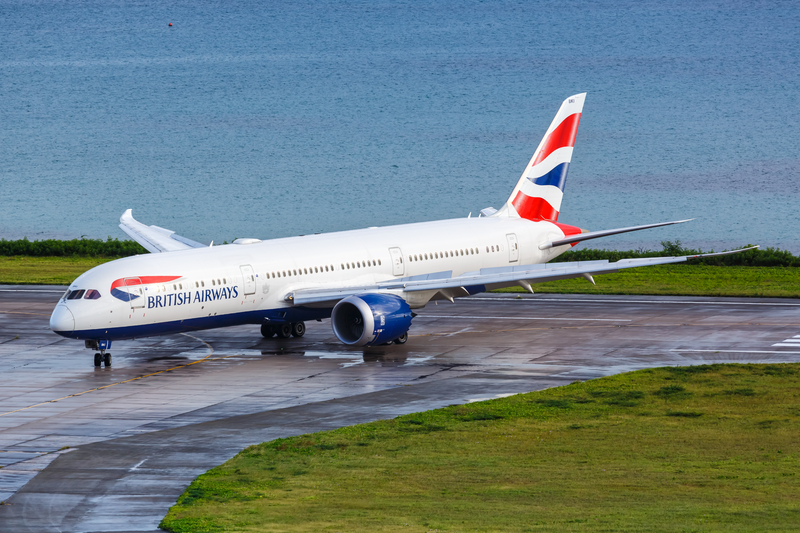
The route will be operated by the Boeing 787-9, and that aircraft choice says almost as much as the destination itself. British Airways is not returning to Melbourne with a high-capacity Boeing 777 or Airbus A380 statement route. It is coming back with a right-sized long-haul twinjet that is flexible enough to support a daily operation while still offering a full premium cabin mix.
Read our stories in your inbox
Two aviation newsletters. Zero fluff.
Melbourne Is Back — But Not As A Nonstop
It is important to frame the route correctly.
This is not a nonstop London–Melbourne service. British Airways will operate LHR–KUL–MEL as a same-flight through service, extending its existing Kuala Lumpur operation onward to Victoria. That matters because tagging Melbourne onto KUL allows BA to re-enter the market without carrying the cost and complexity of an ultra-long-haul nonstop operation.
From a planning standpoint, that is smart.
Kuala Lumpur (KUL) provides a logical intermediate stop, avoids over-reliance on the heavily contested Singapore transit model, and gives BA a chance to build an Australia service around an existing Asian station rather than starting from scratch. It also keeps the route within the operating comfort zone of the Boeing 787-9.
For Melbourne, that means the return of a major European flag carrier, even if the service is not nonstop in the pure technical sense.
The Boeing 787-9 Is The Right Aircraft For This Mission
British Airways will use its four-class Boeing 787-9 on the route, offering First, Club World, World Traveller Plus, and World Traveller.
That is a notable detail for an airline-savvy audience because it shows BA sees Melbourne as more than just a leisure add-on. A four-class 787-9 gives the airline proper segmentation across premium and economy demand, which is exactly what you want on a route linking London (LHR), Kuala Lumpur (KUL), and Melbourne (MEL).
The 787-9 is also a sensible aircraft operationally. It has the range, efficiency, and seat count needed for a long thin route like this, especially when split into two sectors. For a market re-entry, that makes far more sense than deploying an oversized aircraft that would need to be filled year-round at much higher risk.
In other words, this is not British Airways testing Melbourne casually. It is BA choosing a disciplined way to return.
Why Melbourne Matters To British Airways
Melbourne is not just another Australian city on the map.
It is one of the country’s strongest premium, corporate, education, and visiting-friends-and-relatives markets, with deep ties to the UK and one of Australia’s largest British expatriate communities. That gives British Airways a stronger local-demand base than many long-haul resumptions enjoy.
It also arrives at a useful seasonal moment. The January launch places the service into the southern summer, just ahead of major draw periods including the Australian Open and the Melbourne Grand Prix. That is helpful not only from a demand perspective, but also from a publicity and route-ramp-up standpoint. A new service always benefits from entering the market at a time when global attention on the destination is already elevated.
From Melbourne Airport’s perspective, the route is another sign that MEL’s long-haul map is strengthening again, particularly toward Europe.
Kuala Lumpur Is More Than Just A Refueling Stop
The via-KUL structure deserves more attention than it usually gets.
For British Airways, Kuala Lumpur (KUL) is not merely a technical stop. It is a strategic hinge point. By linking Melbourne to its KUL service, BA can improve aircraft utilization, create additional O&D and connecting opportunities, and avoid concentrating too much Australia capacity through Singapore.
That last point is important. BA already serves Sydney (SYD) via Singapore Changi Airport (SIN). By routing Melbourne through Kuala Lumpur instead, the airline diversifies its Southeast Asian connection strategy and reduces the risk of simply duplicating its Sydney structure with a second Australian route.
It also gives BA a clearer proposition for passengers in both directions. Melbourne gets direct British Airways access to both London and Kuala Lumpur on one flight number, while BA gains another way to monetize its KUL operation more effectively.
This Also Says Something About The Current Kangaroo Route
The return to Melbourne lands at an interesting time for Europe–Australia travel.
For years, the Kangaroo Route has been shaped heavily by Gulf hubs and Southeast Asian one-stop gateways. That remains true, but the current environment is more fluid than it was. Ongoing instability affecting parts of the Middle East has led airlines and passengers alike to look harder at alternatives that do not depend as heavily on the Gulf corridor.
British Airways is clearly reading that shift.
Adding Melbourne via Kuala Lumpur gives BA another way to compete on Australia–Europe traffic without relying on Middle Eastern intermediaries. It does not remove the challenge of the one-stop model, but it does give the airline a fresh product in a market where routing resilience and brand familiarity may now matter more than before.
Melbourne’s European Profile Keeps Growing
The wider airport context matters too.
Melbourne Airport (MEL) has been steadily rebuilding and broadening its long-haul profile, and British Airways’ return adds another piece to that story. European connectivity from Melbourne has been deepening again, not only through Gulf and Asian hubs but increasingly through a mix of direct and one-stop models involving European carriers themselves.
That is good news for MEL because long-haul competition is not only about seats. It is about network choice, yield quality, and strategic relevance. British Airways returning to MEL after around 20 years adds prestige, competition, and one more recognizable global brand to the airport’s international lineup.
For British Airways, it also creates a cleaner two-city Australia strategy: Sydney (SYD) for the established flagship market, Melbourne (MEL) for the premium and population depth of Victoria.
This Is A Return, But Also A Test
As strong as the logic is, this is still a route that will need to prove itself.
A daily service is an ambitious restart. Melbourne is a good market, but it is also competitive, price-sensitive in some segments, and already well served via a wide range of one-stop options. British Airways will need to show that its product, schedule, Heathrow connectivity, and brand pull are strong enough to win passengers in that environment.
The good news for BA is that the 787-9 gives it a realistic platform to do that. The airline is not overcommitting blindly. It is entering with an aircraft and routing that allow for a full-service offering without the exposure of a larger-gauge operation.
That makes this route feel less like a vanity relaunch and more like a carefully designed return.
Bottom Line
British Airways’ return to Melbourne Airport (MEL) from January 2027 is one of the more significant long-haul route announcements of the year.
The daily London Heathrow (LHR)–Kuala Lumpur (KUL)–Melbourne (MEL) service brings BA back to Victoria for the first time in about 20 years and gives the airline a second Australian destination alongside Sydney (SYD). Operated by a four-class Boeing 787-9, the route is clearly designed to balance premium demand, long-haul efficiency, and manageable risk.
For aviation professionals, the bigger significance is strategic. This is not just British Airways reviving an old name on the route map. It is BA re-entering Australia in a smarter, more flexible way — using Kuala Lumpur as a bridge, the 787-9 as the right-sized tool, and Melbourne as a market that can support more than nostalgia.