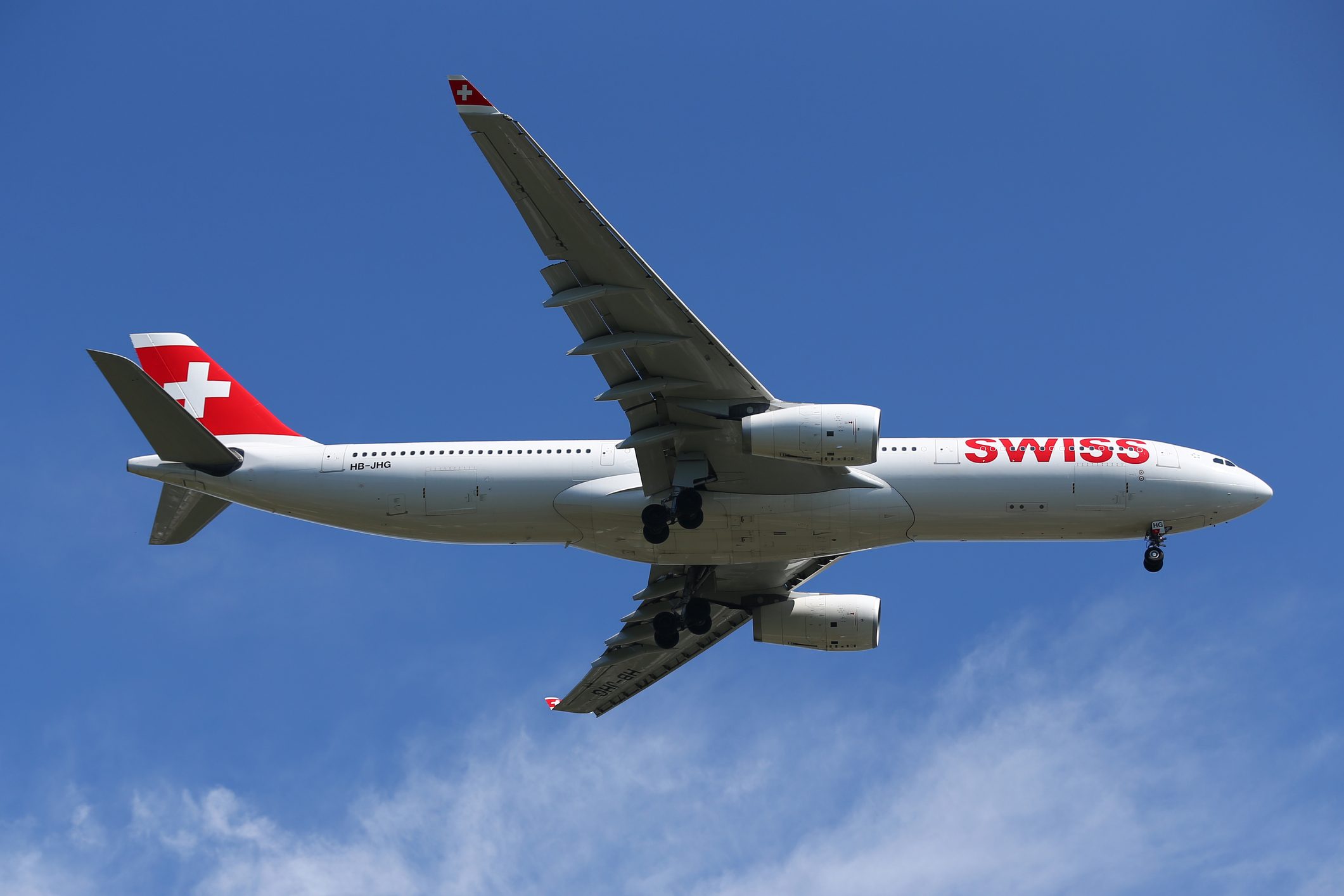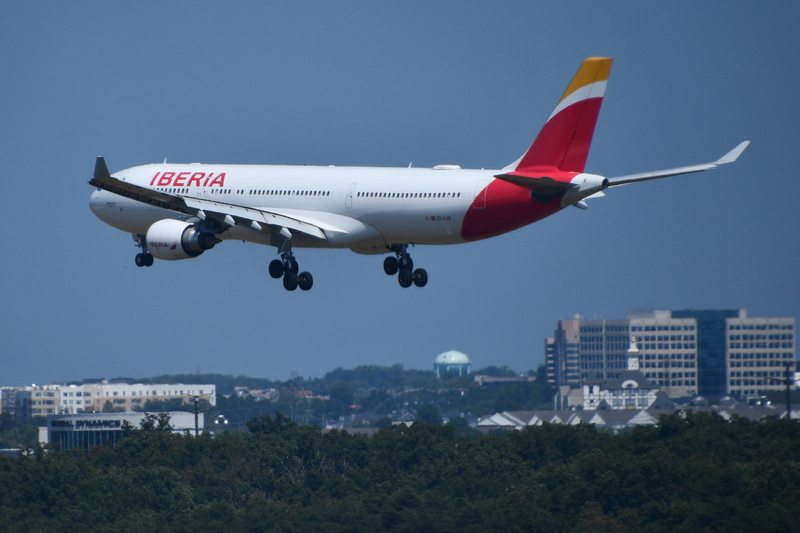
Iberia is going all-in on Latin America for summer 2026, publishing what it describes as its largest-ever programme for the region: 3,354,159 seats between Latin America and Europe, up 7.6% versus last summer. At peak, the airline expects to operate up to 366 weekly flights across the Atlantic, reinforcing Madrid’s Adolfo Suárez Madrid–Barajas (MAD) as one of the most concentrated Europe–Latin America gateways in the market.

For network planners, this isn’t simply “more flying.” It’s Iberia leaning into the advantage it has built over decades: a single-hub structure at MAD that is engineered to bank long-haul departures and arrivals around dense European feed—precisely the architecture that makes high-frequency transatlantic networks work.
Why this matters: MAD is being scaled as a Latin America super-hub
The scale of Iberia’s Latin America programme tends to be understated outside airline circles because it doesn’t rely on dramatic one-off route announcements. Instead, it grows through frequency and gauge discipline: add a flight here, extend a peak-week pattern there, then layer in a new city where corporate demand and industrial traffic can anchor the base load.
Read our stories in your inbox
Two aviation newsletters. Zero fluff.
This summer push also sits inside Iberia’s broader Flight Plan 2030 framework, which is designed to expand fleet and long-haul capacity while selectively adding new intercontinental points. The headline numbers—seats and weekly frequencies—are the visible result of that longer strategy.
Argentina takes the spotlight: Buenos Aires breaks the “three-a-day” ceiling
The most striking frequency move is Argentina. Between June and August, Iberia will operate 23 weekly frequencies between Madrid (MAD) and Buenos Aires (EZE), up from 21 currently. More notably, EZE becomes Iberia’s first long-haul destination to exceed three daily flights, peaking at up to four daily services during certain high-demand weeks.
On the MAD–EZE corridor alone, Iberia plans to offer 456,000 seats this summer, a 12% year-on-year increase. That’s not a marginal tweak—it’s a strong signal that Iberia sees Buenos Aires as the kind of market where frequency sells: corporate flexibility, VFR demand, and robust connectivity on both ends.
Mexico adds a second city: Monterrey launches June 2 with A330-200 service
Mexico is getting a clean expansion lever: a brand-new city. Iberia will start nonstop service between Madrid (MAD) and Monterrey (MTY) on June 2, operating three times weekly. Iberia has priced the programme as 36,288 seats over the summer season.
From an aircraft deployment perspective, Iberia has been explicit: Monterrey will be operated by the Airbus A330-200, a twin-aisle widebody, with 288 seats split between Business and Economy cabins. That choice is telling. The A330-200 gives Iberia long-haul belly cargo capability and widebody economics without overcommitting capacity—ideal for a market like MTY that blends premium industrial demand with strong visiting-friends-and-relatives traffic.
MTY becomes Iberia’s second Mexico station after Mexico City (MEX), and it deepens Iberia’s footprint in a country where schedule utility and corporate travel contracts can move market share quickly.
Brazil continues to ramp: nearly 400,000 seats, driven by new secondary cities
Brazil will see a 15% seat-capacity increase versus last summer, with Iberia offering close to 400,000 seats. The growth is being supported by the relatively recent addition of Recife (REC) and Fortaleza (FOR) alongside expanded operations to Rio de Janeiro (GIG).
For airline professionals, this is a classic Iberia move: broaden Brazil beyond the obvious core markets, then use MAD connectivity to make those secondary cities “feel” less secondary. Recife and Fortaleza also bring a different demand mix—more leisure seasonality and diaspora travel—while Rio remains a premium and high-visibility anchor.
Caribbean capacity jumps: Dominican Republic and Puerto Rico get major frequency lifts
Iberia’s Caribbean programme is seeing some of the sharpest percentage growth:
Iberia Celebrates 50 Years of the Iconic Barcelona-Madrid Air Shuttle, ‘Puente Aéreo’
-
Dominican Republic (SDQ) rises by 21% in seat capacity, with Iberia operating 10 to 11 weekly flights during the summer season, up from 7–8 weekly frequencies last year.
-
Puerto Rico (SJU) increases to 10–12 weekly flights, up from 7–9 last year.
These are the kinds of frequency steps that change customer behavior. Once you move from “a few flights a week” to a near-daily or multi-daily rhythm, you don’t just carry more passengers—you gain schedule relevance, which is often the difference between being an option and being the default.
Chile keeps climbing: Santiago holds at 12 weekly, seats rise again
Iberia will maintain 12 weekly flights between Madrid (MAD) and Santiago (SCL)—effectively two daily services on most days—while increasing seat capacity to nearly 240,000 seats for the summer, up 7% year-on-year.
SCL is a route where consistency matters. At 12 weekly, Iberia can protect connectivity at MAD and serve both point-to-point demand and onward connections into Europe without relying on extreme peak-only patterns.
The aircraft story: widebodies where frequency is the product
Iberia’s Latin America programme is fundamentally a widebody operation. While aircraft assignments vary by market and season, the backbone is Iberia’s long-haul fleet of Airbus widebodies—most notably the Airbus A350-900 and Airbus A330 family—used to balance seat economics, cargo performance, and premium cabin demand.
The confirmed detail in this summer plan is MTY: Iberia has specified the A330-200 (288 seats) for Madrid–Monterrey. That’s a practical choice for a new long-haul market where you want widebody revenue streams (including cargo) without committing the highest-capacity aircraft.
Bottom Line
Iberia’s summer 2026 Latin America schedule is a clear statement of intent: 3,354,159 seats, up 7.6%, and up to 366 weekly flights across the Atlantic anchored on Madrid (MAD). Buenos Aires (EZE) becomes the headline frequency winner with 23 weekly flights and peak weeks reaching up to four daily services, while Monterrey (MTY) joins the map from June 2 with three weekly A330-200 flights. Add double-digit growth in Brazil via REC and FOR, plus major Caribbean increases to SDQ and SJU, and Iberia isn’t just adding capacity—it’s tightening its grip on Madrid’s role as Europe’s most purpose-built hub for Latin America.
Keep reading FlyMag
Get the Daily Brief in the morning or the Route Watch weekly recap on Fridays. Or both.